
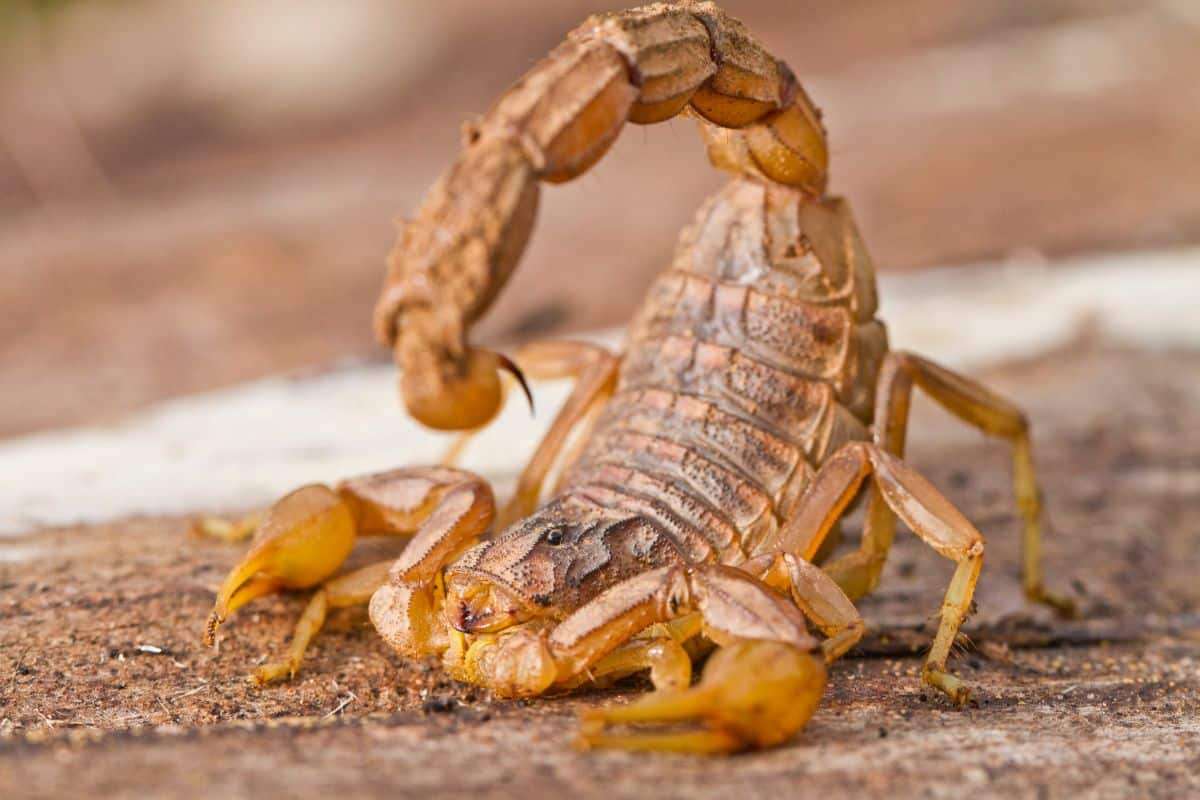
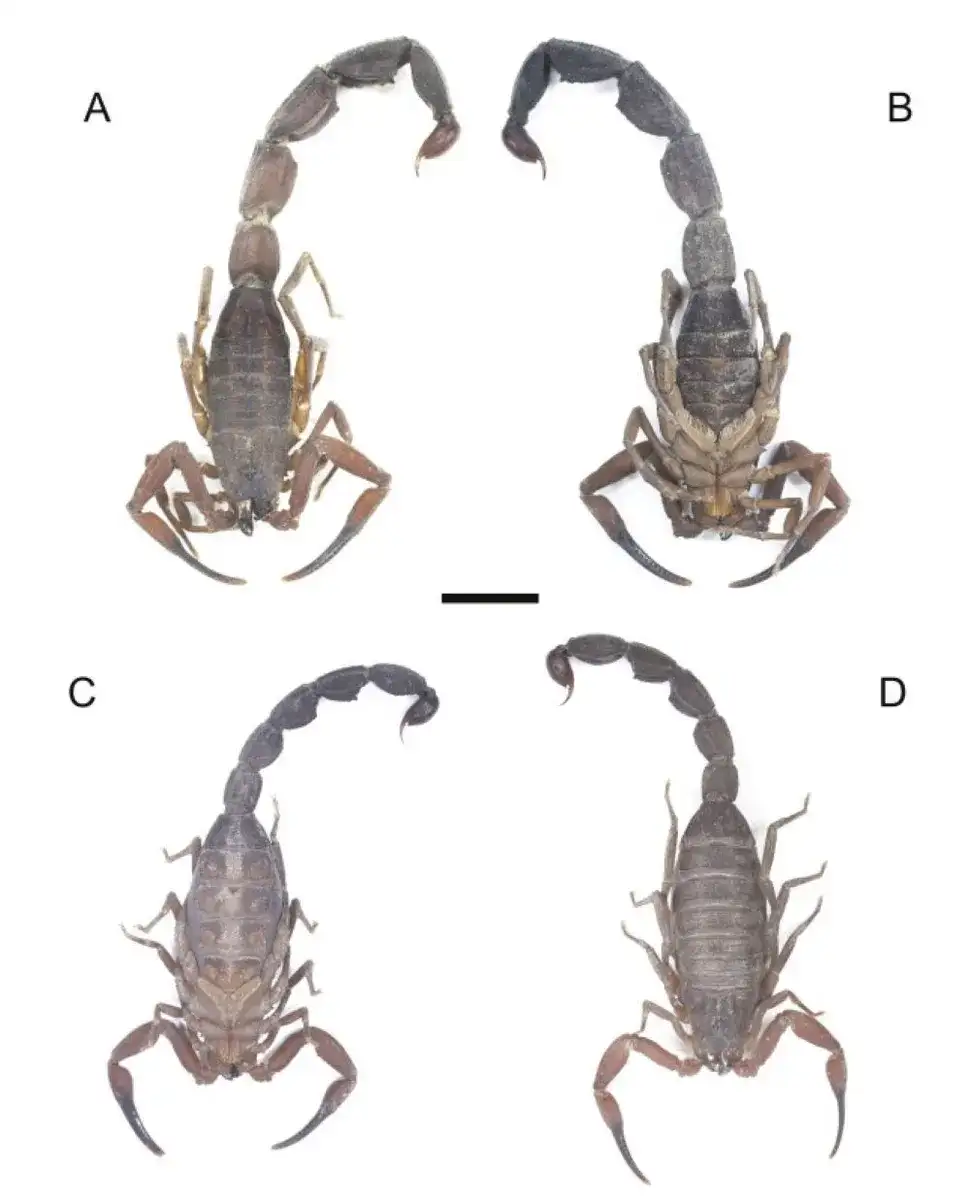
Scientists have uncovered a striking new scorpion species in Colombia with the remarkable ability to spray venom, a defensive behavior previously documented only in two scorpion genera from Africa and North America. This species, dubbed Tityus achilles, was discovered in the Magdalena rainforest within the Cundinamarca region. Reported in the Zoological Journal of the Linnean Society, this finding sheds new light on scorpion defense strategies and poses fresh inquiries into predator-prey interactions in its native ecosystem.
An Exceptionally Unique Scorpion in South America
Traditionally, scorpions inject venom using their stingers to immobilize prey or ward off threats. However, Tityus achilles stands out by possessing the rare dual ability to both inject and spray venom—an extraordinary feature among arachnids.
This spraying capacity enables the scorpion to repel adversaries from a distance, potentially causing temporary blindness or confusion. Such venom-spraying has only been observed in two other scorpion groups: Parabuthus from Africa and Hemiscorpius from North America. With this, T. achilles becomes the first species in South America documented with this notable defense mechanism.

Understanding the Purpose Behind Venom Spraying
Experts suggest that venom spraying represents an energetically expensive survival tactic, employed sparingly when vital. Since synthesizing venom consumes considerable resources, wasteful use would be disadvantageous. This points to an evolutionary response to intense predation pressure in the scorpion’s environment.
Léo Laborieux, the principal investigator and a former graduate student at Ludwig Maximilian University of Munich, noted that venom spraying is most effective against vertebrates, particularly by targeting sensitive facial features such as eyes and nostrils. This implies that T. achilles primarily contends with predators like mammals or birds, rather than other arthropods.
Methods Behind Observing Venom Spraying
Researchers explored this uncommon defensive behavior by gently restraining Tityus achilles individuals using straws, documenting their responses on video. The scorpions sprayed venom an impressive 46 times, with streams reaching distances up to 14 inches (36 cm).
Venom was expelled in two styles: rapid flicks generating tiny droplets and sustained sprays creating continuous streams.
Most sprays were aimed forward, seemingly targeting an assailant’s face, but others were directed upwards or backwards, influenced by the scorpion’s stance and stress level.
Insights Into Venom Chemistry
The venom’s chemical makeup is a critical factor in its function. Researchers observed that initial sprays were generally clear, while later emissions showed a milky appearance. This indicates a dual-layer defensive system:
- Pre-venom: A less potent, rapidly produced toxin used as an initial deterrent, typically clear and delivered in quick flicks or warning sprays.
- Main venom: A powerful, protein-laden toxin that is more metabolically costly to produce, applied through stinging for offense or strong defense.
Rethinking Scorpion Evolutionary Traits
The emergence of Tityus achilles defies earlier beliefs about scorpion venom use and suggests that other species may possess the ability to spray venom but rarely activate it.
Furthermore, this discovery broadens the scope of toxungen research—toxins delivered externally instead of by injection. While animals such as spitting cobras and some amphibians utilize related tactics, confirmed cases in arachnids remain exceptionally rare.
- Categories:
- News













0 comments
Sign in to Comment