
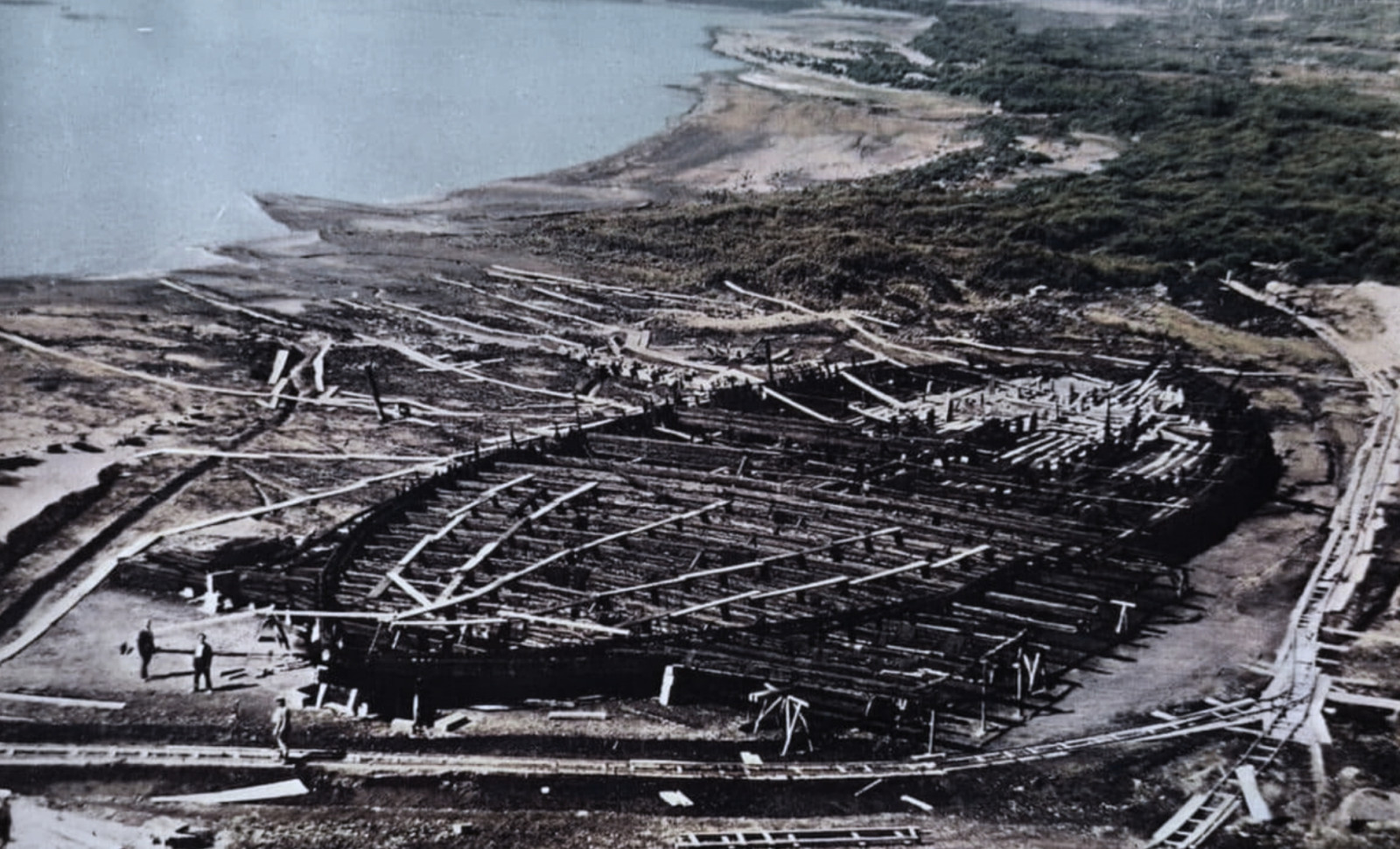
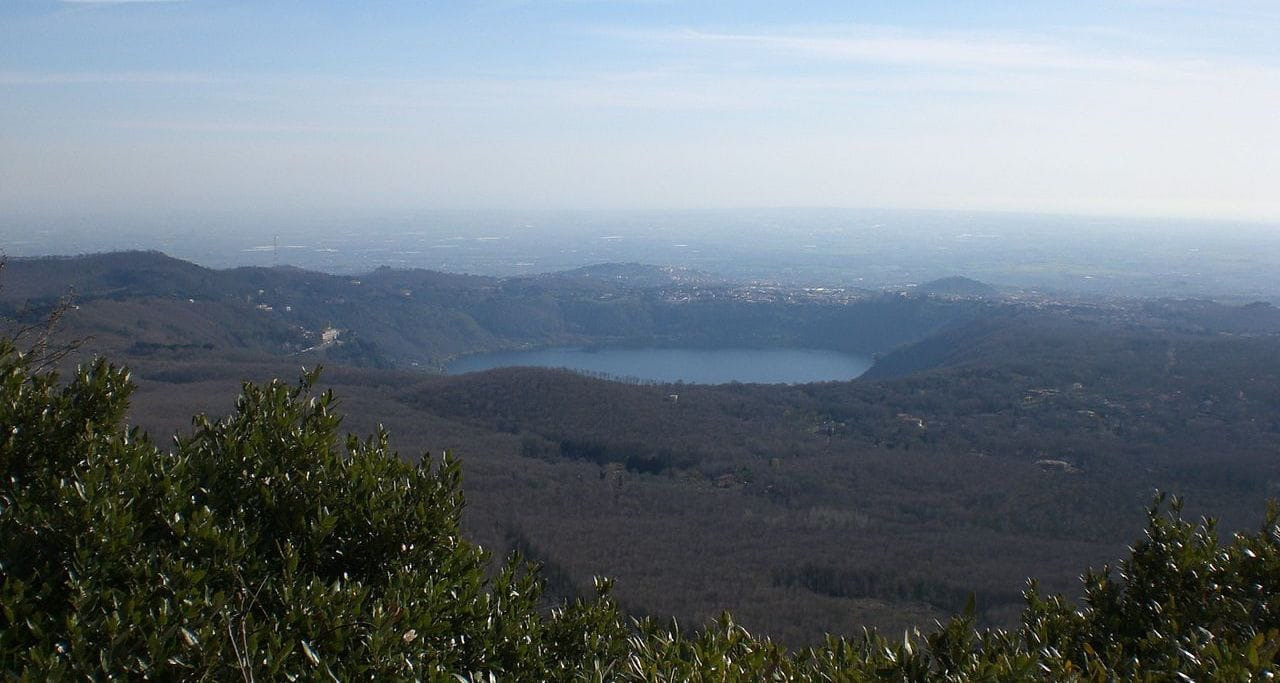
On October 20, 1928, the receding waters of a volcanic crater lake situated roughly 30 kilometers south of Rome began revealing hidden relics. Powerful electric pumps steadily drained the lake, lowering its water level by several centimeters each hour, gradually exposing ancient shapes buried underwater for nearly 2,000 years.
For generations, local fishermen had whispered tales of enormous wooden constructions resting beneath Lake Nemi's surface. While often dismissed as mere legend, frequent net damage caused by submerged timber hinted at possible truths. The 1928 government-sponsored drainage initiative sought to verify these longstanding stories through direct investigation.
Once the lake level had dropped about five meters, a vast, dark silhouette emerged from the mud. Its massive scale far exceeded ordinary boats or natural debris, signaling an impressive engineering feat likely backed by imperial resources.

Revealing the Hidden Hulls
Draining continued until the water receded 22 meters below the original mark, uncovering a ship’s hull stretching approximately 70 meters long and 20 meters wide. Remarkably, this was just the first of two imperial vessels recovered from the lakebed.
Under the guidance of archaeologist Guido Ucelli, researchers recognized the ships' atypical structure — broad, flat designs prioritizing stability over speed, unlike typical Roman warships. They had been crafted using the shell-first method, whereby the outer planks were assembled before the internal framing.
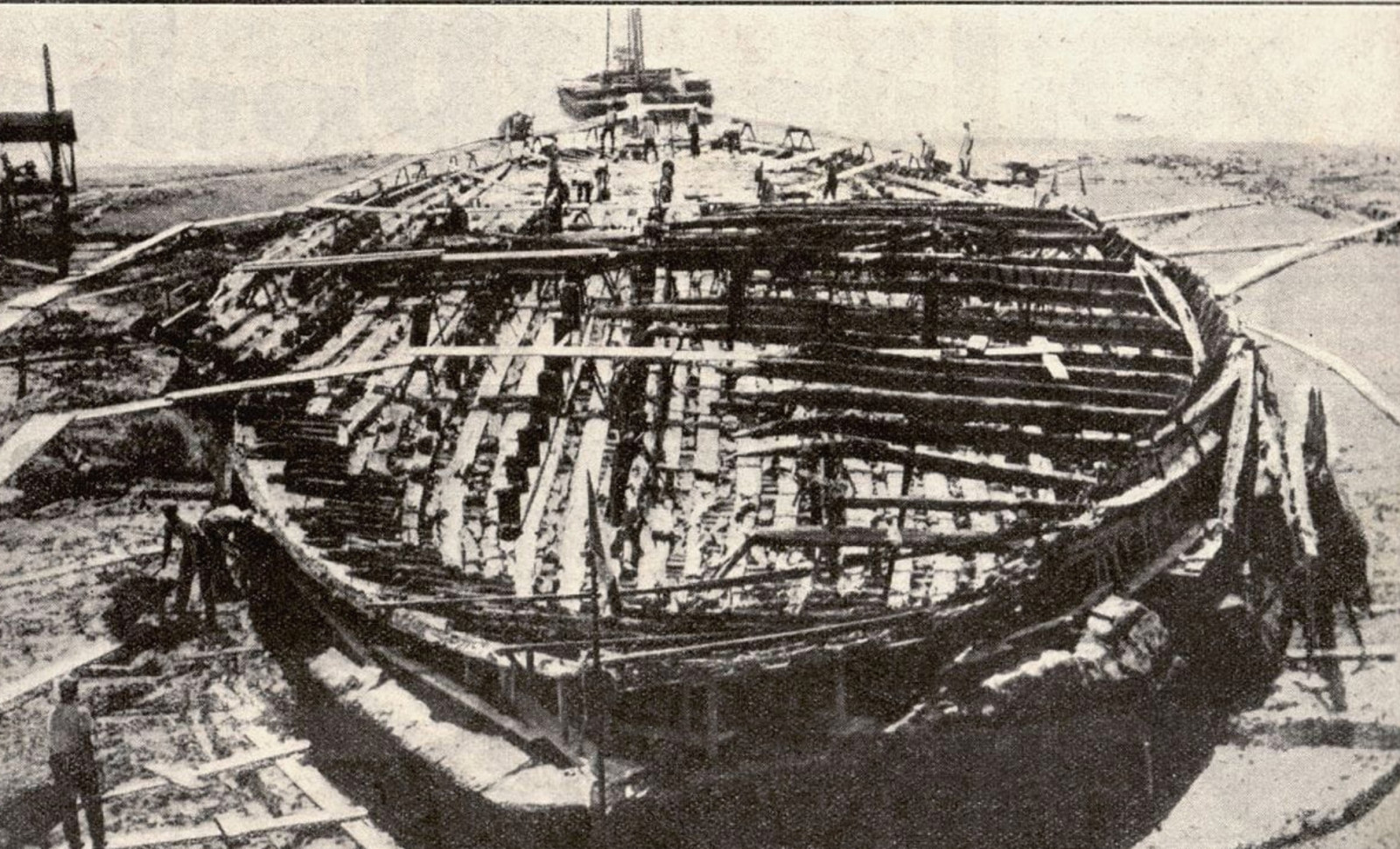
To ensure durability in the lake’s freshwater conditions, innovative preservation techniques were uncovered. Ucelli's team documented the application of tarred fabrics beneath layers of lead sheathing secured with copper nails. This careful protection suggested these ships were meant as long-term stationary fixtures rather than transient watercraft.
Opulent Floating Estates
The excavation of the second ship revealed lavish interiors signaling a shift from simple vessels to floating palaces. Rather than plain wooden decks, ornate mosaic floors composed of exquisite green and red porphyry indicated these platforms mirrored elite Roman villas.
A groundbreaking discovery was an advanced plumbing system. Excavators unearthed lead pipes or fistulae, stamped with the name of Emperor Caligula, firmly linking the ships to his reign from 37 to 41 AD.
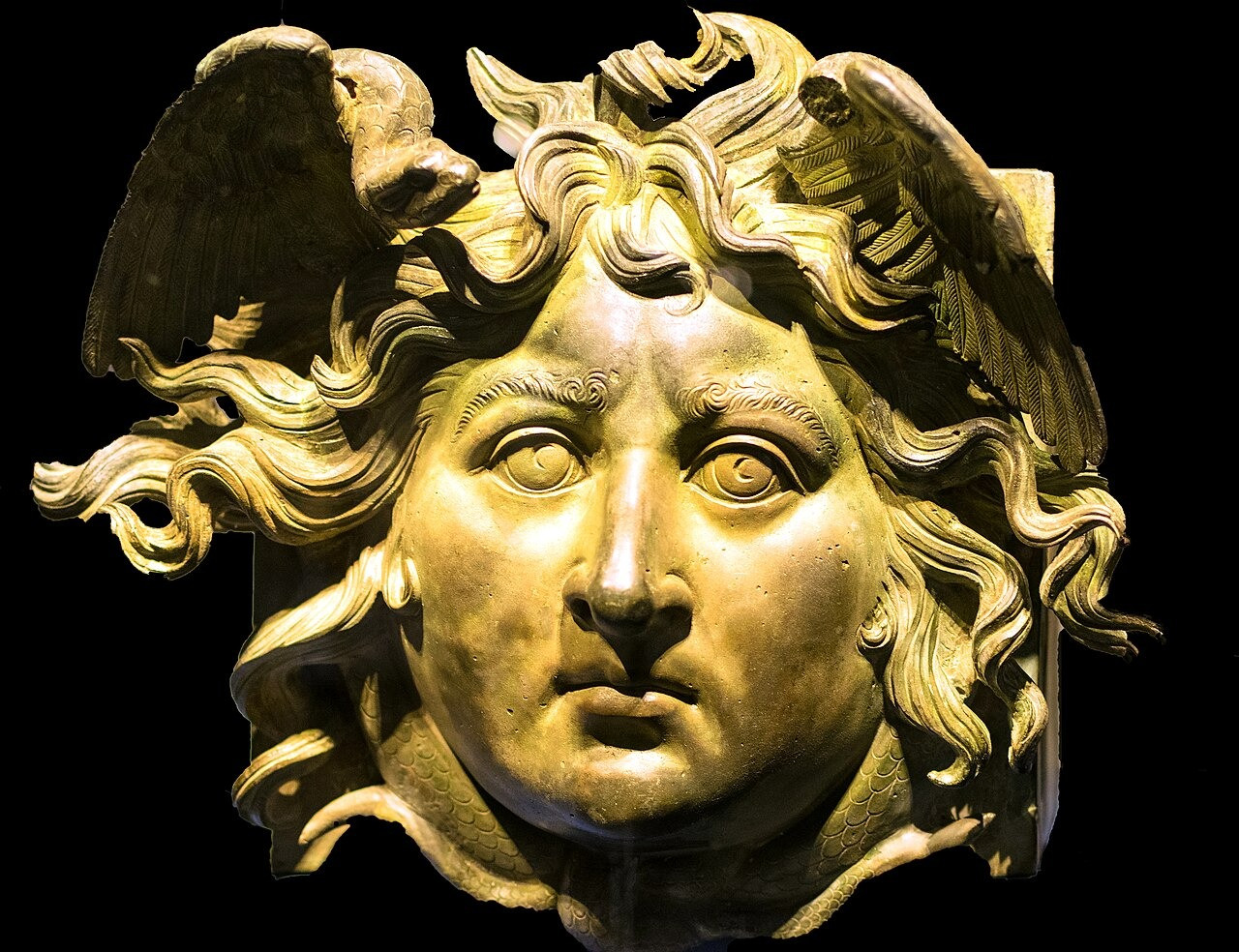
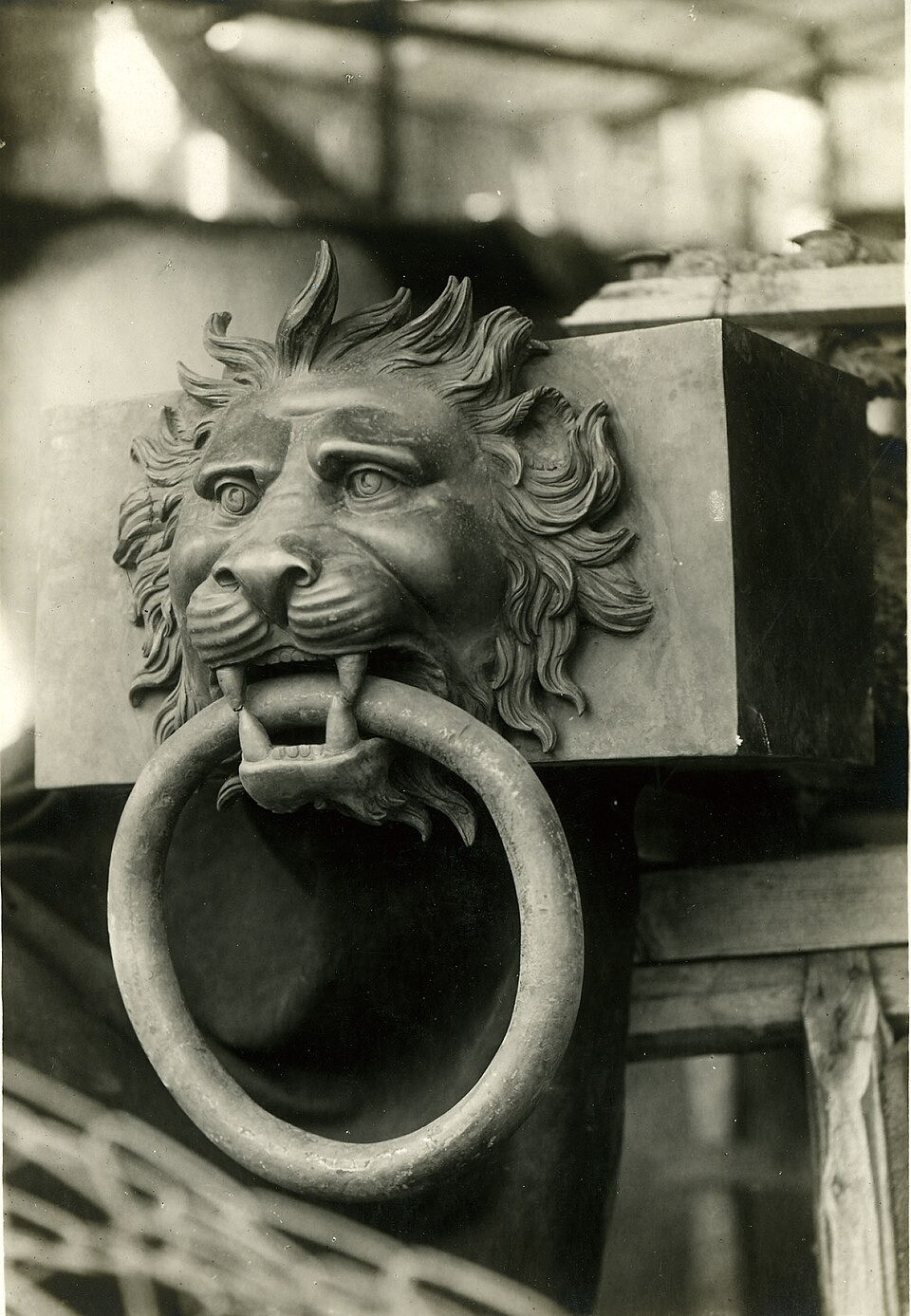
The plumbing system provided not only drainage but also running water and illuminated fountains. Ornamental bronze fixtures, shaped like lions and wolves, served as decorative water spouts. The sheer weight of such elaborate fittings indicates that the designers placed little priority on minimizing mass.
Ingenious Mechanical Innovations
Among the most intriguing finds were mechanical components embedded within the ships’ hulls. Bronze ball bearings arranged in circular tracks were discovered, designed to support rotating platforms capable of smoothly turning entire rooms or statues in preferred directions.
Further research revealed an advanced water management system featuring bucket pumps that continuously removed bilge water. Operated by a chain of containers, these pumps required dedicated maintenance crews to function properly.
The ships’ massive structures weighed over 1,000 tons. To bear such loads, their hulls were reinforced with corrosion-resistant iron fastenings, enabling them to support heavy elements like stone columns, marble walls, and hypocaust heated floors.
Warmed Interiors and Anchoring Systems
Both historical documentation and archaeological evidence point to heated floors achieved via warm air circulating through ceramic pipes beneath the decks. This delicate system demanded special terracotta insulation to shield the wooden vessels from fire hazards.
Immense anchors were deployed to secure the ships. Some measured up to five meters in length, including a particular wooden-core anchor with a weighted lead cross-piece—designed for maximum hold in the lake’s soft volcanic sediment—suggesting the platforms were intended for long-term mooring.
In 1936, authorities established a museum along the lake’s shore to preserve these remarkable vessels. The ships’ hulls rested on steel supports to maintain their shape while drying, transforming the site into a focal point celebrating Rome’s grandeur in maritime engineering for nearly ten years.
The Tragic Destruction of the Museum
The fate of the Lake Nemi Ships took a devastating turn amid World War II. On May 31, 1944, during the turbulent conflict’s advance through central Italy, a blaze erupted inside the museum, destroying both ancient hulls in mere hours.
The cause of the fire remains a matter of debate, with theories implicating retreating troops or accidental Allied artillery. Nevertheless, the detailed plans and photographs created by Guido Ucelli’s team before the destruction remain vital to modern research.
Today, the lakeside museum houses 1:5 scale replicas alongside remaining bronze decorations. These artifacts, together with surviving lead pipes and fistulae, provide the only tangible connections to these monumental floating palaces. The Lake Nemi Ships continue to offer invaluable insight into how Roman engineers adapted luxurious terrestrial amenities to a marine setting.
Measurements and mass estimates recorded by Ucelli’s team persist as standard references in calculating the displacement of ancient ships.
References:
- C.M.C. Green, Roman religion and the cult of Diana at Aricia
- Charles River, Caligulas Nemi Ships. The History of the Roman Emperors Mysterious Luxury Boats
- La Brújula Verde: The discovery of the giant ships that Caligula used on Lake Nem
- Wikipedia: Barcos de Nemi
- Categories:
- News






0 comments
Sign in to Comment