
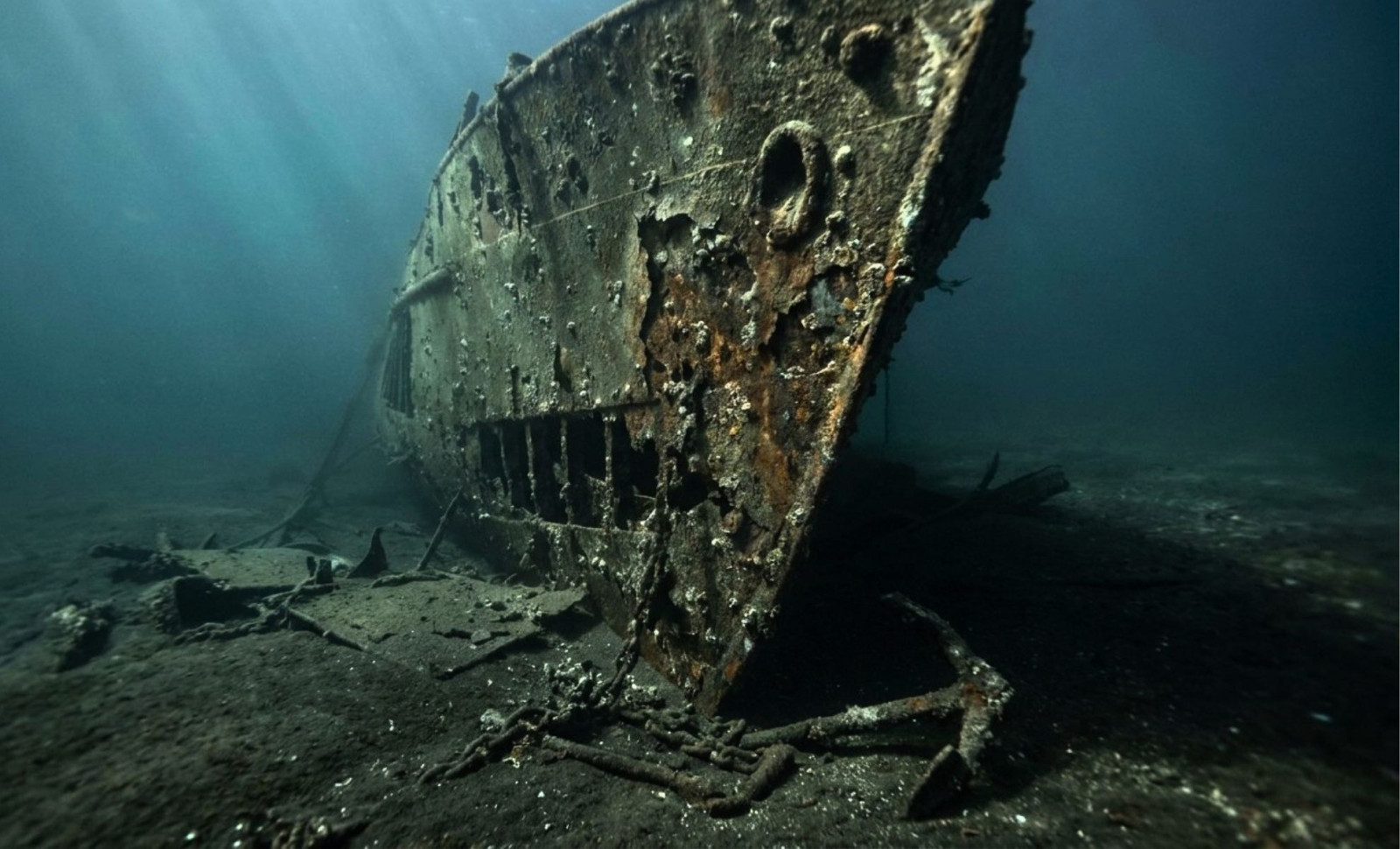
The SS Kielce shipwreck has rested on the floor of the English Channel since 1946, after the cargo vessel struck another ship near Folkestone while carrying bombs and ammunition. Although the crew escaped unharmed, explosives aboard turned a salvage attempt into a massive underwater explosion.
On July 22, 1967, salvage teams detonated an explosive charge to cut through damaged hull plating. The third charge unexpectedly ignited part of the vessel’s ordnance, causing structural damage onshore in Folkestone and generating seismic tremors recorded throughout Europe and North America. Fortunately, no injuries occurred, though the blast scattered debris and created a seabed crater about 47 meters long.
This episode serves as an important lesson on the dangers of underwater unexploded explosives. Over time, aging wrecks with old ammunition can become harder to analyze due to hull deterioration, sediment coverage, and shifting debris. Attempts to disturb these sites may introduce new hazards rather than resolve existing ones.

Bomb-Laden SS Kielce Sank En Route to Germany
Constructed in the U.S. in 1943 and initially named Edgar Wakeman, Kielce was a Type N3 oil-fired steam cargo ship. It was assigned to the Polish government-in-exile during World War II and operated in Atlantic and coastal convoys before continuing postwar transport. Its name is derived from the Polish city of Kielce.
During a 1946 voyage from Southampton to Bremerhaven under U.S. military charter, the ship collided with the steamer Lombardy and sank several miles off Folkestone in approximately 27 meters of water. Lombardy rescued all crew; no fatalities occurred in the incident.
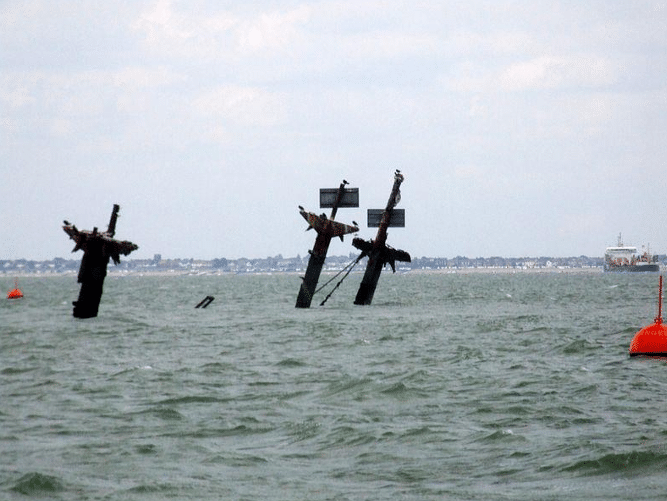
A UK government survey described Kielce’s cargo simply as a “full cargo of bombs and ammunition.” The document also highlighted that the original cargo manifest is missing, preventing full details of quantity and types of explosives aboard.
The wreck site was first noted without positive identification. Later investigations during Channel clearance operations confirmed it contained munitions. The Kent Historic Environment Record lists large bombs among the cargo and acknowledges historical warnings about the wreck’s hazard to shipping.
Detonation During Salvage Attempts in 1967
In 1966, the Folkestone Salvage Company secured a contract to clear the wreck to deepen the shipping channel. This included removing hull debris and dispersing the dangerous explosives inside, which involved reaching compartments storing the munitions.
Two explosive cutting charges were detonated without incident, but on July 22, 1967, the third set off a larger blast within the wreck. The explosion caused cracks in ceilings, broke chimneys, and displaced roof tiles in Folkestone, but official reports indicate there were no injuries.
Initial descriptions suggested a violent marine disturbance, though eyewitnesses close to the wreck noted only moderate water movement. Two salvage workers in a boat about 400 yards (370 meters) from the site observed “a small ripple and some spray,” according to government accounts.
Later analysis estimated the water wave generated was about 0.6 meters high. Most energy from the blast propagated through the seabed, rather than water or air, explaining why seismic instruments detected strong ground vibrations without large waves forming.
Over 25 seismic monitoring stations, some nearly 5,000 miles from Folkestone, recorded the event. It was assigned a magnitude near 4.5 using earthquake measurement methodologies, representing the seismic energy released—not a direct measure of total explosive quantity on board.
Blast Altered Seafloor Landscape
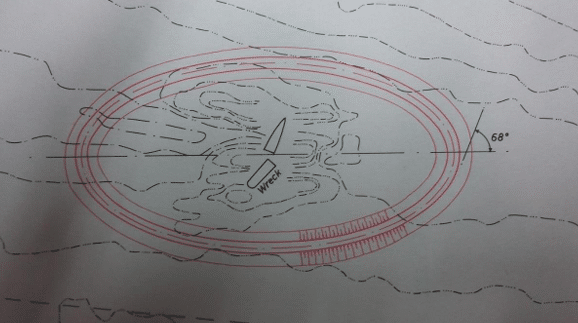
Surveys after the explosion revealed an elliptical crater roughly 47 meters long, 20 meters wide, and 6 meters deep. Raised edges surrounded the depression, which lay on silt at a depth near 27 meters before the blast.
The official investigation compared the crater size with controlled underwater explosion tests, estimating the blast energy was equivalent to about 2,000 tons of TNT. This figure pertains to energy absorbed by the seabed and water, not an exact count of detonated ammunition.
An academic paper from University College London discusses Kielce alongside the SS Richard Montgomery, another munitions-laden wreck near Kent. It highlights widely varying estimates of the Kielce blast, reflecting challenges in modeling underwater detonations when documentation and physical evidence are incomplete.
While Richard Montgomery remains partially intact and well surveyed, Kielce was fragmented by the 1967 blast. Together, they illustrate how charges intended to breach hulls can trigger internal explosives far beyond salvage intentions.
Unexploded Ordnance Remains Hard to Assess
The Kielce explosion scattered wreckage over an area estimated around 120 by 80 meters. A 1977 record noted the debris field was dispersed and measured with uncertainty. Portions of the remains protrude several meters above the usual seabed and lie within or near the impact crater.
The quantity of remaining ammunition is unknown. Some explosives detonated in the 1967 incident, but the lack of a cargo manifest complicates assessing what remains buried. Rusting steel, sediment buildup, and broken parts further hinder exploration without detailed site investigations.
Decades underwater do not guarantee explosives lose their danger. Protective casings corrode, stabilizing materials degrade, and wreck movement or sediment shifts can dislodge items. These processes modify condition but don’t provide a clear timeline for when munitions become safe.
No formal heritage protection covers the site under Kent authorities, but historical data identify it as a marine ammunition hazard. Evidence suggests the Kielce no longer rests intact, yet the scattered pollution and unexploded cargo still present significant challenges to clearance and study of the Channel seabed.
- Categories:
- News









0 comments
Sign in to Comment