
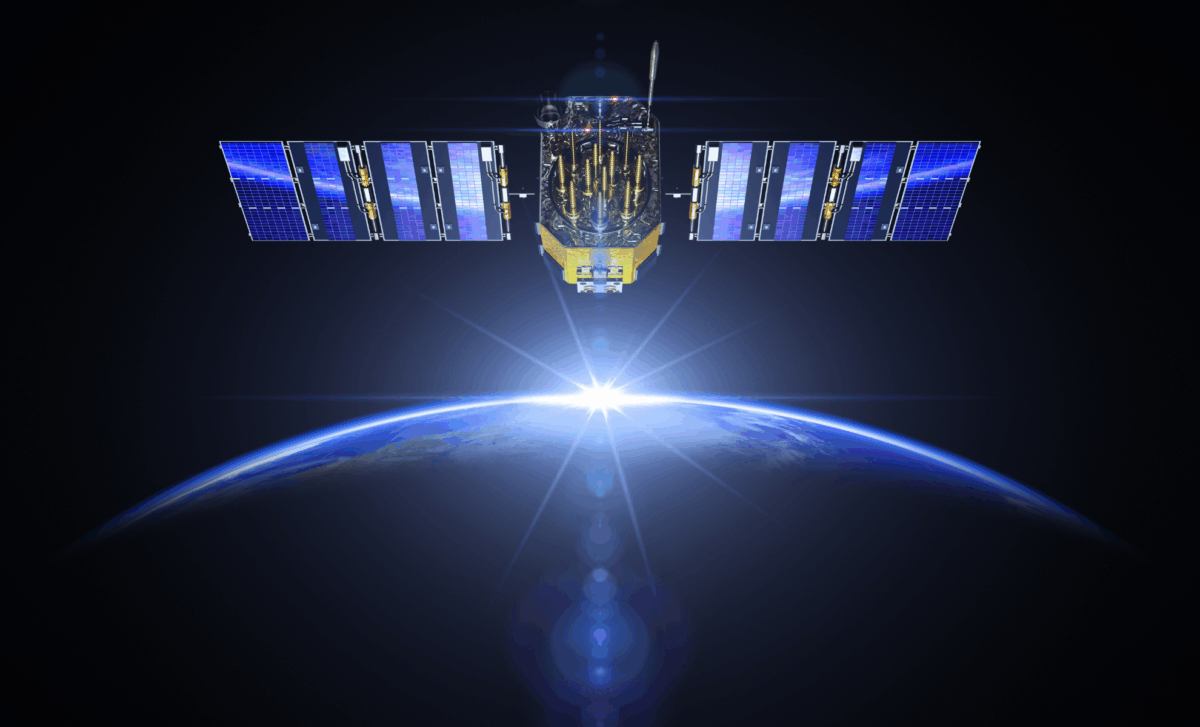
A satellite has achieved a pioneering milestone by autonomously adjusting its orientation in orbit using artificial intelligence for the very first time. This innovative demonstration, conducted by scientists at Julius-Maximilians-Universität Würzburg (JMU) in Germany, signals a transformative shift in satellite control technology. The experiment validated that deep-learning algorithms can now manage complex spatial maneuvers traditionally performed by human operators, suggesting a future where satellites operate completely on their own.
Revolutionizing Satellite Attitude Control with AI
The breakthrough centers on the In-Orbit Demonstrator for Learning Attitude Control (LeLaR) initiative, a project spearheaded by researchers at JMU. Using deep reinforcement learning, the team trained a satellite to independently determine and execute optimal orientation adjustments without pre-set instructions or reliance on commands from Earth. This AI-driven system autonomously computed and performed attitude corrections in real time while in orbit.
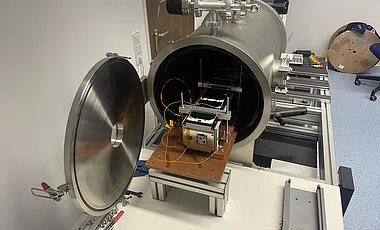
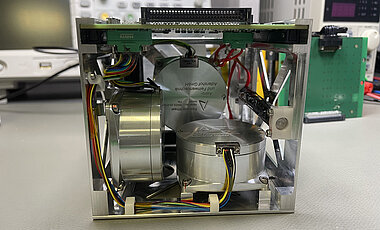
Initially, the AI was refined through extensive training within a sophisticated simulation environment on Earth. Afterwards, the programmed model was uploaded to the InnoCube nanosatellite currently operating in low Earth orbit. When tasked with a desired goal orientation, the satellite independently calculated the best approach and manipulated its internal reaction wheels to achieve the target. This procedure was successfully replicated multiple times as the satellite passed overhead, confirming the AI’s dependability.

“This successful test marks a major step forward in the development of future satellite control systems,” said Tom Baumann, research assistant in aerospace information technology and LeLaR team member at JMU. “It shows that AI can not only perform in simulation but also execute precise, autonomous maneuvers under real conditions.”
Beyond the scientific breakthrough, this achievement illustrates a fundamental change in engineering approaches. The work led by JMU highlights a shift where engineers focus less on direct control and more on designing intelligent systems capable of adapting dynamically, ushering in a new generation of spacecraft autonomy.
From AI Support Tools to Fully Autonomous Spacecraft
The LeLaR project marks a significant advancement in AI’s role within space operations. While previous artificial intelligence applications, such as NASA’s “dynamic targeting” algorithms and the U.S. Naval Research Laboratory’s Autosat system, enhanced mission efficiency by automating auxiliary tasks like camera alignment and signaling, they never assumed direct control of a satellite’s spatial positioning. The Würzburg team’s work pushes AI from a supportive capacity into full operational independence.
Empowering satellites with self-directed orientation decisions could dramatically increase mission flexibility, decreasing dependence on continuous ground intervention and enabling quicker responses to unpredictable events such as collision avoidance or on-board system faults.
Practically, this autonomous capability may allow satellites to adjust for variations in solar radiation or manage equipment failures independently, potentially lowering operational expenses and minimizing risk, especially for missions in deep space.
“It’s a major step towards full autonomy in space,” said Professor Sergio Montenegro, another LeLaR team member at JMU. “We are at the beginning of a new class of satellite control systems: intelligent, adaptive and self-learning.”
The potential applications extend far beyond Earth’s vicinity. Incorporating such AI capabilities into future interplanetary exploration could allow spacecraft to navigate vast cosmic distances with minimal human intervention. From Mars explorers to asteroid missions, intelligent control systems could one day operate entire fleets of autonomous robotic explorers across the solar system.
- Categories:
- News










0 comments
Sign in to Comment