
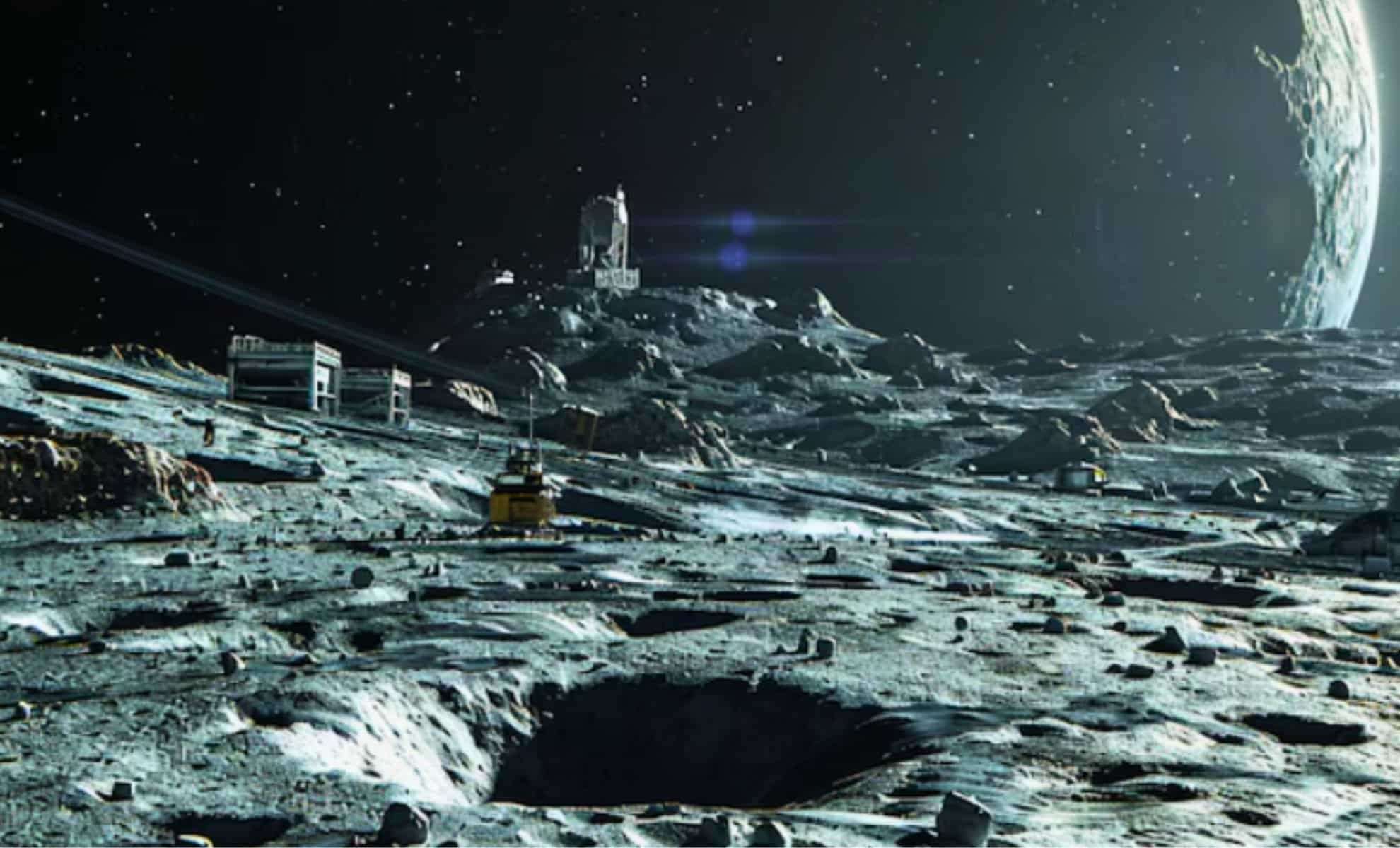
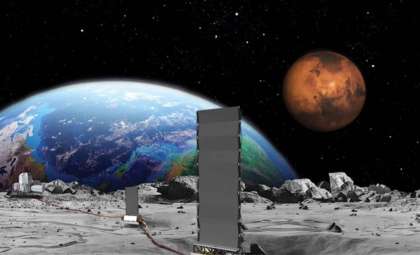
NASA has announced an accelerated plan to deploy a nuclear reactor on the lunar surface by 2030, as confirmed by acting Administrator Sean Duffy in a recent press briefing. This initiative is a crucial part of the Artemis program's goal to establish a permanent U.S. foothold at the Moon’s South Pole, where abundant sunlight, water ice, and strategic importance converge.
“We’re in a lunar race with China,” Duffy explained to the media. “To sustain a moon base, reliable power is essential.” Unlike solar power, which fails during the Moon’s prolonged nights lasting about two weeks, nuclear fission provides a steady, high-capacity energy source to support future habitats, exploration vehicles, communication arrays, and potential extraterrestrial mining projects.
On July 31, Duffy issued a directive to immediately establish a Fission Surface Power Program Executive role to oversee the development process and report directly to NASA’s leadership, signaling a decisive move from research toward deployment.

Accelerating Efforts Amid China-Russia Lunar Collaboration
Since March 2024, China and Russia have unveiled three collaborative initiatives aiming to deploy a lunar nuclear reactor by the mid-2030s. Documents obtained by ABC News reveal U.S. concerns that if these nations establish energy infrastructure first, they might declare exclusive zones on the Moon, restricting other countries’ access to vital areas.
Such a move would threaten the U.S. ability to develop installations near the lunar south pole, regarded as prime territory for extended human missions due to its mix of sunlight and permanently shadowed regions harboring ice deposits.
“Everyone recognizes this area as the prime spot,” Duffy said. “We have both water ice and sunlight there. Our priority is securing it for the United States.”

Pioneering Nuclear Fission Beyond RTGs
NASA has employed radioisotope thermoelectric generators (RTGs) since the 1960s, utilizing the decay of plutonium-238 to power spacecraft like the Voyager, Cassini, and the Curiosity rover. However, this upcoming project will represent the first deployment of a nuclear fission reactor in space.
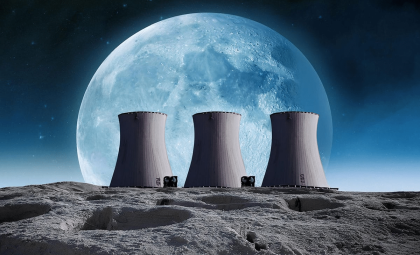
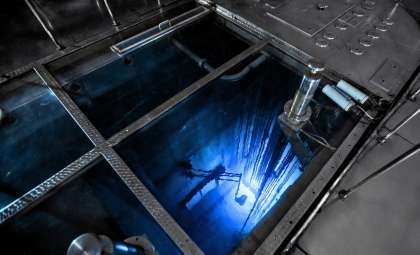
Designed as a Small Modular Reactor (SMR), the unit will be compact yet efficient, targeting a power output of at least 100 kilowatts, sufficient to energize roughly 75 American homes. Its operation will be independent of solar energy, making it ideal for lunar regions that remain in darkness for extended periods.
After investing hundreds of millions in research and development, Duffy emphasized: “We are moving beyond analysis and into action.”
Challenges Ahead: Deployment Timing and Political Factors
Established during the Trump administration, NASA’s Artemis program aims to return astronauts to the Moon by mid-2027, with plans for a sustainable human presence that could pave the way for Mars exploration. Yet, political shifts and budget pressures have led to some uncertainty.
Former President Donald Trump, campaigning for re-election, has criticized Artemis as costly and has advocated for skipping the Moon to focus directly on Mars missions. This perspective aligns with Elon Musk and SpaceX, which supports Mars colonization and is involved as a contractor for Artemis hardware. Nonetheless, emerging geopolitical pressures, especially China’s rapid lunar advancements, may refocus U.S. priorities on the Moon.
NASA has announced plans to issue a public call for proposals soon, inviting private-sector companies to compete for the lunar nuclear reactor project. The schedule is ambitious, and success will hinge on balancing technological readiness with political and financial support in the years to come.
- Categories:
- News







0 comments
Sign in to Comment