
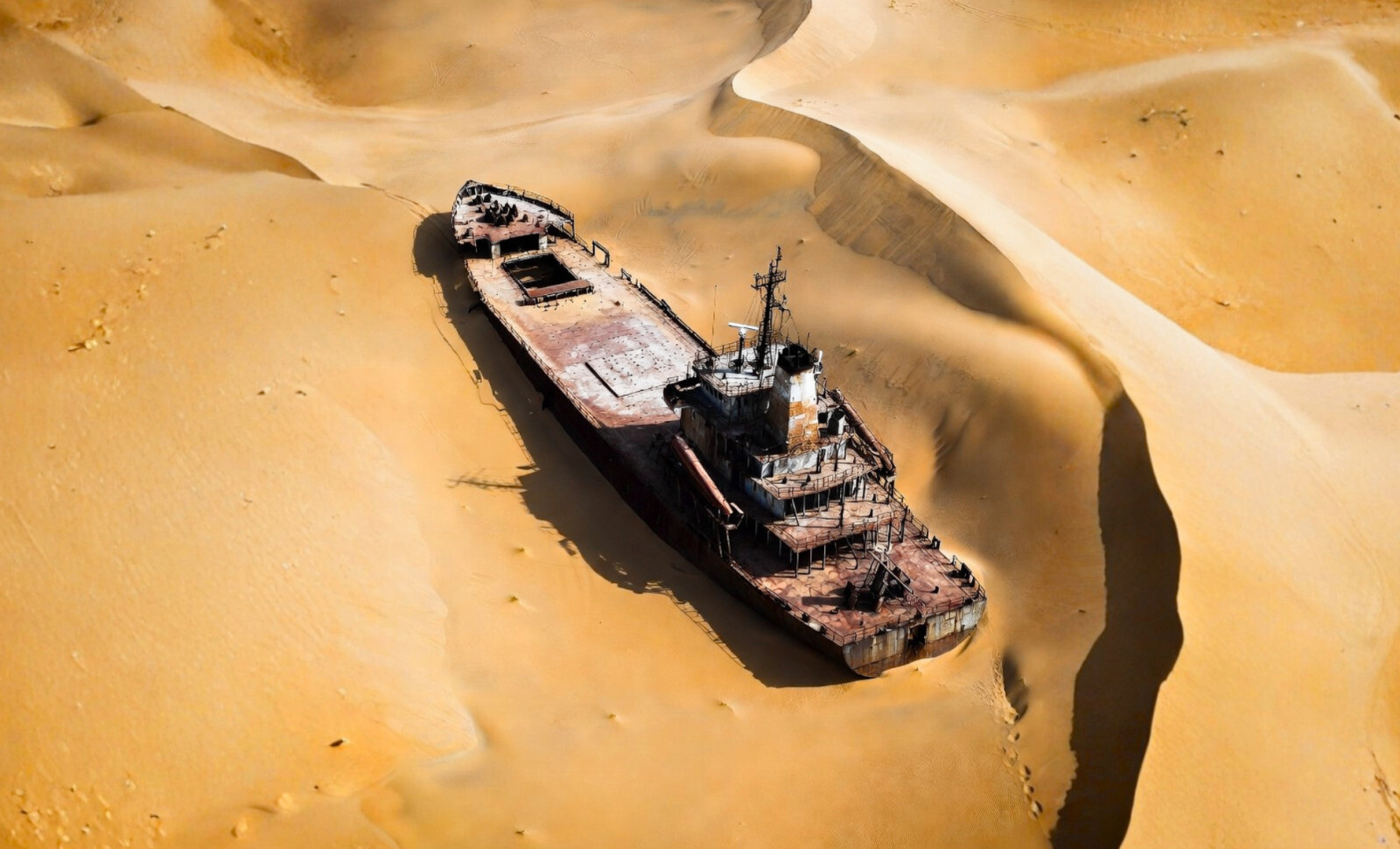
In an unexpected discovery within Namibia's restricted U-60 diamond mining zone, a geologist uncovered what at first seemed an ordinary rounded stone partially buried in desert sand back in April 2008. Upon closer examination, it turned out to be a copper ingot stamped with a trident insignia linked to the prestigious Fugger banking dynasty.
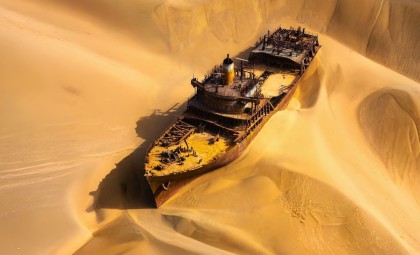
This intriguing find emerged from one of the most unlikely sites for marine archaeology: the Sperrgebiet, a highly regulated diamond area along Namibia's southern coast near the Orange River. The region’s rugged terrain and strict access limitations meant the site had remained largely undisturbed by treasure hunters.
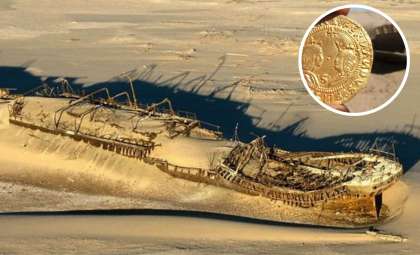
As archaeologists carefully removed layers of sand, a trove of artifacts surfaced: copper ingots, ivory pieces, weaponry, and navigation instruments. Most strikingly, the cargo included over 2,000 gold coins, predominantly Spanish rather than Portuguese currency, revealing this was far more than a typical shipwreck.

Further investigation linked the assemblage to the Bom Jesus, a Portuguese nau that departed Lisbon on March 7, 1533, destined for the Indian Ocean trade routes but vanished without trace.
Portuguese Vessel Carrying an Unexpected Cargo Manifest
The ship’s identity wasn't revealed by a single artifact but through a combination of historical and material clues. Several Portuguese coins featured João III, dating from 1525 to 1538, helping narrow down the timeframe of the wreck.
The cargo itself told a compelling story: rather than returning from Asia laden with spices and exotic goods, the ship was outbound, transporting metal and capital essential for trading expeditions in the East. What puzzled experts, however, was that around 70 percent of the gold coins were Spanish excelentes.
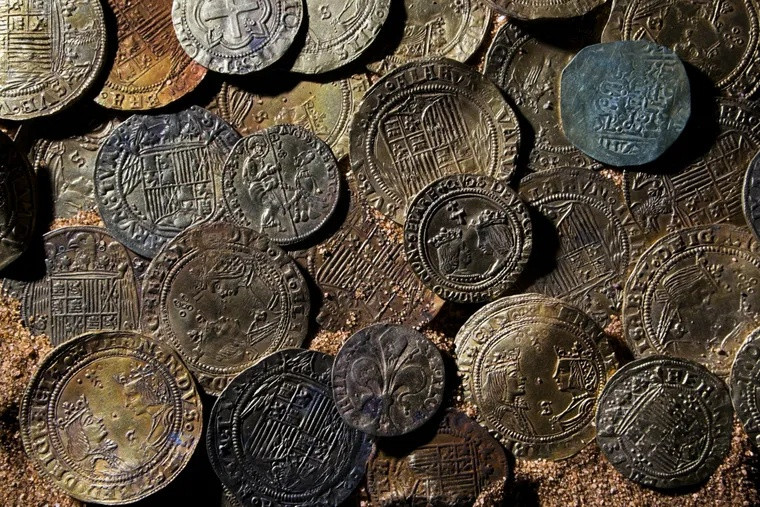
Prompted by this, historian Alexandre Monteiro delved into archival documents, uncovering a royal dispatch dated February 13, 1533, revealing that João III had sent a noble to Seville to secure 20,000 gold crusados from Spanish financiers backing the India fleet. This clarified the presence of Spanish coins as part of the complex international financing behind Portugal's seafaring empire.
The Coast’s Dual Role: Wrecking and Preserving
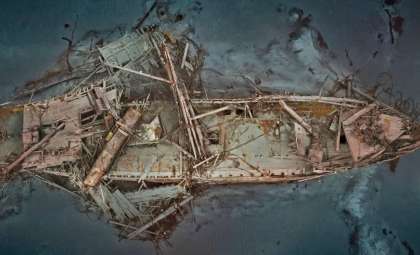
While turbulent coastal weather likely drove the ship onto rocky shores about 150 meters from the edge, fragmenting its stern and scattering its precious cargo into the surf, the significant weight of its copper ingots may have anchored the remains firmly in place.
National Geographic reported archaeologist Bruno Werz’s theory that the sheer mass of copper prevented the ship from being swept away by currents, allowing the shifting sands to entomb the wreck.
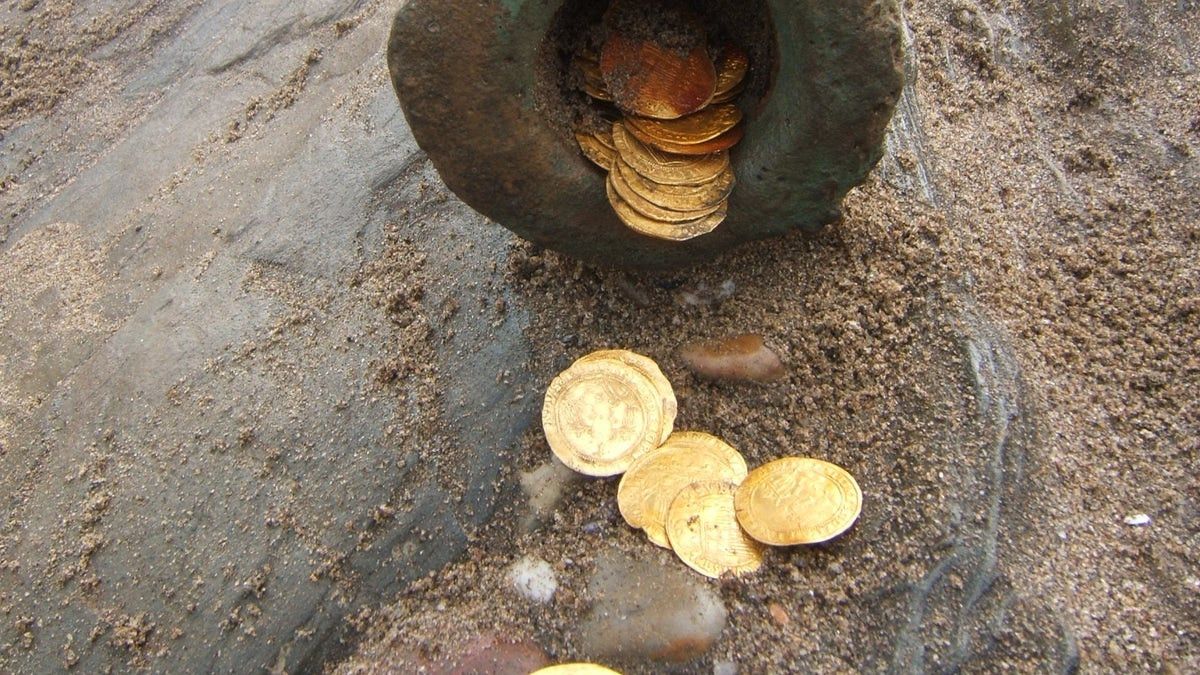
The favorable conditions led to an exceptional state of preservation. More than 22 tons of copper ingots, alongside ivory, weaponry, wood, and maritime tools, were retrieved. In addition, close to 23 kilograms of gold coins surfaced, marking a rare intact cargo from the early 1500s.
The Significance Behind the Name Bom Jesus
Identifying a 16th-century wreck is challenging, especially since Portugal’s maritime archives suffered devastating losses during the 1755 Lisbon earthquake and its aftermath, eradicating vital documentation previously housed in the Casa da Índia.
Researchers instead drew on surviving documentation like the Relações das Armadas and Memória das Armadas. These records mention only one ship lost near Namibia in that era: the Bom Jesus. National Geographic highlighted an illustration labeling "Bom Jesus" alongside "perdido," meaning lost.
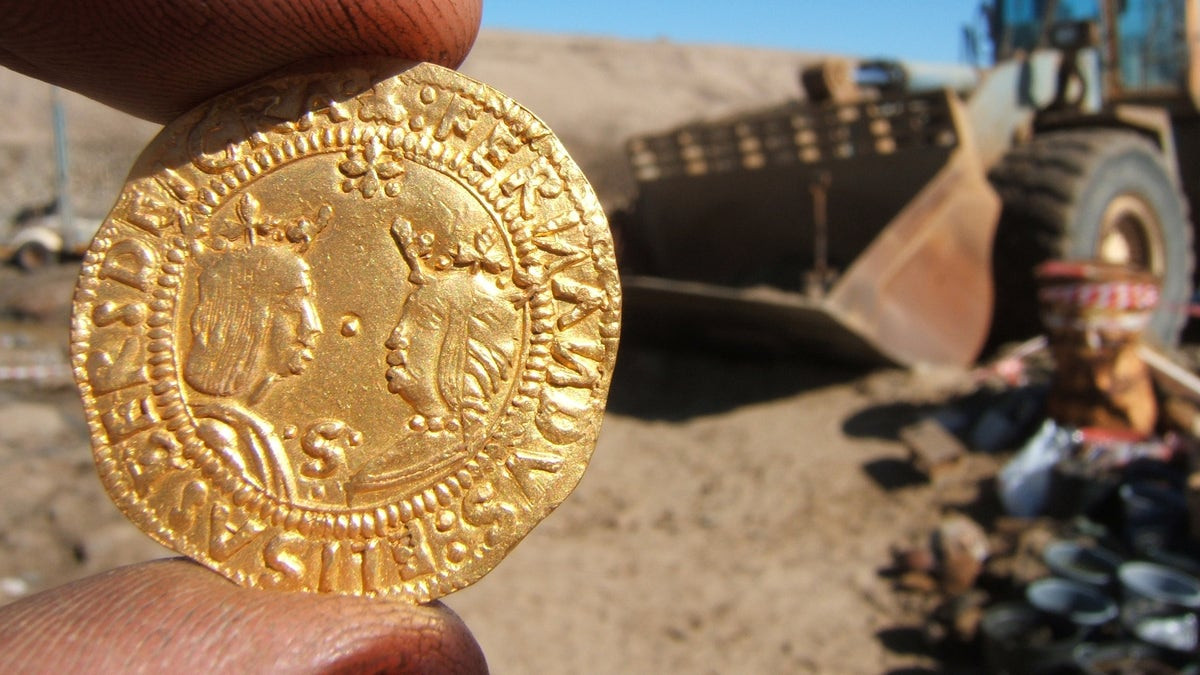
Though not incontrovertible, the convergence of route, timeline, cargo, and coin evidence makes the identification highly credible.
Excavation Amid a Diamond Mining Zone
The discovery’s context was unique. Between 2008 and 2009, archaeologists accessed the site roughly six meters beneath sea level, within a protective embankment blocking Atlantic tides. This was no typical shoreline excavation but a carefully managed dig inside an active diamond concession area.
Mining activity halted temporarily for researchers to explore the site under the oversight of Namdeb, a joint venture between De Beers and the Namibian government. Namdeb’s official information emphasizes their commitment to safeguarding archaeological heritage within their operational zones. In this instance, their security prevented looting, preserving a historical treasure hidden for centuries.
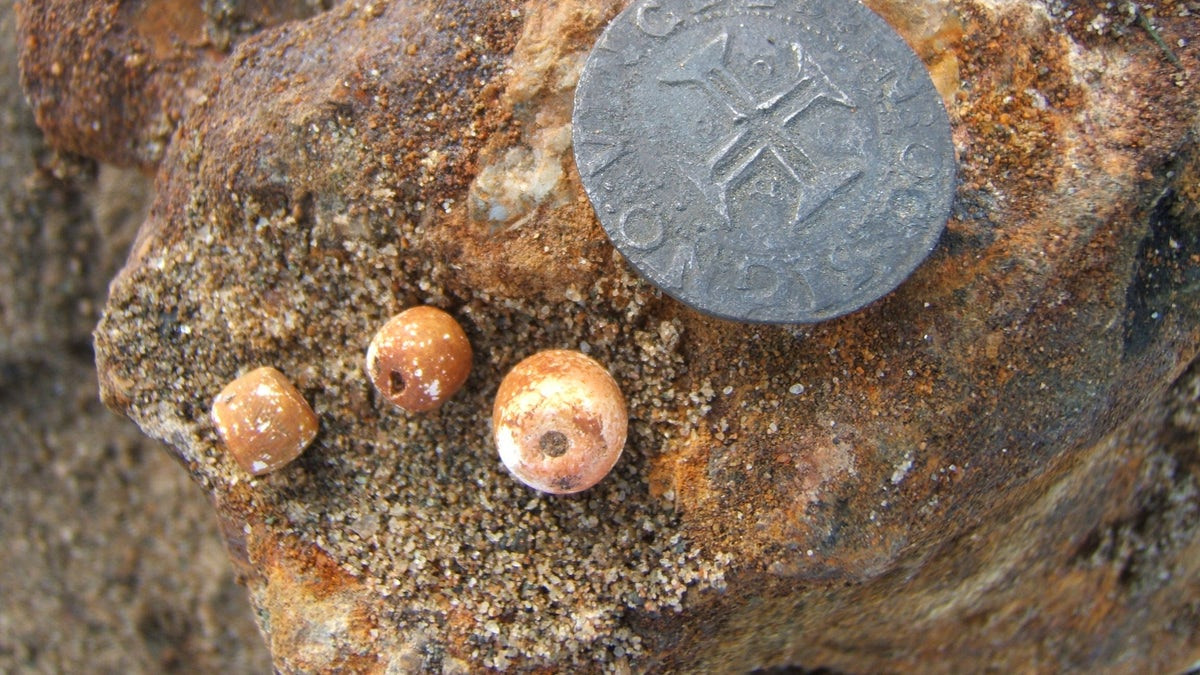
A leading figure was Dr. Dieter Noli, chief archaeologist with the Southern Africa Institute of Maritime Archaeological Research and advisor to Namdeb, who played a vital role in uncovering and studying the shipwreck.
Beyond Priceless Artefacts: Human Stories Preserved
While the gold attracted attention, the discovery of smaller, haunting remnants also touched researchers deeply. Within the wreck’s timber, archaeologists found toe bones inside a shoe—one of the few human remains recovered.
This scarcity of skeletal material suggests that many aboard—estimated by National Geographic at about 300 people, including sailors, soldiers, traders, clergy, aristocrats, and enslaved individuals—might have survived the crash and escaped ashore. The nearby Orange River would have offered fresh water, though their ultimate fate remains unknown.
Protected under UNESCO’s 2001 convention, the site qualifies as underwater cultural heritage, preserving ships, cargo, artifacts, and remains submerged for over a century. Yet its value goes beyond legal terms, offering a rare window into a vital 1533 voyage and the interconnected trading networks of Europe’s ocean empires.
- Categories:
- News




0 comments
Sign in to Comment