
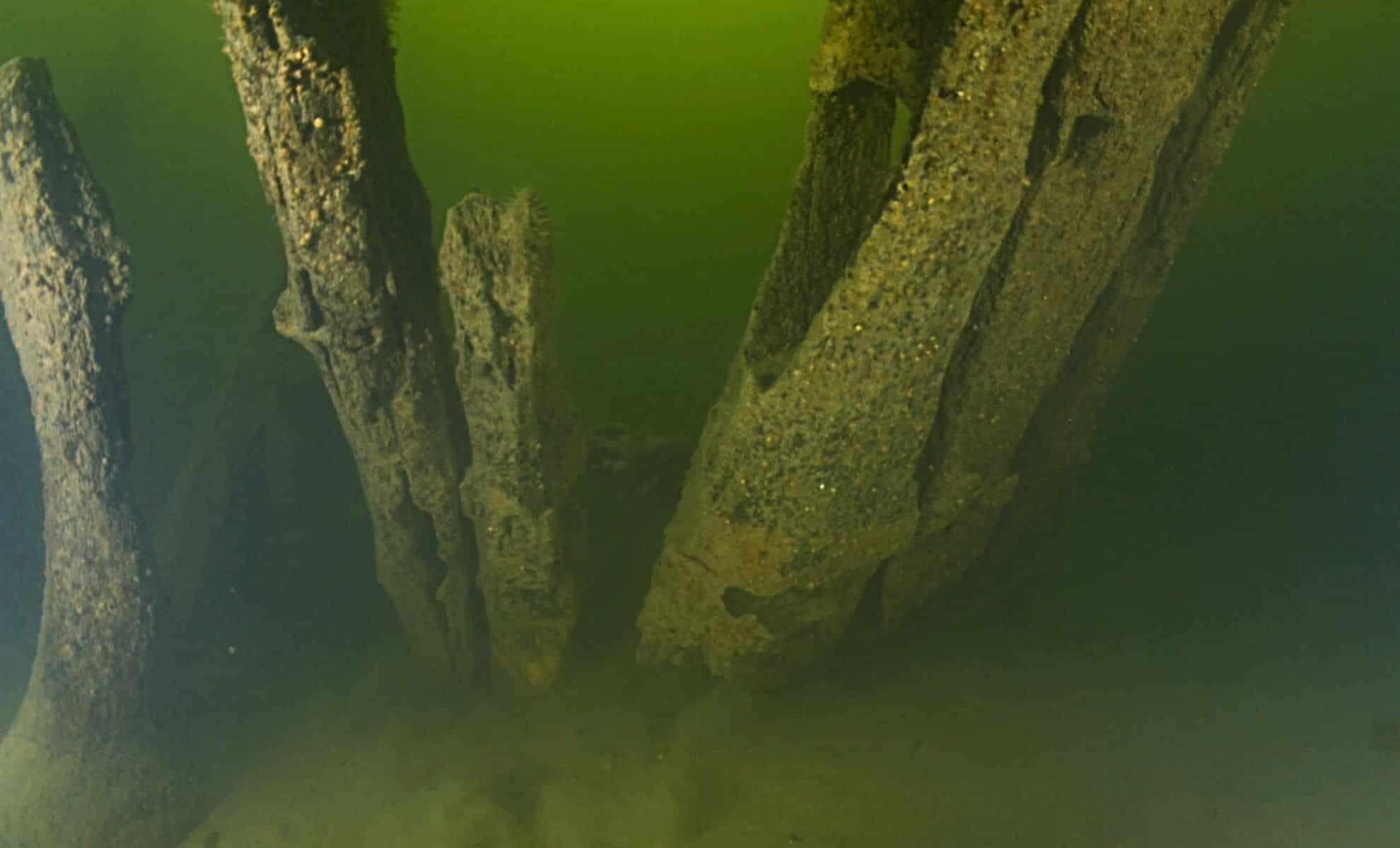
A recently studied shipwreck off Sweden’s coast has been re-identified after years of mistaken assumptions.
Once labeled as a Viking ship, the wreck—now named Vrak 5—has been dated by marine archaeologists to the 15th century, making it one of Scandinavia’s oldest surviving vessels built with the carvel planking technique.
The discovery was announced by experts at Vrak – the Museum of Wrecks in Stockholm.

Not a Vessel of the Viking Era
Located in the Landfjärden bay, roughly 30 kilometers south of Stockholm, this shipwreck is among five known wrecks that have been believed since the 1800s to originate from the Viking Age (circa 793–1066 AD).
However, careful research led by Håkan Altrock, curator and project leader at Vrak, revealed that four of these wrecks actually date to the 1600s and 1700s, while Vrak 5 is older, with origins traced to before 1480 and possibly as far back as the 1460s.
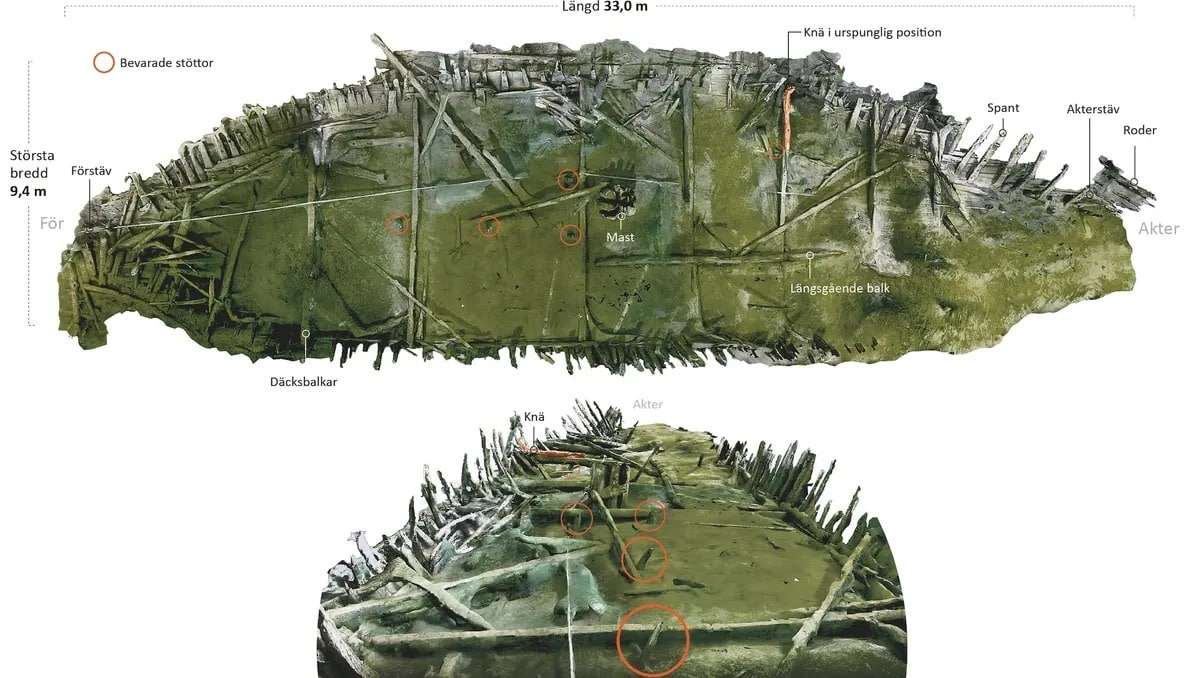
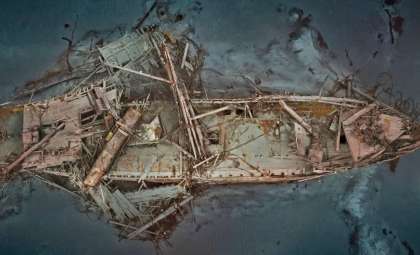
The ship remains impressive in preservation, stretching around 35 meters long and 10 meters wide.
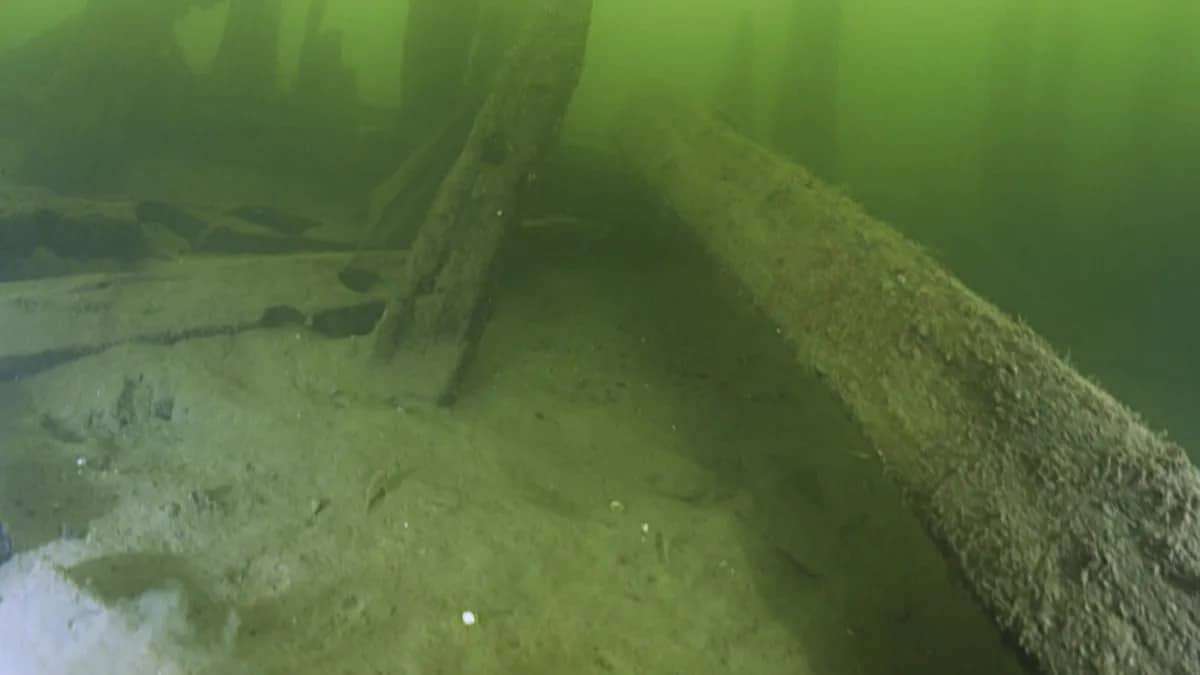
Remarkably, its sternpost and rudder still stand upright, and much of the vessel’s framework is visible rising from the seafloor.
Distinctive Carvel Shipbuilding
Vrak 5 stands apart due to its construction style. Unlike the clinker-built vessels typical of the Viking era, which had overlapping planks providing flexibility and light weight, this ship was built using the carvel technique.
This method, which appeared in the Mediterranean region around the 7th century AD, involves fitting smooth, flush planks edge-to-edge, enabling a stronger hull supported by robust internal framing.
Altrock noted the significance of this design, marking a shift in Scandinavian maritime craftsmanship especially as naval tactics evolved.
“It was an important consideration when ships started carrying cannons in the 15th century,” he noted.
Traditional clinker-built ships could not withstand the weight of artillery, making carvel construction crucial for the new era of warships.
Regional Timber Analysis and Digital Mapping
Examining the ship’s wood through dendrochronology, which studies tree-ring sequences, scientists traced the timber to southern Sweden, particularly the Kalmar and Blekinge areas.
This supports the conclusion that the ship was built locally instead of being imported. To study the wreck in situ with minimal disturbance, the team employed photogrammetry to create a precise 3D model.
This technique compiles multiple photographs into a detailed three-dimensional digital reconstruction, facilitating close analysis while preserving the site — and the interactive model is available online.
Insights into a Naval Transition Period
Altrock describes Vrak 5 as “a fascinating link between medieval and modern shipbuilding.”
The ship’s innovative design embodies a critical transitional phase when northern European naval engineering shifted from Viking traditions toward accommodating new maritime needs, including artillery placement on ships.
Moving forward, Vrak museum aims to seek funding for a comprehensive excavation of Vrak 5, which promises to deepen understanding of this crucial historical evolution in Scandinavian seafaring.
- Categories:
- News









0 comments
Sign in to Comment