
Researchers led by astrophysicist Ray Norris have highlighted a rediscovered Aboriginal site in southern Australia that could predate Stonehenge in terms of its astronomical significance. This was reported by the BBC World Service alongside the documentary Reach for the Stars – Aboriginal Astronomy.
The Intersection of Tradition and Science: Unveiling Wurdi Youang
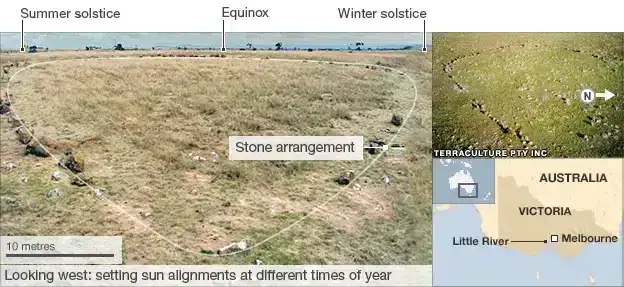
Situated in the grasslands of Victoria, the Wurdi Youang site features an elliptical stone arrangement stretching almost fifty meters across, made up of more than one hundred basalt rocks.
Although the formation was documented by archaeologists in 1977 and has been familiar to European settlers for over two hundred years, its full meaning has only recently started to come to light.
It is thought to have been created by the Wadda Wurrung people, whose cultural heritage was largely suppressed during the early 1900s.

Tracking The Sun’s Path Through Stone Alignments
A collaborative team of archaeologists, astronomers, and Aboriginal experts utilized NASA technology to precisely map the positions of the stones. Their analysis indicates the stone placements are deliberately aligned.
The waist-high stones positioned at the narrow end of the ellipse align exactly with the horizon points where the sun sets on the summer and winter solstices. Additionally, the central axis aligns with the sunset on the equinox, when day and night durations are equal.
Unlike Stonehenge, which uses gaps between upright stones to mark solstices, this Aboriginal structure relies on the natural incline and placement of grounded rocks. Professor Norris describes the probability of this occurring by chance as “extremely low.”
The Role of Songlines in Ancient Astronomy
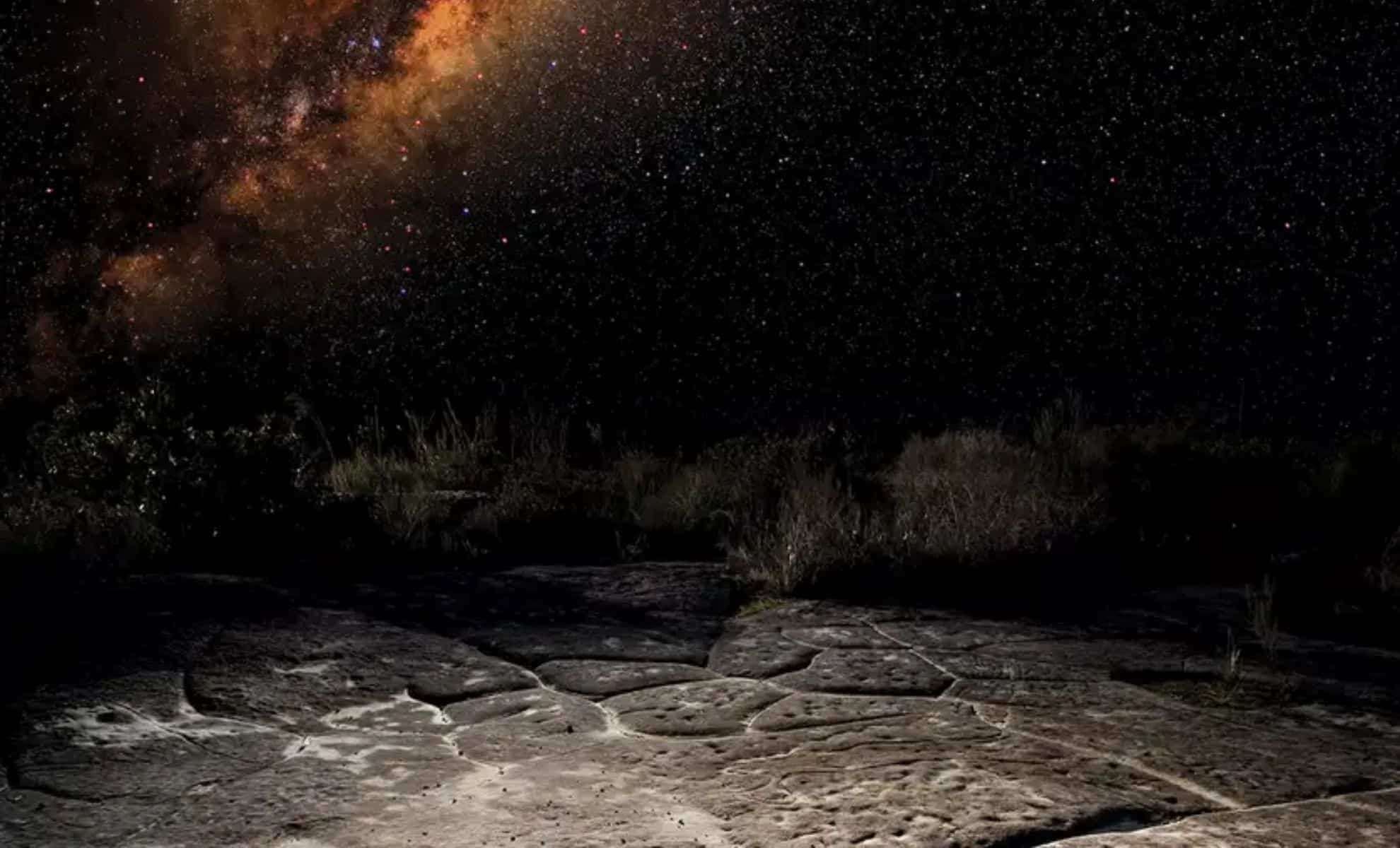
Various Aboriginal communities across Australia share stories centered on a celestial figure known as the Emu in the Sky. Unlike Western constellations, this figure is outlined by the dark patches in the Milky Way. Its visibility during April and May traditionally indicated the season for collecting emu eggs, directly linking narrative, ecological knowledge, and seasonal timing.
In a remarkable example, a rock engraving found in Kuring-Gai Chase National Park near Sydney mirrors the emu’s shape as it appears in the southern autumn sky. When this sky figure is overhead, the carved outline on the ground closely resembles its celestial counterpart.
Indigenous Narratives Explaining Eclipses and Cosmic Phenomena
The depth of Aboriginal astronomical knowledge extends beyond the stars. The Walpiri people of the Northern Territory preserve an oral tradition that depicts a solar eclipse as a union between the sun-woman and the moon-man, symbolizing an eclipse when the moon obscures the sun.
Professor Norris highlights that this narrative reflects a profound understanding, predating Western scientific explanations by centuries—a conceptual breakthrough he terms a "giant intellectual leap."
Estimating the Age of Wurdi Youang
Though precise dating of Wurdi Youang remains incomplete, estimates vary greatly, with some suggesting it could be as old as 20,000 years while others suggest more recent origins around 200 years. The deep embedding of the stones implies considerable antiquity, but final dating will depend on testing soil samples beneath the rocks for past sunlight exposure.
Setting aside exact ages, Professor Norris believes the site’s greatest importance lies in what it reveals intellectually: “What really fascinates me is whether Aboriginal people were engaged in true astronomy well before British colonization. That insight reveals a tremendous cultural depth.”
- Categories:
- Science











0 comments
Sign in to Comment