
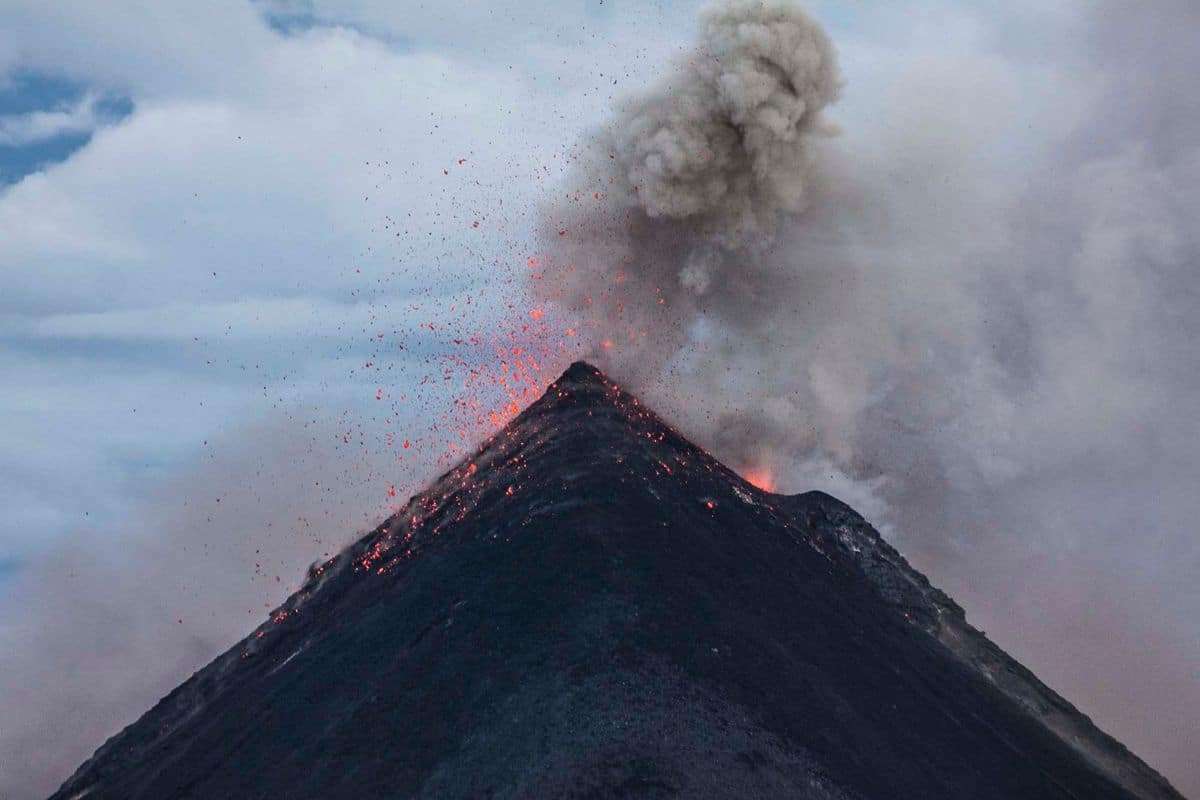
Recent research has precisely dated the enormous Los Chocoyos supereruption to approximately 79,500 years ago, demonstrating that its climatic impact was significantly shorter-lived than previous studies suggested.
Analysis of ice cores retrieved from Greenland and Antarctica indicates that despite the enormous ash emissions from this eruption, Earth's environment rebounded within decades instead of enduring an extended period of cooling.
A Cataclysmic Eruption That Transformed Central America
The Los Chocoyos supereruption, one of the most intense volcanic events recorded, originated from the present-day Atitlán volcanic complex in Guatemala. It released a vast amount of ash and volcanic aerosols that influenced ecosystems and the global climate. Earlier hypotheses proposed that this event may have led to a sustained phase of global cooling.

In an effort to clarify its timing and environmental effects, a multidisciplinary team of geoscientists, hydrologists, chemists, and physicists examined polar ice core samples.
These cores preserve particulate evidence from historical volcanic episodes, enabling researchers to reconstruct the eruption's chronology. Their work confirmed the 79,500-year-old date for Los Chocoyos, refining prior estimates and shedding light on its environmental aftermath.
Brief Climate Impact, Rapid Recovery
Although the eruption propelled huge quantities of ash into the skies, resulting in sunlight attenuation and global cooling, findings show that the planet’s climate stabilized much sooner than anticipated. Instead of a prolonged cooling phase lasting thousands of years, the temperature dropped but rebounded within a few decades.
This revelation challenges the belief that every supereruption inevitably triggers enduring ice ages. Despite immediate and severe consequences, Earth’s climate demonstrated a capacity for swift recovery that exceeds earlier expectations.
Implications for Future Volcanic Risks
These new insights are significant for assessing volcanic hazards moving forward. While concerns remain that a contemporary supereruption could severely disrupt food supplies and climate conditions, this research points to a more robust atmosphere than once believed.
However, rapid climatic rebound does not lessen the immediate devastation caused by such an eruption. The Los Chocoyos event deposited thick ash layers, drastically altering terrains and habitats.
A similar eruption today would pose serious threats to global agriculture, transportation, and infrastructure.
Advancing Understanding of Supereruptions
Researchers plan to extend their investigations to other ancient supereruptions using ice core data, sediment analysis, and volcanic ash studies to identify consistent trends. Their goal is to improve models predicting how such events might affect Earth’s climate system and overall habitability.
These findings could lead to adjustments in volcanic hazard assessments, indicating that not all supereruptions result in long-term climate cooling.
Supereruptions remain among nature's most dramatic phenomena, but this study highlights Earth’s impressive ability to recover more swiftly from volcanic catastrophes than previously recognized.
- Categories:
- Science







0 comments
Sign in to Comment