
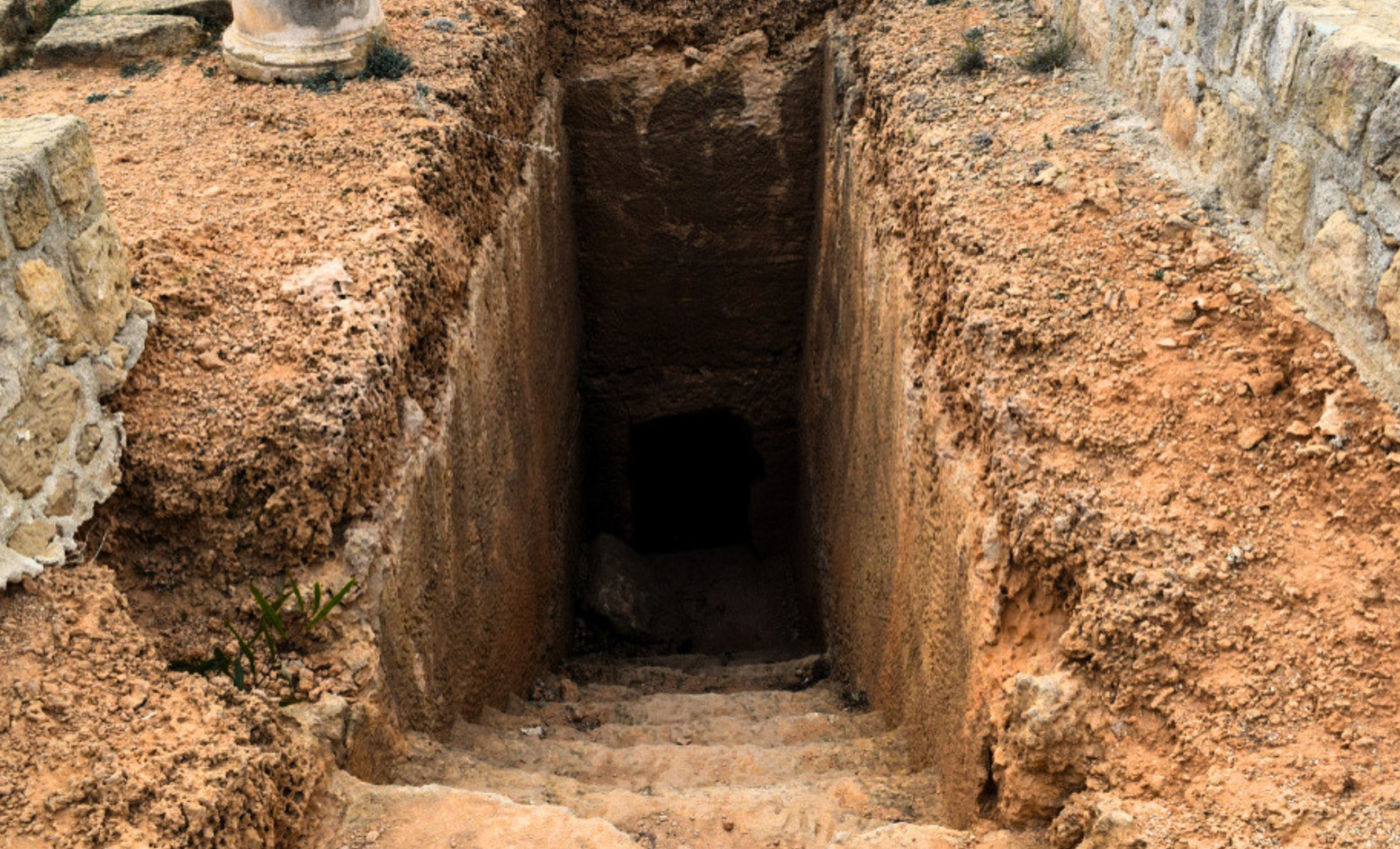
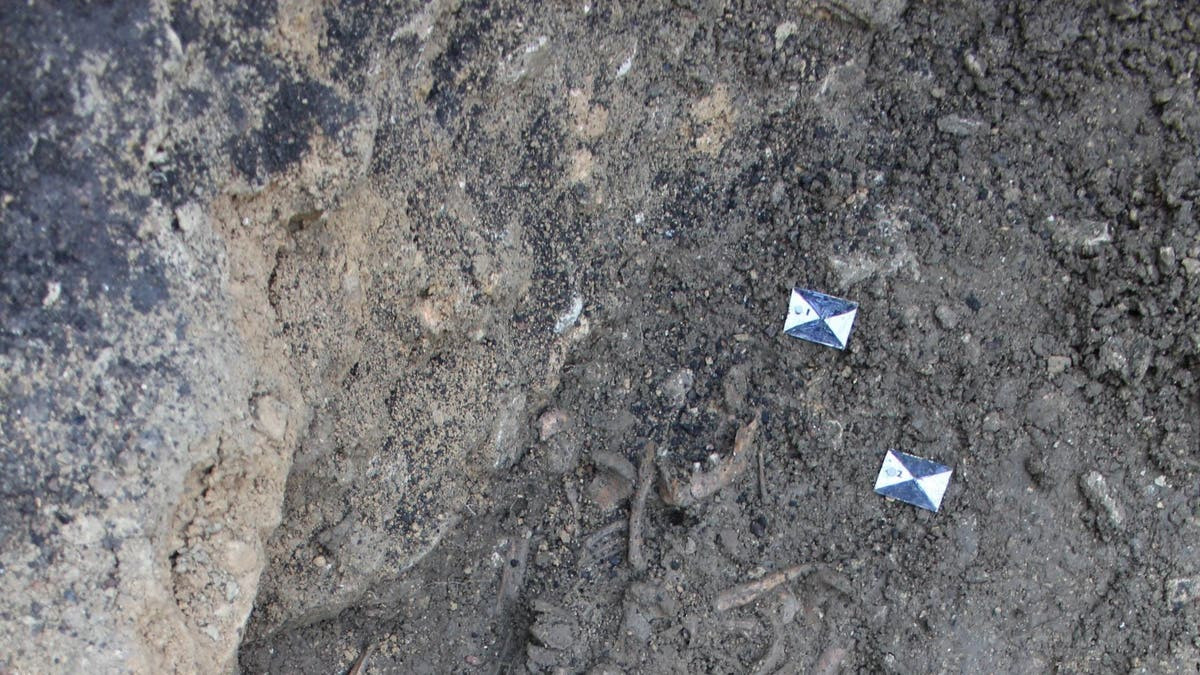
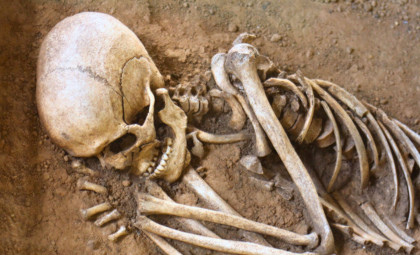
Unbeknownst to many visitors at The Old Bell Hotel in Malmesbury, the garden beneath their feet concealed remains dating back over a millennium. Archaeologists, undertaking investigations prior to new construction, uncovered 24 complete skeletons alongside scattered bones belonging to other individuals, with these remains estimated to be from 670 to 940 AD.
The discovered skeletons represent men, women, and children. Although the hotel opened its doors in 1220 as accommodations for visitors to the nearby abbey’s library, these graves predate the establishment by about 500 years. This remarkable find offers Malmesbury its inaugural archaeological evidence for a historical period previously documented solely through written records.
The excavation began as a standard archaeological survey during preparatory work for a construction project on historically sensitive land. What emerged was a previously undisturbed ancient burial site that had remained intact for well over a thousand years.

Paolo Guarino, Assistant Publications Manager at Cotswold Archaeology and a local resident, explained that although historical texts referenced a monastery existing on this land during that era, physical proof was lacking until now. “We had documentation indicating a monastery was founded in this timeframe, but this excavation has provided the first tangible proof,” Guarino remarked. He described the remains as “the earliest verified signs of 7th to 9th century occupancy in Malmesbury.”
Unexpected Burial Location Near the Abbey
The Anglo-Saxon graves appeared in an unanticipated area. While Malmesbury Abbey’s known medieval cemetery lies south of the structure, these burials were discovered west of the site’s former cloisters, surprising the excavation team. A Cotswold Archaeology representative told Fox News Digital that no Saxon-era remains had been previously identified in Malmesbury before this dig.
The spokesperson also noted that medieval builders of The Old Bell likely encountered human bones during foundation excavation but proceeded regardless. “Historical evidence often shows that medieval construction involved building walls directly atop graves, occasionally disturbing burials,” they explained. “It is probable that builders came across skeletal remains but continued their work without interruption.”
The hotel itself bears physical traces from each century of its existence. The bar’s stone fireplace, dating to the hotel’s opening in 1220, rests on foundations unknowingly constructed over this much older burial ground.
More Than Just Monastic Burials
Typically, monasteries inter monks in their burial grounds. However, this site contained the remains of men, women, and children, altering historians’ perspective on the site's relationship with the abbey.
Tony McAleavy, a historian specializing in Malmesbury Abbey and a local resident, told the BBC of his enthusiasm for the findings. “This isn’t just a collection of monastic graves,” McAleavy stated. “We are seeing evidence of the wider community who supported the monks.”
McAleavy highlighted that these skeletal remains provide concrete support to the abbey’s documented prominence during its peak, when it was a leading center of learning in Western Europe. The origins trace back to an Irish monk who established a teaching hermitage around 637 AD, later evolving into a Benedictine monastery by 676 AD. The abbey’s importance was further cemented when King Athelstan, England's first monarch to rule all territories, was interred there in 941 AD.
An Archaeological Revelation During Malmesbury’s Anniversary Celebrations
The announcement of the excavation coincided with Malmesbury’s Athelstan 1100 festivities, marking 1,100 years since King Athelstan’s coronation. This timely discovery enriched the ongoing celebrations by deepening public engagement with the town’s Anglo-Saxon heritage.
Following the initial dig, Cotswold Archaeology launched the Big Athelstan Dig, a community-driven archaeology initiative involving residents in investigating 15 test pits across Malmesbury. What started as a single hotel excavation blossomed into a broader project to unearth the town’s early medieval past.

Kim and Whit Hanks, proprietors of The Old Bell, described the find as “a rare glimpse into the lives of Middle Saxon-era inhabitants of Malmesbury.” Through Cotswold Archaeology, they said, “We feel privileged to safeguard this slice of local heritage. It is fitting that some of the earliest remains surfaced near the abbey, on the grounds of England’s oldest hotel.”
- Categories:
- News






0 comments
Sign in to Comment