
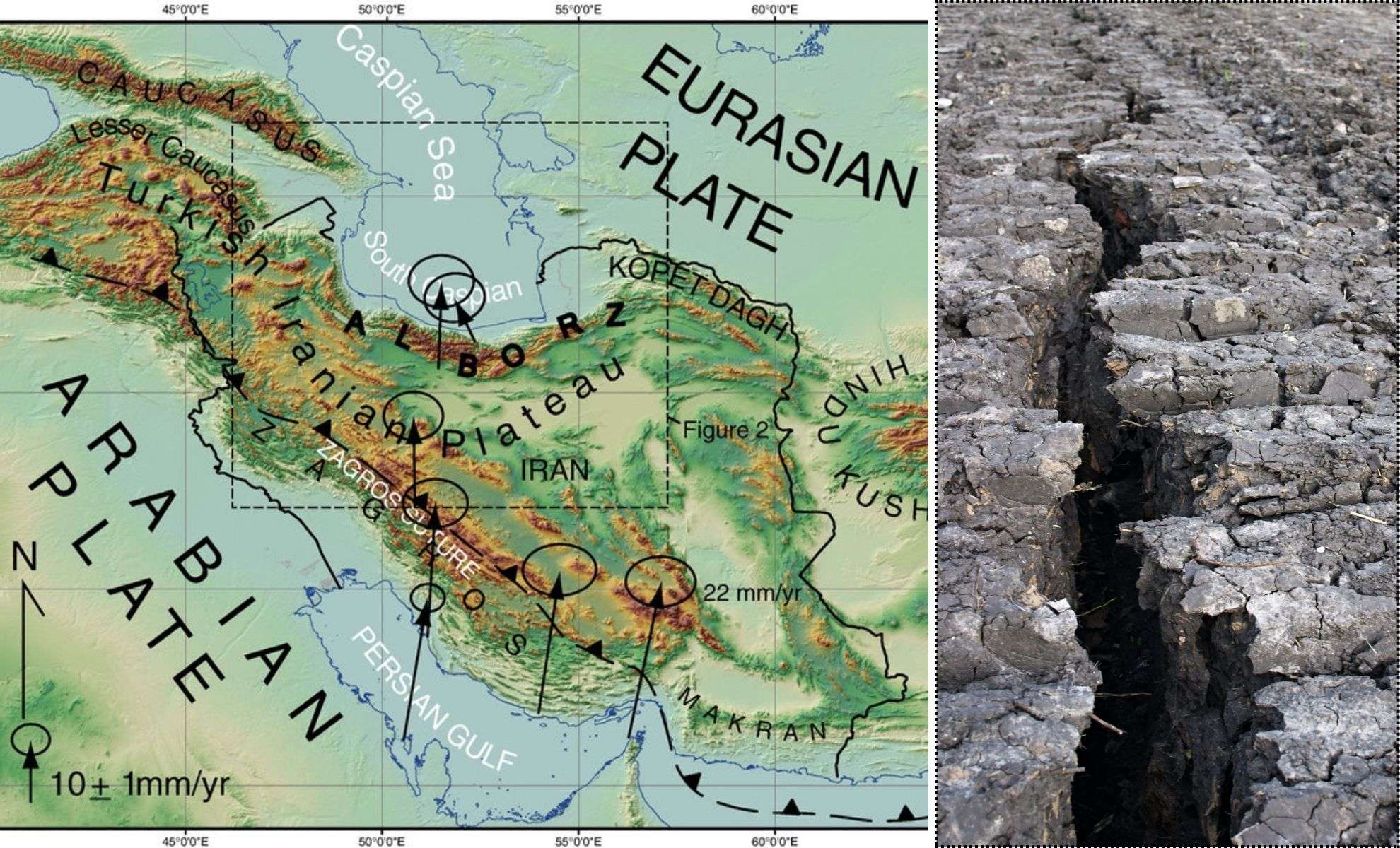
Far beneath the Earth's crust, a significant geological transformation is underway. Researchers from the University of Göttingen have identified that the Neotethys oceanic plate, which once lay between the Arabian and Eurasian landmasses, is fracturing horizontally. This phenomenon is occurring beneath the Zagros Mountains, an extensive range spanning southeastern Turkey, northwestern Iran, and northern Iraq’s Kurdistan region.
For countless millennia, the Arabian and Eurasian tectonic plates have been converging, driving the oceanic plate downward into the mantle. This subduction pulls the Earth’s crust downward, forming a substantial basin that has steadily collected sediment over eons. Yet, fresh research indicates that this process is uneven, with segments of the descending oceanic plate breaking off, altering the geological dynamics of the area.
This fragmentation carries important consequences for seismic activity, natural resource distribution, and the region's overall geological equilibrium. Moreover, it offers an exceptional insight into the subterranean tectonic forces that sculpt mountain ranges, basins, and contribute to earthquake events on the surface.

The Arabian-Eurasian Plate Collision and Its Effects on Regional Geology
The ongoing collision between the Arabian and Eurasian plates has persisted for tens of millions of years, uplifting the Zagros Mountains and forming the Mesopotamian plains through sediment accumulation from erosion. While it was long assumed that the weight of the mountains was the primary force contributing to deep regional depressions, new geodynamic simulations reveal the significant role of the subducting Neotethys plate’s downward pull.
Dr. Renas Koshnaw, the principal investigator, notes that sediment volumes in parts of the Zagros exceed what the mountain load alone could account for. This implies that the sinking oceanic plate is actively dragging the crust downward, creating additional accommodation space for sedimentation.
“The substantial sediment thickness in the northwestern Zagros was unexpected given the modest topography there. This suggests that the depression is deeper than the burden from the Zagros Mountains alone could create,” stated Koshnaw.
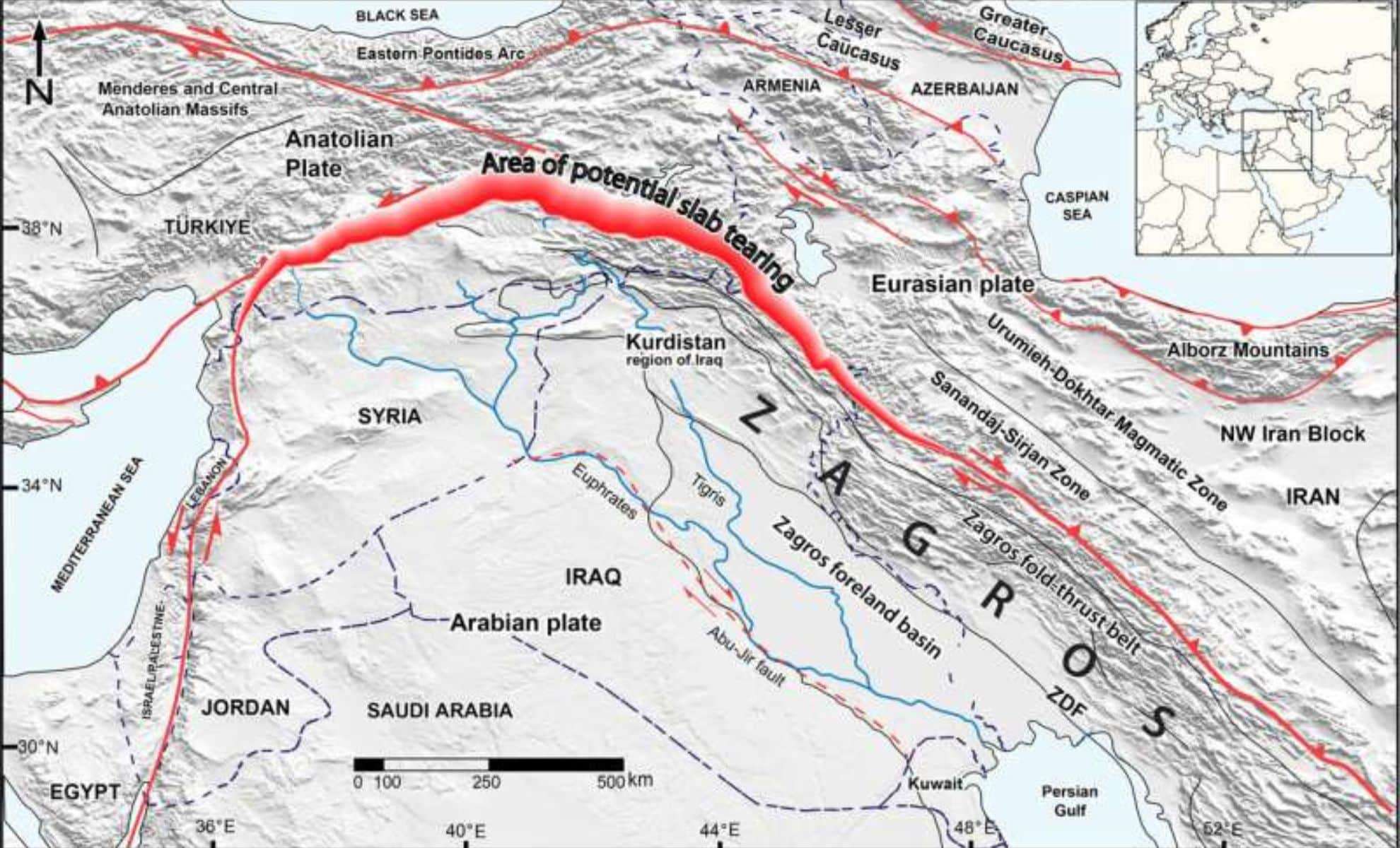
Uncovering the Plate’s Split: Key Research Insights
By simulating the Earth's surface flexure, the team reconstructed the geological forces shaping this region over millions of years. Their findings show that the oceanic plate beneath the Zagros Mountains is splitting horizontally, with a fracture extending from southeastern Turkey into northwestern Iran.
Koshnaw explains the rupture is irregular, with some sections continuing to pull the land downwards while others have detached, relieving that subsurface tension.
“The ongoing downward pull by the plate promotes sediment-filled depressions. Near Turkey, the basin becomes shallower, indicating where the plate has fractured and released the tension,” he explained.
These discoveries offer fresh perspectives on how tectonic dynamics invisibly mold landscapes, demonstrating that despite seemingly stable ground, tectonic plates are actively deforming beneath us.
Summary of Major Study Discoveries
Consequences for Seismic Hazards and Resource Potential
The disintegration of an oceanic plate beneath a convergent boundary is more than a scientific curiosity; it directly influences earthquake risks, resource exploration, and regional tectonic behavior.
- Seismic Threats: Plate fragmentation changes the stress distribution in the Earth’s crust, possibly triggering earthquakes, affecting areas in northwest Iran, Iraq, and southeast Turkey.
- Energy and Minerals: Tectonic deformation affects subsurface heat and fluid pathways, potentially enabling new geothermal energy prospects and aiding the discovery of sediment-hosted mineral deposits.
- Tectonic Evolution Insights: Understanding plate fragmentation deepens knowledge of mountain formation processes in regions such as the Himalayas, Andes, and Alps.
"This work enhances our grasp of how the Earth's lithosphere operates," Koshnaw commented. Recognizing subduction dynamics and plate tearing helps scientists forecast geological transformations and their societal impacts.
Advancing Research on Earth’s Deep Tectonics
This breakthrough opens avenues for broader investigations into tectonic forces reshaping the Earth's surface. Progress in seismic tomography, satellite geodesy, and computational modeling will enable increasingly detailed mapping of plate behavior.
As additional subducting plates experience fragmentation, researchers aim to determine if these breaks follow predictable patterns or are random, using the Neotethys plate case as a reference for other global collagen zones.
This revelation underscores Earth's dynamic and ever-evolving nature beneath our feet, shaped by forces that have crafted continents, oceans, and mountain chains over millions of years. Each scientific advance brings us closer to deciphering the mysteries of our planet’s interior.
- Categories:
- News










0 comments
Sign in to Comment