
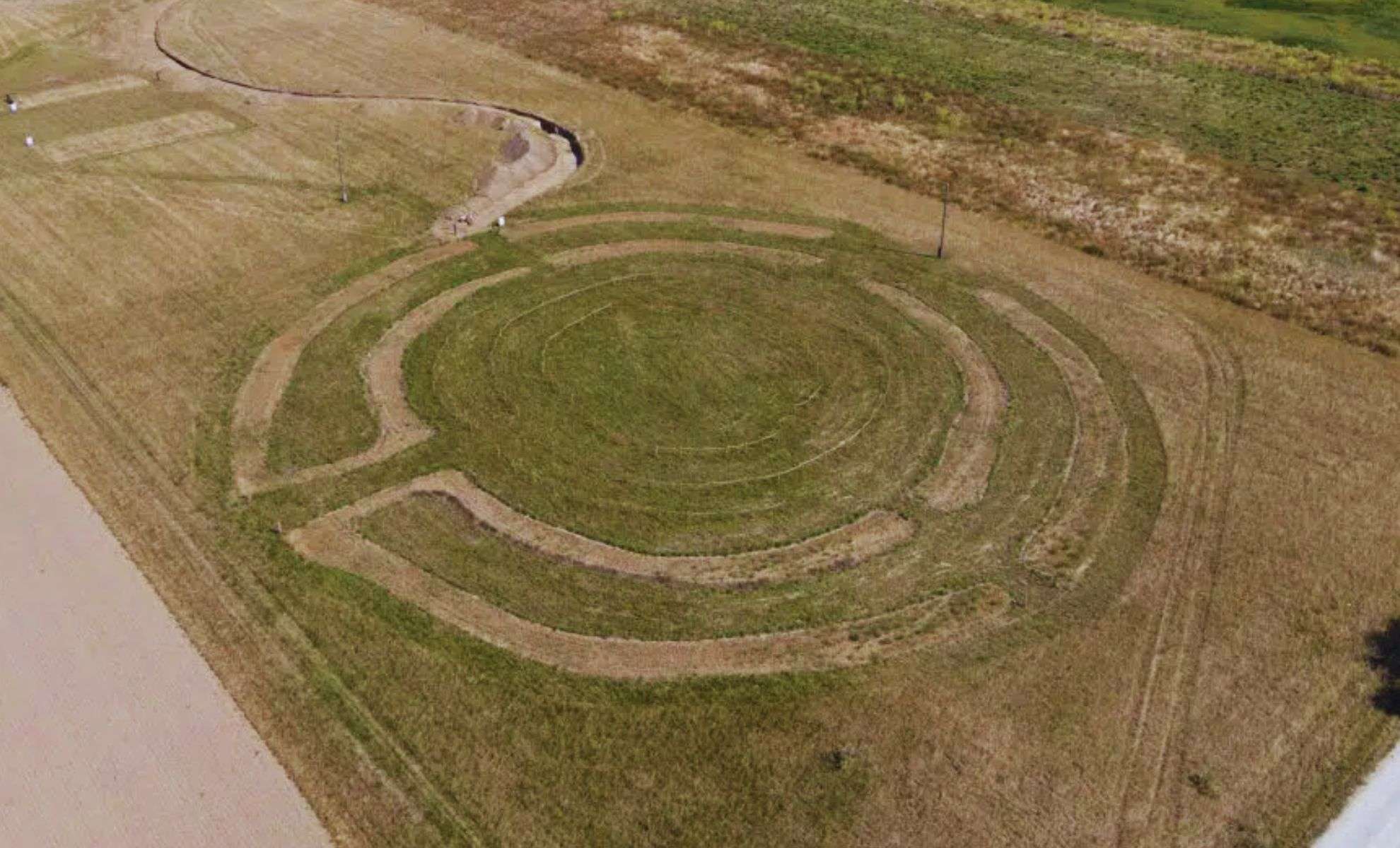
In the quiet town of Rechnitz within Burgenland, Austria’s least populous region, researchers have unearthed vast circular structures dating back to the Neolithic era. These remarkable earthworks, estimated to be from between 4850 and 4500 B.C.E., predate iconic landmarks such as Stonehenge and the Egyptian pyramids by over two millennia. The discovery was officially announced by Burgenland Archaeology following comprehensive excavations completed in September 2025.
Unearthing a 6,500-Year-Old Enigma Beneath the Surface
Between 2011 and 2017, detailed aerial and geomagnetic surveys revealed a series of concentric circular formations concealed beneath the grassy terrain, later confirmed to be Neolithic in origin. Subsequent excavations have verified these as circular ditch enclosures, a hallmark of prehistoric settlements characteristic of the Neolithic period.
Among these, three circular earthworks stretch up to 105 meters across and feature remnants of wooden postholes that once lined their perimeters. These stakes likely formed multiple concentric rings, a structural trait common in similar prehistoric ditch systems scattered throughout Central Europe. With over 120 comparable sites identified in the area, their purpose continues to puzzle experts.

Rechnitz: A Focal Point of Neolithic Culture
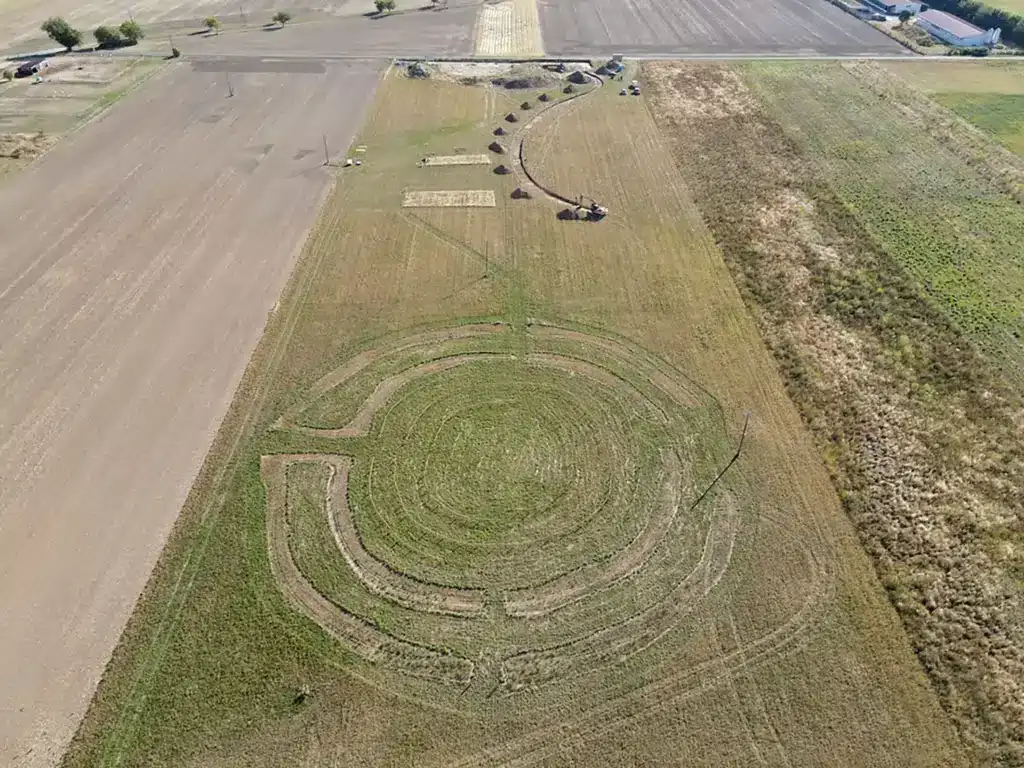
The distinctive feature of Rechnitz lies in the close clustering of several large circular earthworks. Nikolaus Franz, head of Burgenland Archaeology, suggests this indicates the site’s major importance during the Neolithic era.
“The existence of three of these monumental constructions in immediate proximity to one another makes it possible to classify the Rechnitz discovery site as a supraregional center during the Middle Neolithic period,” Franz explained in a statement. “We are learning a great deal about the clans of Neolithic settlers who found here a favorable place to establish the cultural techniques of farming and animal husbandry in what is now Austrian territory during the 6th millennium B.C.E.”
Unlike more isolated finds elsewhere in Europe, these circles at Rechnitz seem interlinked, forming a complex that likely served ritual, social, and agricultural functions. This implies Rechnitz was a central hub for community interaction and regional cooperation during the middle Neolithic era.
Transforming Ruins Into an Educational Landmark
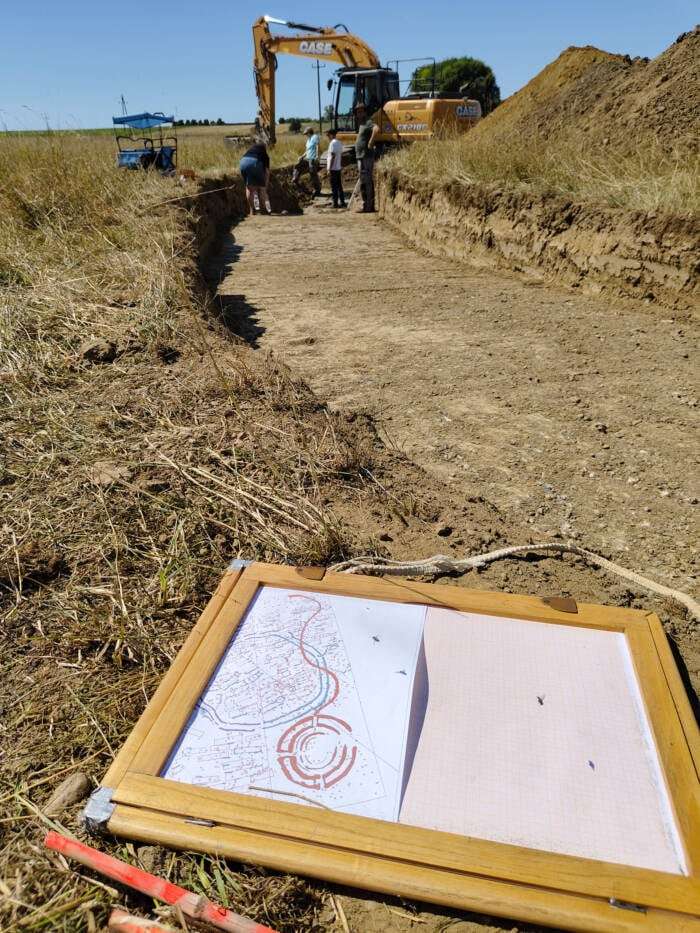
With the excavation phase complete, Burgenland Archaeology is developing the location into an archaeological park and public visitor center. Efforts include cultivating authentic Stone Age crops such as barley, flax, and nettle to provide an immersive glimpse into Neolithic everyday life over 6,500 years ago.
Additional scientific progress is underway by sending soil samples to the University of Vienna, aiming to refine understanding of historic agricultural practices and ancient diets. This research promises to shed light on how early European communities thrived and adapted in their environments.
- Categories:
- News













0 comments
Sign in to Comment