
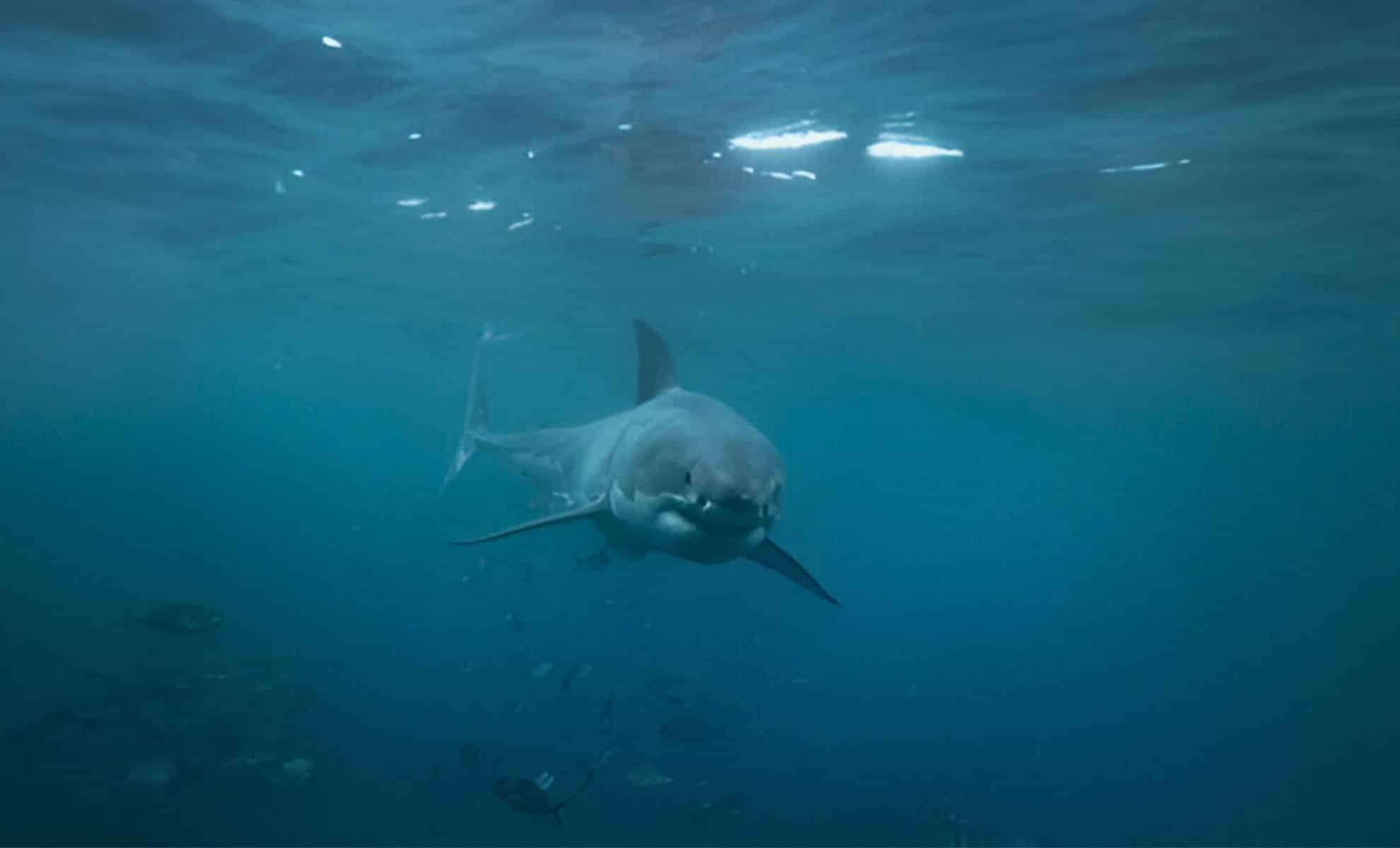
In the North-West Atlantic waters near the borders of Georgia and Florida, marine scientists witnessed an extraordinary encounter. January 2025 marked the capture of an exceptional great white shark — a male exceeding all his species' known limits. This colossal specimen, dubbed Contender, has astonished experts and is reshaping our understanding of great white sharks.
Acolossal Discovery
On January 17, the Ocearch research team, famed for tracking ocean predators, encountered a giant great white unlike any recorded before. Measuring an impressive 4.2 meters and weighing around 750 kilograms, Contender far surpasses the typical adult male size, which generally ranges from 3.4 to 4 meters.
Dr. Harley Newton, chief veterinarian for Ocearch, highlighted the rarity of such a find, explaining that male great whites typically reach sexual maturity at about 26 years old and roughly 3.5 meters in length. "Encountering an individual of this magnitude is truly exceptional," Newton remarked.

Following the Movements of a Marine Titan
Studying great white sharks presents significant challenges, as these apex predators often inhabit expansive, deep ocean regions far from coastal areas. To better observe Contender, researchers fitted him with a Spot tag attached to his dorsal fin. This technology allows scientists to track his migratory patterns and behavior throughout the ocean.
Following the tagging procedure, Contender has covered over 470 kilometers, with recent pings detected near Merritt Island, Florida. Tracking this shark is yielding essential insights on his feeding habits, migration, and seasonal tendencies, enriching scientists’ understanding of these solitary hunters.
Advancing Strategies for Shark Preservation
The discovery of Contender extends beyond scientific curiosity. It represents a pivotal step in preserving great white sharks. Through their research, Ocearch intends to map migration corridors and habitat hotspots to inform effective protection measures. Emphasis is placed on safeguarding critical feeding and breeding habitats from threats like overfishing and shifting climate conditions.
Great white sharks serve a key role in sustaining marine ecosystems by regulating prey populations, thus maintaining oceanic balance. However, human influences increasingly jeopardize their survival. Data gathered from tracking Contender will be instrumental in guiding global conservation initiatives to ensure these apex predators endure for generations.
- Categories:
- News











0 comments
Sign in to Comment