

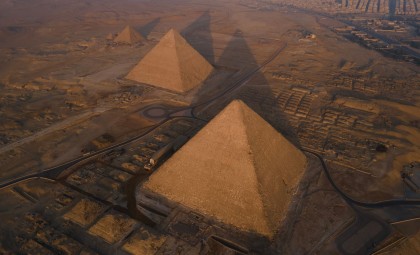
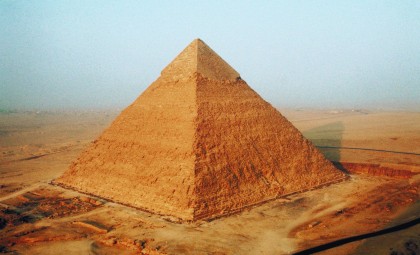
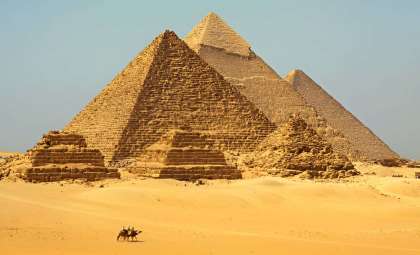
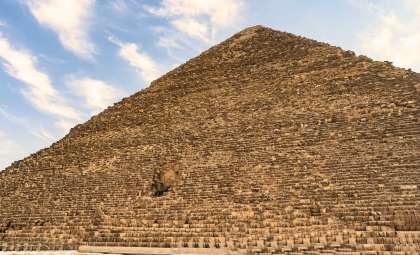
The enigma surrounding the construction of the Great Pyramid of Giza has puzzled historians for ages. How did the ancient builders manipulate immense limestone blocks, weighing several tons each, without the benefit of modern machinery? A remarkable find in 2013 has since shed light on this question, offering unprecedented clarity.
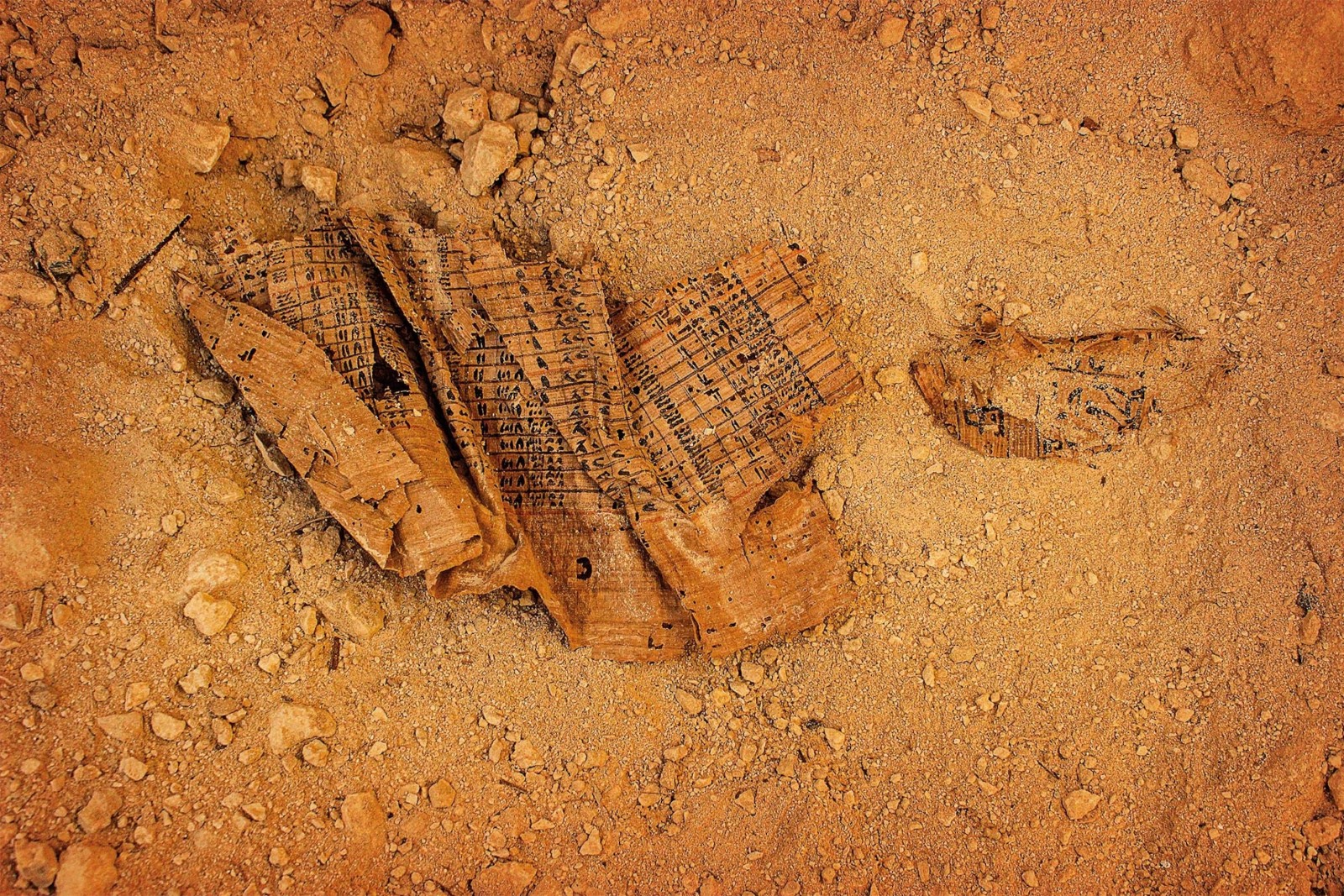
At the coastal site of Wadi el-Jarf along Egypt’s Red Sea, archaeologists discovered a trove of ancient papyrus scrolls called the Red Sea Papyri. These documents, among the oldest papyri ever discovered, included the personal log of Merer, a chief supervisor who contributed significantly to the pyramid’s construction. His writings detail the logistics behind one of history’s most iconic feats.
Wadi el-Jarf: The Vital Port Supporting Pyramid Construction
Nowadays, Wadi el-Jarf appears as a desolate desert shoreline, but more than 4,500 years ago, it was a hive of activity. When British explorer John Gardner Wilkinson encountered the site in 1823, he mistakenly identified it as a Greco-Roman burial ground. In the mid-20th century, French archaeologists François Bissey and René Chabot-Morisseau suggested it was once a center for metal production. It wasn't until 2008 when French Egyptologist Pierre Tallet confirmed that Wadi el-Jarf functioned as a crucial port during Pharaoh Khufu’s reign, central to transporting construction materials for the pyramid.

National Geographic reports that Wadi el-Jarf’s strategic location on the Red Sea enabled efficient transport of resources. Although situated about 240 kilometers from Giza, the Egyptians used boats to ferry copper from the Sinai Peninsula and limestone from nearby Tura quarries. This port’s discovery reveals the sophisticated logistical framework underpinning the pyramid’s assembly, captured in the papyri like a snapshot of ancient industrial coordination.
Insights from Merer’s Daily Logs
Reading Merer’s journal might at first seem like mundane administrative notes, but it offers vibrant details that illuminate the pyramid's construction process. Merer was directly responsible for supervising the transportation of materials. His logbook, spanning three months, chronicles a daily sequence of activities undertaken by his team.
For instance:
“Day 25: Inspector Merer spent the day with his team moving stones to Tura-South; spent the night at Tura-South.”
The following day’s entry states:
“Day 26: Inspector Merer left Tura-South with his team on a boat, filled with limestone blocks, to Akhet-Khufu [the Great Pyramid], spending the night at She-Khufu [an administrative area near Giza].” These notes reveal a rigid, almost military-style regimen, with precise documentation of each stage of their mission.
What truly stands out is the scale of these operations. Merer’s crew numbered 200 workers, who moved stones, logged transit records at administrative checkpoints, and repeated this process through multiple journeys. Over just a few days, Merer’s team made numerous trips between the quarries and the pyramid site, hauling massive quantities of stone.
Reevaluating the Pyramid Workforce
The popular belief that slaves built the pyramids under harsh conditions has long dominated the narrative. However, the Red Sea Papyri, and Merer’s accounts in particular, suggest a contrasting story. The workers were not enslaved but rather skilled artisans compensated for their labor.
Merer’s records mention that workers were remunerated not with currency—since ancient Egypt lacked money—but through regular provisions like bread, meat, dates, beer, and legumes. These rations were scaled according to the laborer's role and status, reinforcing the notion that these were professional craftsmen rewarded for their expertise.
The journal also references notable overseers, including Ânkhkhâf, Khufu’s half-brother, who served as the chief supervisor of the king’s works.
“Day 24: Inspector Merer spends the day with his za hauling [text missing] with people in elite positions, aper-teams, and the noble Ankh-haf, director of Ro-She Khufu,” stated the papyrus fragments.
His participation underscores that the pyramid project was meticulously managed by Egypt's high-ranking officials, illustrating a highly structured and coordinated enterprise involving the kingdom’s most influential figures.
- Categories:
- Science




0 comments
Sign in to Comment