

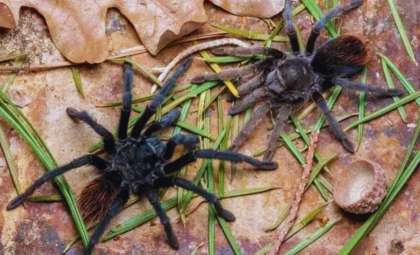
Fossilized footprints discovered in northern Arizona have provided a captivating glimpse into the life of a prehistoric arachnid that roamed the Earth around 260 million years ago. These delicate impressions in stone, belonging to a creature comparable in size to today’s tarantulas, offer an extraordinary insight into spider behavior that predates the era of dinosaurs. The findings were initially reported by WIRED, based on studies performed at the Raymond M. Alf Museum of Paleontology and further examined by geologists and ichnologists committed to unraveling the fossil’s secrets.
A Unique Fossil from the Desert
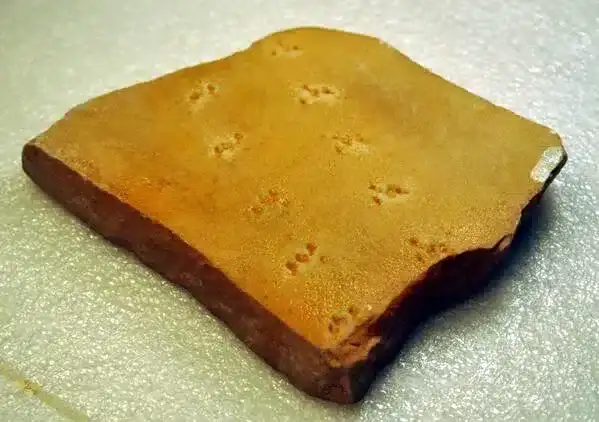
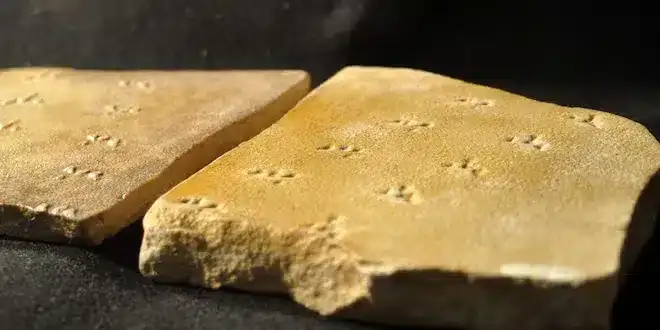
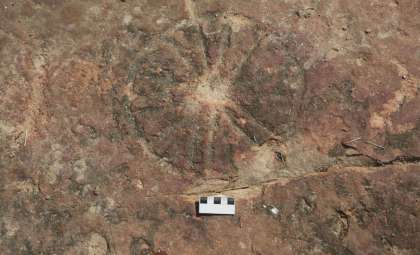
The remarkable discovery dates back to when paleontologist Raymond M. Alf uncovered a sandstone slab in the Arizona desert. The rock preserved a series of intimate, cup-shaped prints left by an ancient arachnid as it crossed damp sand. As the sand dried, these footprints were fossilized with impressive clarity.
The fossil is currently housed at the Raymond M. Alf Museum of Paleontology, where it remains a rare window into prehistoric life. Curator Andrew Farke explained, “Fossil spiders from this region are exceptionally rare.” Owing to their soft bodies, arachnids seldom leave fossils, making these tracks invaluable for understanding spider activity from long before dinosaurs ruled the planet.

Recreating Ancient Movements
To identify the source of the tracks, Raymond Alf ingeniously applied ink to the legs of live spiders and monitored their movement across paper. The resulting patterns closely resembled those fossilized in the sandstone.
Later, geologist Christa Sadler replicated this experiment under controlled settings, building a four-meter sandy track with different moisture levels and inclines. Testing both tarantulas and scorpions, she analyzed how environmental factors influenced their movement. Sadler’s observations supported Alf’s hypothesis: the prints were most probably left by a tarantula-sized spider moving steadily across damp terrain.
Decoding the Earth’s Oldest Spider Path
The study of such ancient marks falls within the field of ichnology, specializing in traces like footprints and burrows. Emory University ichnologist Anthony Martin reviewed the Arizona fossil and concurred with previous conclusions. While some might interpret the marks as four-toed, Martin recognized “the unmistakable imprints of an eight-legged creature, moving with an alternating gait.”
He clarified that “the legs on opposite sides coordinate out of phase, a typical characteristic of terrestrial arthropods.” This evidence confirmed the maker was an arachnid rather than a scorpion or other ancient walker. Martin added that “the breadth of the tracks offers clues about the spider’s size,” although it remains uncertain how widely the legs were spread during locomotion.
A Journey from the Permian, Before Dinosaurs
The footprints date back to the Permian Period, preceding the arrival of dinosaurs by more than 30 million years. During this period, present-day Arizona was a sprawling desert of shifting sands and seasonal rains. In this environment, an ancient arachnid left its fleeting path, ultimately preserved for millions of years.
Now showcased at the Alf Museum, the fossil represents one of the earliest known spider trace fossils — an extraordinary record of ancient wildlife before colossal prehistoric creatures dominated Earth. Each footprint offers a glimpse into a distant past, illustrating that spiders quietly inhabited the world well in advance of dinosaurs.
- Categories:
- News






0 comments
Sign in to Comment