
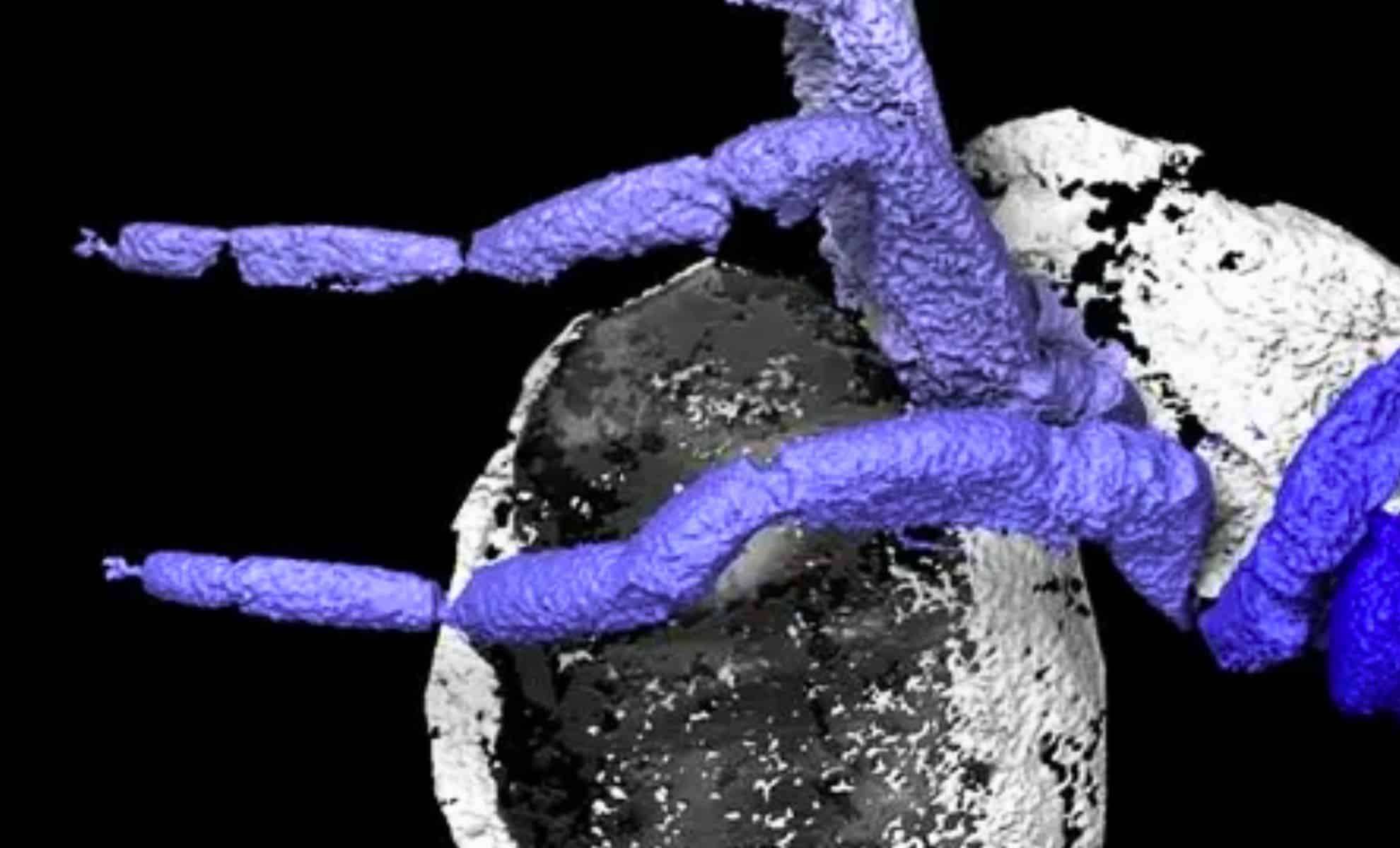
A remarkably preserved arachnid fossil unearthed in eastern France is offering new insights into the evolutionary lineage of today's spiders. Dating back 305 million years, the species, dubbed Idmonarachne brasieri, was described in a paper featured in Proceedings of the Royal Society B. Although it shares many spider-like traits, this creature falls just outside the category of true spiders.
A Long-Forgotten Fossil Comes into Focus
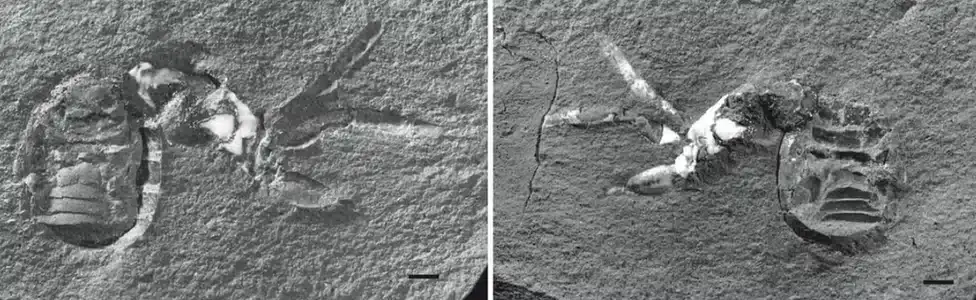
The specimen, now identified as Idmonarachne brasieri, originates from the Montceau-les-Mines locale, famed for its exceptional fossil preservation over 300 million years old. Despite its importance, the fossil was overlooked for years, stored in the archives of the Muséum national d’Histoire naturelle in Paris.
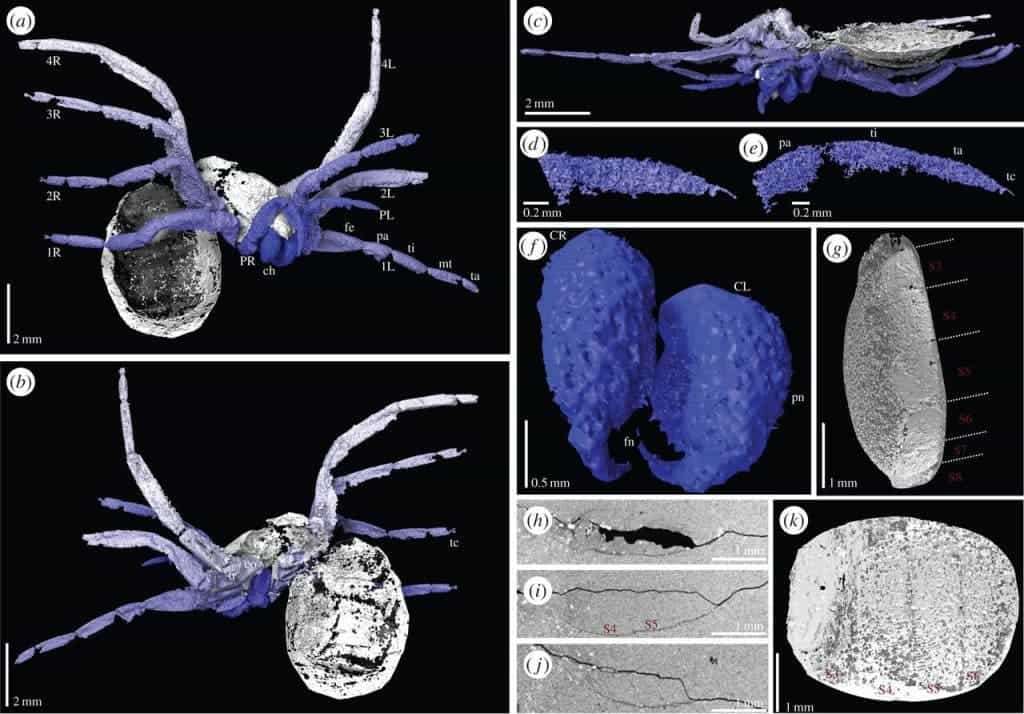
Researchers from the University of Manchester, University of Kansas, Imperial College London, and Berlin’s Museum für Naturkunde recently reexamined the materials. Employing advanced CT scanning techniques, they meticulously revealed the fossil’s hidden anatomy encased in stone for millions of years.

“Initially, I couldn’t precisely identify the arachnid,” recounted Russell Garwood, a paleontologist at the University of Manchester. “Its legs and the front body half were embedded deeply within the rock.”
Silk Production Without Webs
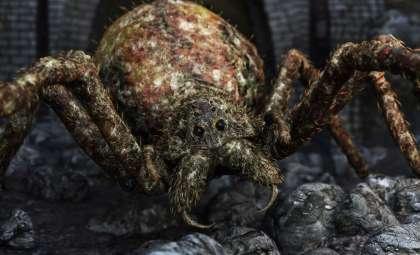
The fossil depicts a tiny arachnid roughly 1.5 centimeters in length, featuring eight legs and formidable fangs, characteristics typical of spiders. However, a crucial difference was noted: the absence of spinnerets, the specialized appendages spiders use to produce and control silk threads.
This lack positions I. brasieri just outside the modern spider group. Nevertheless, it may have still generated silk, akin to its ancestor Attercopus, a tailed arachnid species without spinnerets. In those prehistoric times, silk might have served different purposes, such as lining shelters or producing safety draglines, rather than spinning webs.
“We are examining a now-extinct branch that diverged from the spider lineage more than 305 million years ago, evolving side by side,” explained the lead paleontologist. He emphasized the specimen as “the closest relative to spiders that isn’t actually a spider.”
Verifying the Absence of Spinnerets
Confirming that a feature is genuinely missing is often more challenging than detecting its presence. To rule out the possibility that spinnerets had degraded or were lost during fossilization, the team used more than conventional scanning. They conducted imaging at the Diamond Light Source synchrotron in Oxfordshire, employing high-resolution X-rays to obtain an even clearer view of the fossil’s abdomen. “A high-definition scan is necessary to detect such delicate details,” the researchers stated.
The findings were conclusive. The region where spinnerets would be was intact, smooth, and free of damage. There were no indications of deterioration or missing parts, indicating spinnerets never developed on this species.
Interestingly, the oldest discovered true spider emerged from the same fossil deposit. This spider possessed spinnerets, implying that both species coexisted and developed similar characteristics independently along parallel evolutionary routes.
A Quiet Honor and a Crucial Discovery
The specific name brasieri honors the late Professor Martin Brasier, an esteemed Oxford paleobiologist celebrated for his contributions to understanding early life. Brasier passed in 2014, and this naming serves as both a scientific recognition and a personal tribute. “He was an incredibly supportive colleague,” Garwood shared.
For those studying evolutionary biology, Idmonarachne brasieri marks a significant transitional species. It captures a time in arachnid evolution when silk production existed but before the advent of specialized spinnerets necessary for weaving webs.
- Categories:
- News


0 comments
Sign in to Comment