
Between approximately 26,000 and 19,000 years ago, during the last Ice Age, our planet's environment was markedly different from today. Massive ice sheets covered much of the Northern Hemisphere, causing significant drying across the Southern Hemisphere as water was locked into these glaciers. This buildup of ice led to a substantial drop in sea levels—up to 125 meters—uncovering land that had been hidden beneath the ocean.
Archaeological Breakthrough at Knysna Eastern Heads Cave
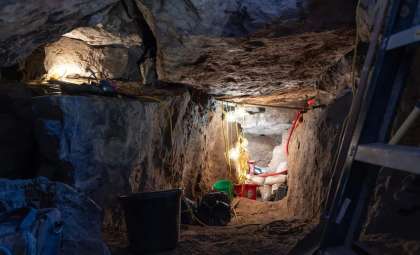
The Knysna Eastern Heads Cave 1, located 23 meters above today’s coastline, is a remarkable site that sheds light on human existence near the close of the Ice Age. Positioned along South Africa’s southern shore, the cave now overlooks the Indian Ocean, though during the Ice Age the sea lay much farther away—approximately 75 kilometers distant.
Instead of ocean views, inhabitants saw expansive grasslands, a key resource for their survival. Excavations initiated in 2014 have revealed that humans occupied this cave over a span of nearly 48,000 years, providing an exceptional continuous record from southern Africa's Middle to Later Stone Age transition, roughly from 40,000 to 25,000 years ago.

Environmental Shifts and Adaptation of Resources
Before the Ice Age reshaped the landscape, local populations exploited marine foods like shellfish due to their proximity to the shoreline. As the climate cooled and sea levels dropped, the coast receded, compelling people to pivot towards land-based food sources. This change is evident through tools found at Knysna, especially those dating between 19,000 and 18,000 years ago. These stone implements indicate a shift towards hunting terrestrial animals in response to evolving environmental conditions.
Insights into Robberg Tool Technology
A major highlight of Knysna’s findings includes stone tools associated with the Robberg technology, a recognizable and widespread toolmaking tradition that prevailed in southern Africa from about 26,000 to 12,000 years ago. These tools, likely parts of composite hunting weapons, may have been barbs used to capture migrating herds across the Palaeo-Agulhas Plain. Their uniform design and complex production methods suggest they were disseminated across many communities, reflecting an extensive network of knowledge exchange and cultural connectivity.
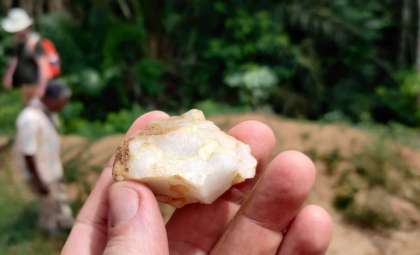
Most tools discovered at the site are crafted from quartz, prized for its ability to form sharp edges but known for its brittleness. The manufacture of bladelets—small, slender tools potentially serving as replaceable weapon tips—was particularly prominent. Some artifacts were made from silcrete, a material requiring heat treatment to enhance its durability. This discovery at Knysna represents one of the earliest known examples of heat-treated silcrete, a sophisticated technique dating back to approximately 164,000 years ago in the region.
Material Procurement and Site Usage Patterns
The presence of silcrete at Knysna is especially noteworthy, since natural deposits lie over 50 kilometers away in the Outeniqua Mountains. How ancient peoples acquired this material remains uncertain, though it hints at either long-distance travel or trading relationships with other groups to obtain these valuable resources.
Additional findings reveal that later layers of the site contain fewer tools, implying a reduction in cave occupancy during the final phases of the Ice Age. This pattern suggests the cave likely functioned as a temporary campsite rather than a permanent settlement. While the exact reasons for these changes are still unknown, ongoing research aims to unravel the complexities of how and why use of the cave fluctuated over time.
- Categories:
- News








0 comments
Sign in to Comment