
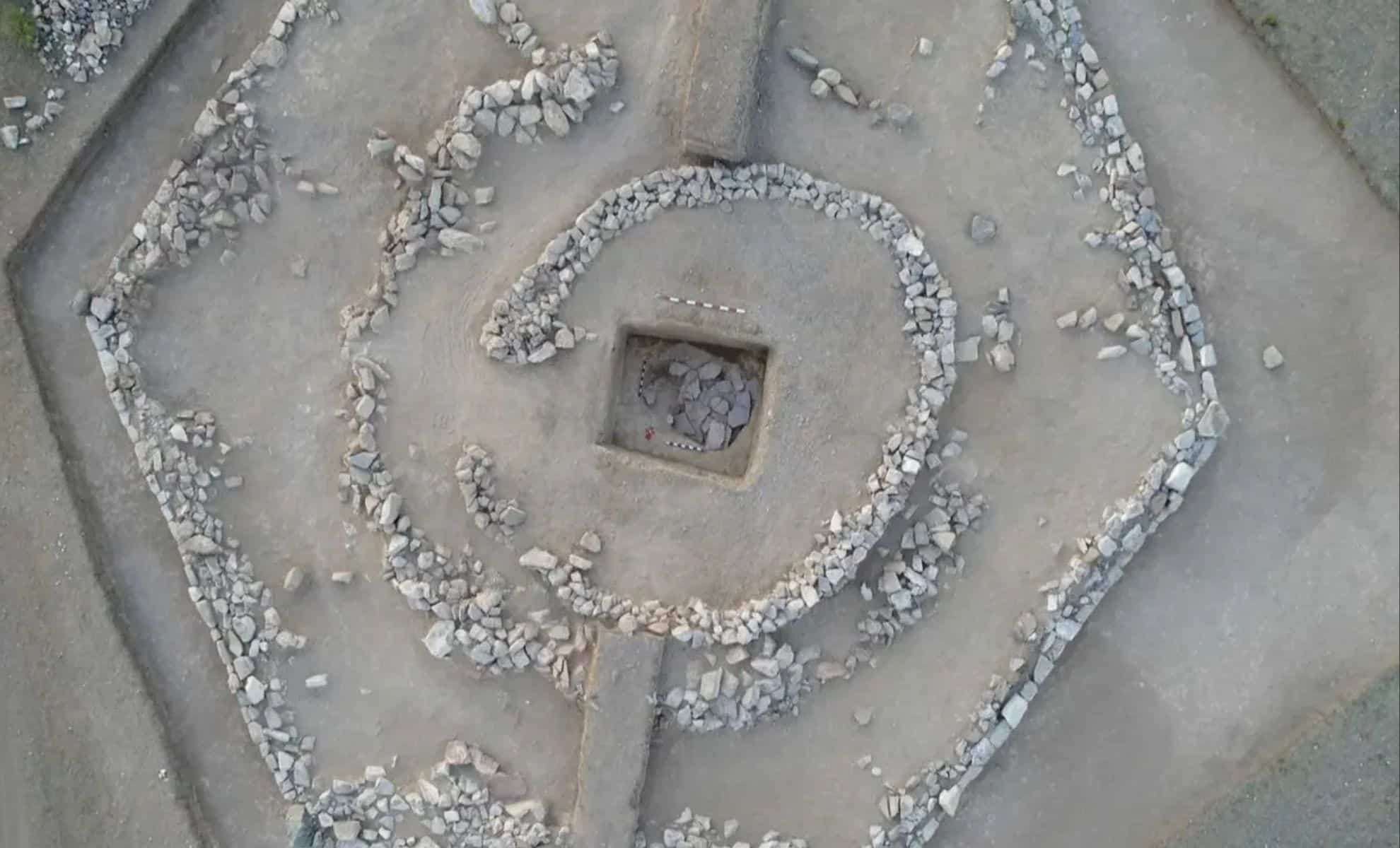
In eastern Kazakhstan, archaeologists have uncovered an extraordinary 3,800-year-old hexagonal pyramid, providing fresh insights into the enigmatic Bronze Age culture of the region. Situated at the Kyrykungir archaeological site near Toktamys village, this rare structure rises about 3 meters (10 feet) in height, with each of its six sides measuring nearly 13 meters (43 feet). This unique architectural find is unlike any previously documented in Central Asia. Researchers speculate that the pyramid may have been constructed as a royal burial site or ceremonial monument, symbolizing the status and influence of its occupants.
Led by experts from the L. N. Gumilyov Eurasian National University, the excavation has gained global attention for the pyramid’s unprecedented six-sided geometry, a design element never before seen in this locale. Archaeologists uncovered a complex stone labyrinth that appears to channel visitors toward a central crypt, suggesting a strong ritualistic and spiritual importance. The pyramid’s precise layout, engineering craftsmanship, and grave goods point to a highly advanced, symbolically rich society that valued astronomy, geometry, and intricate mortuary rites.
Engineering Excellence of the Steppe’s Hexagonal Monument
Distinct from the classic Egyptian pyramids, this edifice features a flat top and a distinctive hexagonal shape, built from tightly arranged megalithic stones that reveal a sophisticated mastery of geometrical principles and stone construction. Scholars suggest the pyramid’s shape and directional alignment may correspond to celestial events or seasonal cycles, echoing themes observed in Bronze Age burial architecture throughout Eurasia.

Ulan Umitkaliyev, project leader, highlighted the monument’s precision: “The steppe pyramid is hexagonal, with each side measuring thirteen meters and eight carefully arranged stone rows between faces.” This complex design reflects an in-depth understanding of structural integrity and geometry, indicating the presence of a highly organized and expert workforce behind its construction.
It is unclear whether the pyramid was once topped with a roof or purposely left open to the elements. Some hypotheses propose it was covered by earth, protecting the interior relics until erosion gradually revealed the burial labyrinth and its contents, which archaeologists now painstakingly study.
Connecting With the Andronovo Culture and Equine Traditions
The newly found hexagonal pyramid is strongly associated with the Andronovo culture, a Bronze Age civilization that flourished across Central Asia from roughly 2000 to 900 BCE. This culture is renowned for its horse domestication, which played a pivotal role in social organization, economy, and burial practices.
Excavations of the pyramid’s burial chamber uncovered horse bones along with ornate ceramics, gold jewelry, and expertly made bronze tools. These artifacts suggest the burial was for a prominent figure, possibly a leader or elite individual. The horse remains underscore the animal’s profound spiritual and funerary significance to the Andronovo people.
Equine-related rites marked many burial sites throughout Kazakhstan, Russia, and Mongolia, where horse sacrifices honored the dead. The Kyrykungir pyramid likely represents an elaborate funerary practice involving interment with horses and valuable goods intended to accompany the deceased into the afterlife.
Insights Into Bronze Age Cultural Exchange and Monumental Architecture
Beyond its architectural marvel, the hexagonal pyramid offers evidence of extensive Bronze Age trade and cultural connections across Eurasia. The Andronovo people participated in vast networks stretching from Afghanistan to the Caspian region, trading metals, textiles, and livestock.
Artifacts recovered at Kyrykungir, such as bronze implements and gold decorations, hint at wide-ranging exchanges with distant communities. The blend of metallurgical techniques, decorative styles, and funeral customs implies that the Andronovo culture was integrally linked to broader regional developments.
Some researchers propose the pyramid’s architectural style drew inspiration from earlier monumental sites seen across Central Asia, reflecting a mosaic of artistic influences. The substantial megalithic construction further demonstrates advanced engineering knowledge passed down by skilled craftspeople.
Reevaluating Burial Customs of the Eurasian Bronze Age
The Kyrykungir pyramid enriches our understanding of Bronze Age mortuary customs on the vast Eurasian Steppe. Featuring a rich assemblage of jewelry, tools, and horse remains, the site was clearly designed not simply as a tomb but as a ceremonial venue to honor and memorialize important individuals.
Comparable Bronze Age burial locations in Central Asia often contain personal artifacts, weapons, and remains of feasting rituals, highlighting the deceased’s social stature. The pyramid’s unusual hexagonal pattern may hold a symbolic meaning tied to cosmology, spirituality, or social hierarchy.
Continuing investigations at Kyrykungir are expected to yield further discoveries, including possible inscriptions or grave markers, offering deeper insight into the beliefs and traditions embraced by the Andronovo culture.
Looking Ahead: The Lasting Impact of the Hexagonal Pyramid
Future research into the Kyrykungir hexagonal pyramid promises to transform our knowledge of Bronze Age communities in Central Asia. Experts are eager to compare its design with other monumental sites, seeking evidence of shared architectural traditions among contemporaneous cultures.
Additionally, archaeologists aim to determine if Kyrykungir was part of a broader ceremonial landscape connected to other burial grounds throughout the steppe. Such findings could shed light on how ancient societies structured their political, social, and religious lives.
For now, the Kyrykungir hexagonal pyramid remains a captivating relic from a lost era, offering glimpses into the complex rituals, spiritual beliefs, and extraordinary craftsmanship that characterized Bronze Age civilizations of the Eurasian steppes. As excavations uncover more of this ancient marvel, its secrets will continue to illuminate the past.
- Categories:
- News





0 comments
Sign in to Comment