
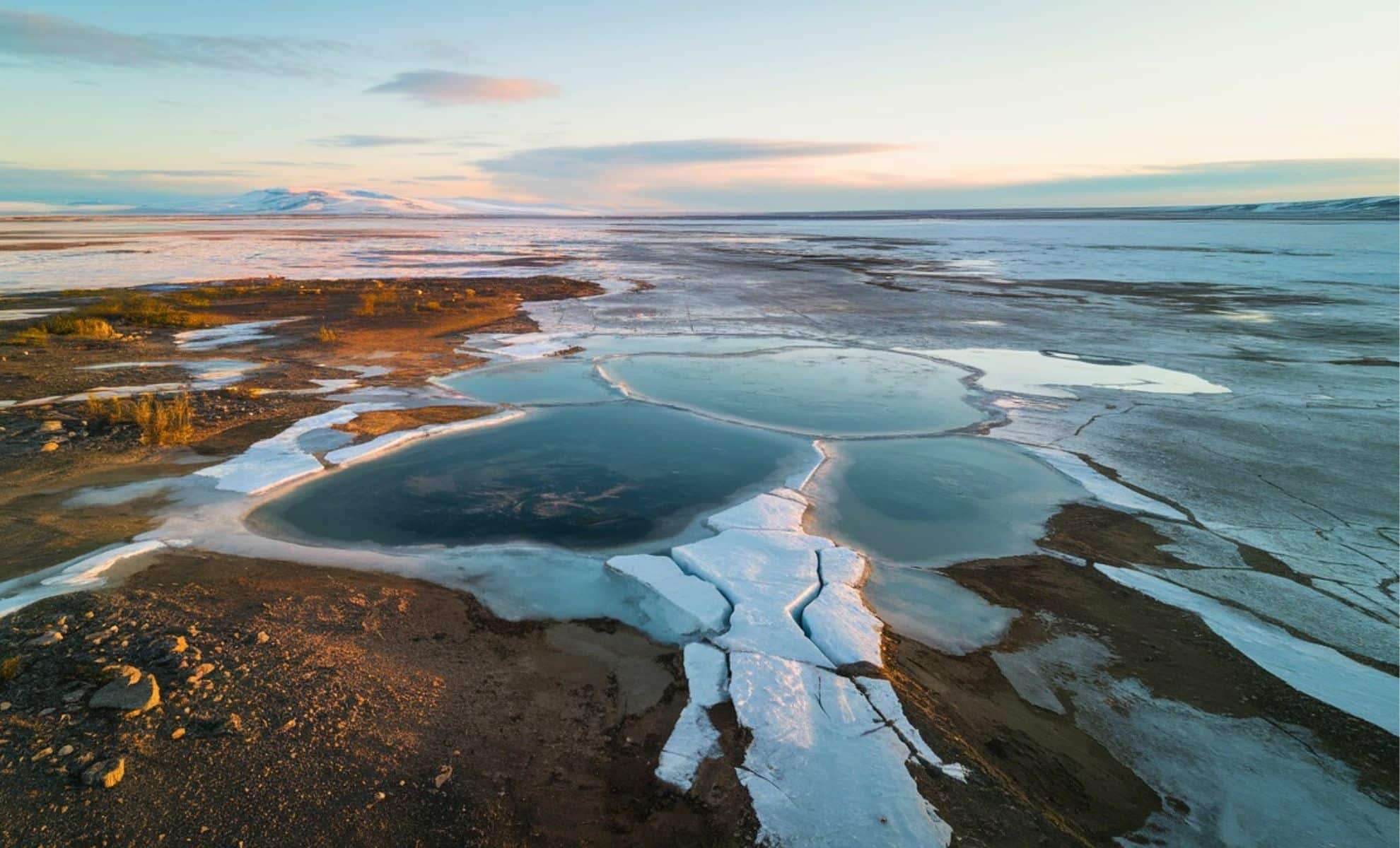
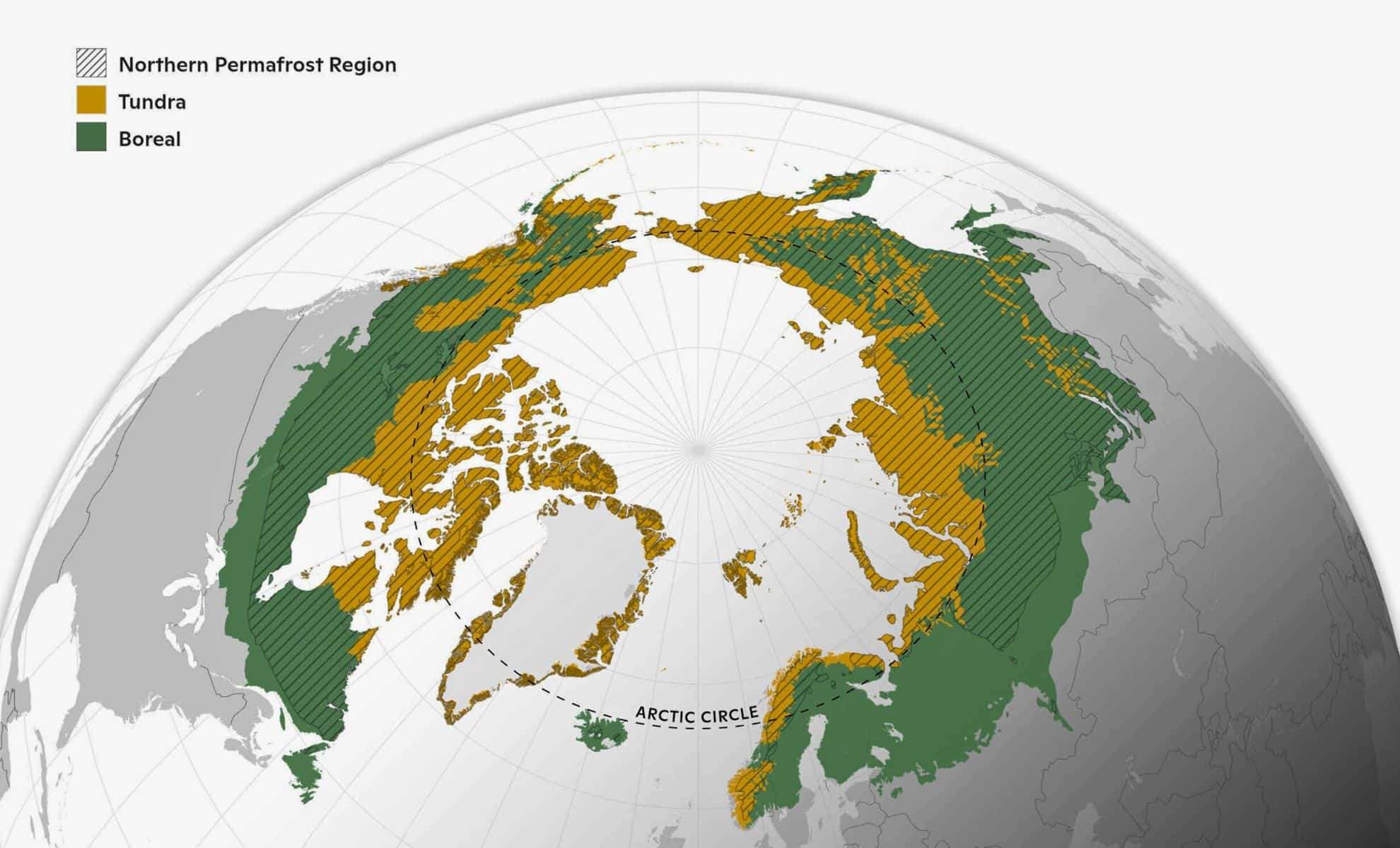
The Arctic-boreal zone (ABZ), historically a dependable carbon sink, has shifted to emit more carbon dioxide (CO₂) than it absorbs. Recent research by the Woodwell Climate Research Center shows that roughly one-third of the ABZ releases more carbon than it stores, rising to 40% when emissions from wildfires are included. This represents a significant change in this region’s contribution to Earth’s overall carbon cycle.
Changing Carbon Patterns in the Arctic-Boreal Zone
The Arctic-boreal zone, which includes tundra, boreal forests, and wetlands in the far north, once served as a net carbon sink. It absorbed CO₂ through plant photosynthesis and emitted far less via respiration.
However, climate change has destabilized this balance. Though longer growing seasons and more abundant vegetation might increase carbon uptake, these benefits are offset by rising emissions from melting permafrost, intensified microbial decomposition, and frequent wildfires. Lead author Anna Virkkala explains, “Source regions and fires are now cancelling out much of that net uptake and reversing long-standing trends.”

In-Depth Carbon Monitoring
Scientists compiled three decades of CO₂ observations (1990–2020) from over 200 sites, combining flux tower data with soil, climate, and vegetation information. This yielded the ABC Flux database, featuring detailed carbon flux maps at a 1 km by 1 km scale, illustrating the complex carbon exchanges across the Arctic.
Co-author Sue Natali, leader of the Permafrost Pathways initiative, remarks, “The Arctic encompasses diverse ecosystems and climatic zones. Thanks to advanced mapping, we can now closely monitor regional carbon processes at unprecedented detail.”
Drivers Behind the Changing Carbon Balance
The research identifies key contributors to the ABZ’s shifting carbon balance. While increased vegetation during longer summers offers some benefits, greater emissions prevail during the off-season.
Highlights include:
- Permafrost thaw: Releases trapped carbon as soils warm.
- Enhanced winter microbial activity: Higher temperatures speed organic matter decay.
- Limited carbon uptake: Only 12% of areas showing increased greenness achieved net annual carbon gains.
Marguerite Mauritz, from the University of Texas-El Paso, observes, "Extended growing seasons combined with heightened winter microbial processes are gradually altering carbon pathways."

Wildfires Exacerbate Carbon Emissions
Wildfires are increasingly influential in Arctic carbon outputs. Including wildfire emissions raises the share of the ABZ functioning as a carbon source from 34% to 40%. Enhanced vegetation growth coupled with drier conditions leads to more frequent fires, triggering feedback loops that worsen warming effects.
Mauritz stresses, “Collaborative initiatives like this are essential for understanding how evolving seasonal patterns and disturbances affect both regional and global climates.”
Wider Ramifications of Arctic Warming
This study aligns with mounting evidence of the Arctic shifting from a carbon sink into a net carbon source. Additional methane (CH₄) emissions from wetlands and lakes amplify this trend, highlighting the Arctic’s growing influence on global greenhouse gas levels.
Virkkala warns, “Our findings serve as an alert to potentially larger changes ahead, pinpointing regions that require enhanced monitoring in the coming decades.”
With these newly developed, high-resolution maps, policymakers and researchers gain vital tools to pinpoint where carbon dynamics are altering most significantly. This research underpins targeted climate action strategies to limit the broader consequences of warming in the Arctic.
As the Arctic undergoes rapid shifts in its role within the planet’s carbon cycle, the effects are expected to ripple far beyond northern latitudes, emphasizing the critical need for coordinated global response.
- Categories:
- Science











0 comments
Sign in to Comment