
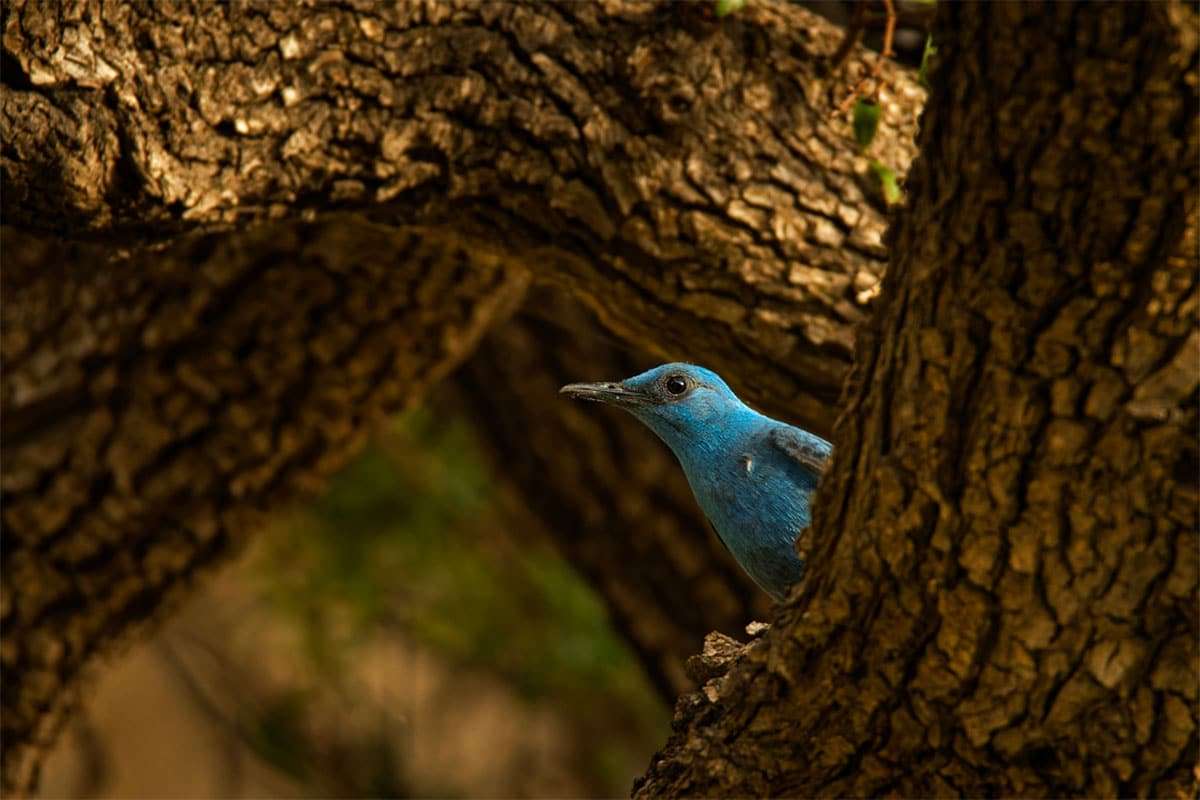
While exploring picturesque trails near rushing waterfalls, Sanchez noticed a small, unusual bird resting among the coastal plants. Its distinctive blue-gray feathers, with hints of orange, immediately attracted his attention. Without hesitation, he raised his camera and snapped multiple photos that quickly became a sensation in birdwatching circles.
“It was an exhilarating experience for a new photographer to encounter such an exceptionally rare bird,” Sanchez expressed with great enthusiasm, recalling the unexpected encounter.
Meet one of Oregon's rarest birds in its history to date – the Blue Rock Thrush. Vancouver resident Michael Sanchez unknowingly captured ground-breaking photos of this very rare bird near Hug Point State Park last Sunday at dawn.
📷: Michael Sanchez pic.twitter.com/IqFwwZ3atQ— Bird Alliance of Oregon (@BirdAllianceOR) April 29, 2024Add Cosmo Herald as a Preferred Source

Introducing the extraordinary Blue Rock Thrush
The bird captured by Sanchez was later confirmed as a Blue Rock Thrush (Monticola solitarius), a species native mainly to Europe and Asia. This discovery sent waves throughout the birding community, marking the first verified record of this species in the U.S.
Key traits of the Blue Rock Thrush include:
- An average length around 22 centimeters
- Weight between 37 and 54 grams
- A notably melodic call
- Bright blue-gray plumage in males
- Brownish tones with lighter streaks underneath for females and juveniles
While a sighting was reported in British Columbia in 1994, its validity has been questioned, making this recent confirmation particularly noteworthy.
Expert reactions and growing enthusiasm
The rare find quickly gained traction on social media, sparking lively conversations among bird lovers and scientists. Brodie Cass Talbott from the Bird Alliance of Oregon highlighted the significance: “It’s an exceptionally rare national record in Oregon and may not be matched for decades.”
To illustrate the rarity, here’s a summary of Blue Rock Thrush sightings in North America:
Decoding the rare visit: possible explanations
The appearance of a Blue Rock Thrush on the west coast of North America has left experts intrigued, as its typical range extends from North Africa to East Asia. This unprecedented occurrence has prompted various hypotheses:
- Storm-driven displacement: Severe weather may have pushed the bird off its usual course.
- Maritime hitchhiking: The thrush could have sought shelter on a ship traversing the Pacific.
- Effects of climate change: Altered environmental factors might be shifting migration behaviors.
- Rare genetic variation: An unusual mutation could have influenced the bird’s navigation.
As more research unfolds, both amateurs and professionals remain eager to spot this elusive visitor again. The Blue Rock Thrush’s fleeting presence on Oregon’s coastline serves as a profound example of nature’s surprising wonders, even in today’s thoroughly explored world.
This landmark observation highlights the vital role of citizen scientists and the potential for remarkable discoveries in unexpected locations. Celebrated by the birdwatching community, the so-called “bird of the century” promises to inspire curiosity and passion among naturalists for many years ahead.










0 comments
Sign in to Comment