

Groundbreaking research has illuminated how time elapses at a faster rate on the Moon compared to Earth, a finding vital for upcoming lunar exploration efforts.
Though slight, this temporal variation carries significant consequences for lunar navigation, communication, and mission management.
Exploring Lunar Time Dilation
More than half a century since human footprints last marked the Moon, scientists have quantified the subtle acceleration of time there. A NASA research team has determined that time on the lunar surface advances roughly 57 microseconds (0.0000575 seconds) each day ahead of Earth.

This accumulated difference means that over many years, a person living on the Moon would age faster compared to someone on Earth—approximately 5.75 seconds after nearly three centuries. The study’s lead, physicist Slava Turyshev from NASA’s Jet Propulsion Laboratory, emphasized the necessity of the precise mathematical analysis involved: “Somebody needed to sit down and work out the maths.”
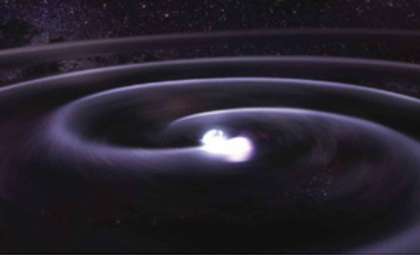
This effect arises from Einstein’s theory of general relativity, which describes how gravity impacts time flow. The Moon’s gravitational field is weaker, about one-sixth that of Earth’s, enabling time there to pass more rapidly. With NASA’s Artemis missions aiming to maintain a long-term human presence on the Moon, integrating this understanding of time distortion is essential.
NASA’s Goddard Space Flight Center
Significance for Upcoming Lunar Ventures
The implications for future lunar projects are profound. Successful navigation, communication, and operational coordination on the Moon demand precise timekeeping. Efforts are underway at NASA and allied US agencies to develop a unified lunar time standard, an initiative growing more urgent with plans to return astronauts by 2026. A recently published preprint stresses, “The establishment of a standardized lunar time is essential for synchronizing activities and operations on the Moon.”
Turyshev and collaborators compared the progression of time as experienced on Earth, the Moon, and the Solar System’s barycenter—the gravitational center around which celestial bodies orbit. This holistic framework ensures optimal coordination for space missions, minimizing operational conflicts and encouraging inter-agency cooperation. Arati Prabhakar, the White House Science Advisor, remarked on the necessity of this precision: “Precision applications such as spacecraft docking or landing will require greater accuracy than current methods allow.”
Introducing a Unified Lunar Time Standard
The need for a consistent timekeeping convention is accentuated by the Moon’s lengthy 29.5-day cycle of daylight and darkness. Presently, mission times are tied to Earth-based time zones aligned with the spacecraft’s country, a practice unsuited to extended missions involving numerous landers, rovers, and orbiters.
Adopting a common temporal reference will promote dependable data exchange and coordination, allowing automated systems to function smoothly. The report underlines, “With missions involving multiple landers, rovers, and orbiters, having a common time reference ensures that all units can coordinate effectively, avoiding conflicts and enhancing collaboration.”
International organizations such as the International Bureau of Weights and Measures and the International Astronomical Union are slated to convene in August to deliberate on the formal lunar time definition. As humanity prepares to establish settlements on the Moon and Mars, this research lays the groundwork for an agreed-upon time standard vital for complex extraterrestrial operations.
Pinpointing the time dilation effect on the Moon represents a fundamental advancement in readiness for future lunar expeditions. By creating a coordinated lunar time system, NASA and its partners aim to guarantee mission success through accurate navigation, communication, and teamwork on the Moon’s surface.
As Turyshev astutely observed, “Failing to account for the discrepancy between a transmitter clock on the Earth and how it is perceived by a receiver on the Moon will result in a ranging error.” This work not only enhances our grasp of relativistic effects but also underscores the critical role of detailed planning in space exploration.
- Categories:
- Astronomy ,
- News ,
- Science ,
- Space ,
- Nasa






0 comments
Sign in to Comment