
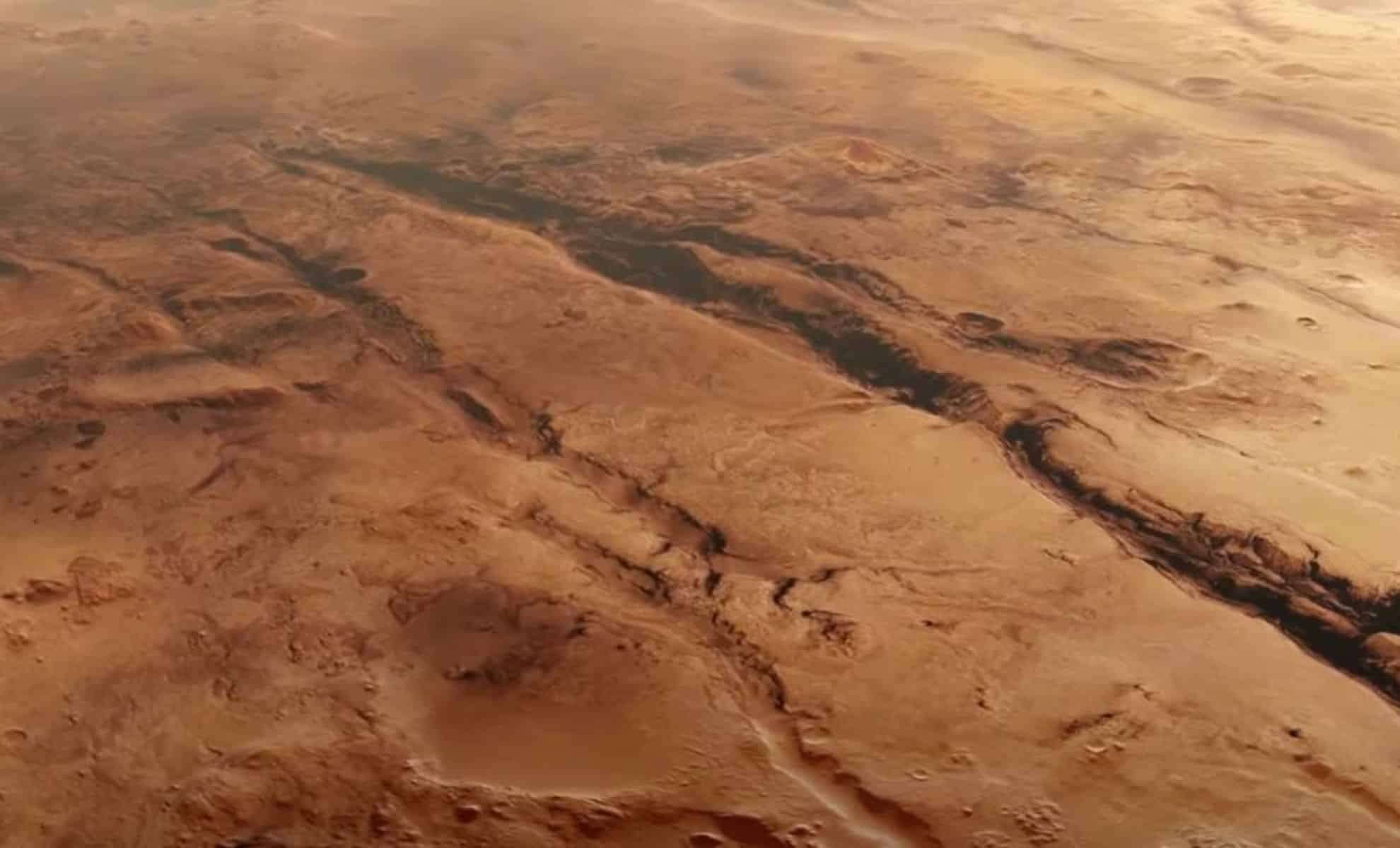
The European Space Agency (ESA) has unveiled a stunning video highlighting a detailed aerial tour over Mars’ fascinating Nili Fossae landscape.
Produced using data collected by ESA’s Mars Express spacecraft, this impressive footage reveals intricate details of Mars’ surface, shedding light on the planet’s complex geological past through its distinctive terrain.
The video harnesses high-resolution imagery from the Mars Express High Resolution Stereo Camera (HRSC) to deliver an in-depth examination of one of the Red Planet’s most scientifically captivating areas.

Vast Impact Basin and Unique Geological Structures
Nili Fossae lies along the eastern rim of the colossal Isidis Planitia impact basin, which stretches roughly 1,900 kilometers (1,200 miles) across, making it one of Mars’ largest craters. The region features extensive trenches, or graben, that plunge hundreds of meters deep and extend over hundreds of kilometers.
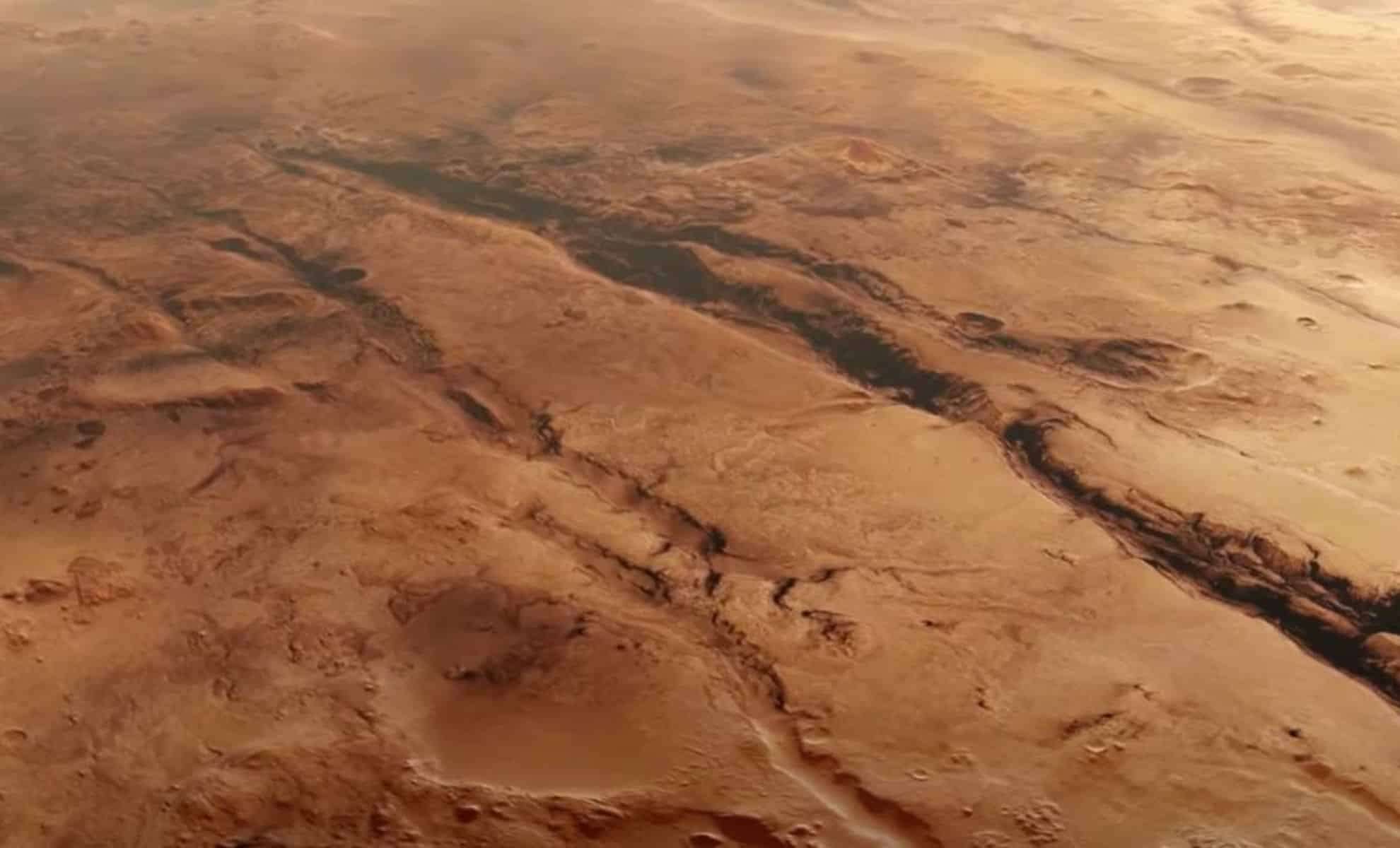
These deep fissures formed as a result of a massive meteorite impact billions of years ago, fracturing the Martian crust and causing blocks of land between fault lines to subside, creating the prominent trenches observed today. ESA notes, “The trenches of Nili Fossae are believed to have formed following a colossal meteorite impact some 4 billion years ago.
This impact also created the 1,200-mile-wide Isidis Planitia crater.” Comparable geological features called Amenthes Fossae appear on the opposite side of the Isidis basin.
Mineralogical Richness and Evidence of Ancient Water
Nili Fossae is a focus of ongoing research due to its abundant mineral diversity, including silicates, carbonates, and clay minerals discovered by the Mars Express OMEGA instrument. These minerals typically develop in watery environments, indicating that liquid water once flowed in this locale. The presence of these deposits hints at past rivers, lakes, or other bodies of water that once existed on Mars.
ESA scientists explain, “Nili Fossae draws attention because of the vast variety and volume of minerals present, which form in water’s presence, signaling that this area was wet during Mars’ early history.” These findings illuminate a dynamic geological narrative and raise the possibility that ancient conditions may have supported microbial life.
How the Flyover was Created
The flyover footage was generated by integrating imagery from the High Resolution Stereo Camera (HRSC) aboard Mars Express with digital elevation models to produce a three-dimensional visualization of the terrain. These models faithfully depict the planet’s surface, enabling a realistic and immersive aerial journey.
The sequence begins by closely showcasing the intricate trench systems before zooming out to reveal the broader landscape, including the Jezero Crater, currently explored by NASA’s Perseverance rover. This dynamic visualization offers both scientists and the public a vivid understanding of Mars’ topography and geological mechanisms.
Implications for Mars Research and Exploration
Insights from Mars Express data deepen our comprehension of the Red Planet’s formation and environmental history, assisting in the identification of promising locations for upcoming exploration initiatives. Studying Nili Fossae, with its signs of past water and mineral variety, helps pinpoint areas with potentially higher prospects for uncovering traces of ancient life.
The mineral richness and water-related evidence make Nili Fossae a compelling site for continued investigation. “Much of this region’s terrain originated more than 3.5 billion years ago when water was widespread on Mars,” ESA experts remarked, underlining its significance in piecing together the planet’s past. These findings are critical in guiding the search for early life and mission planning.
- Categories:
- Astronomy ,
- News ,
- Science ,
- Space















0 comments
Sign in to Comment