
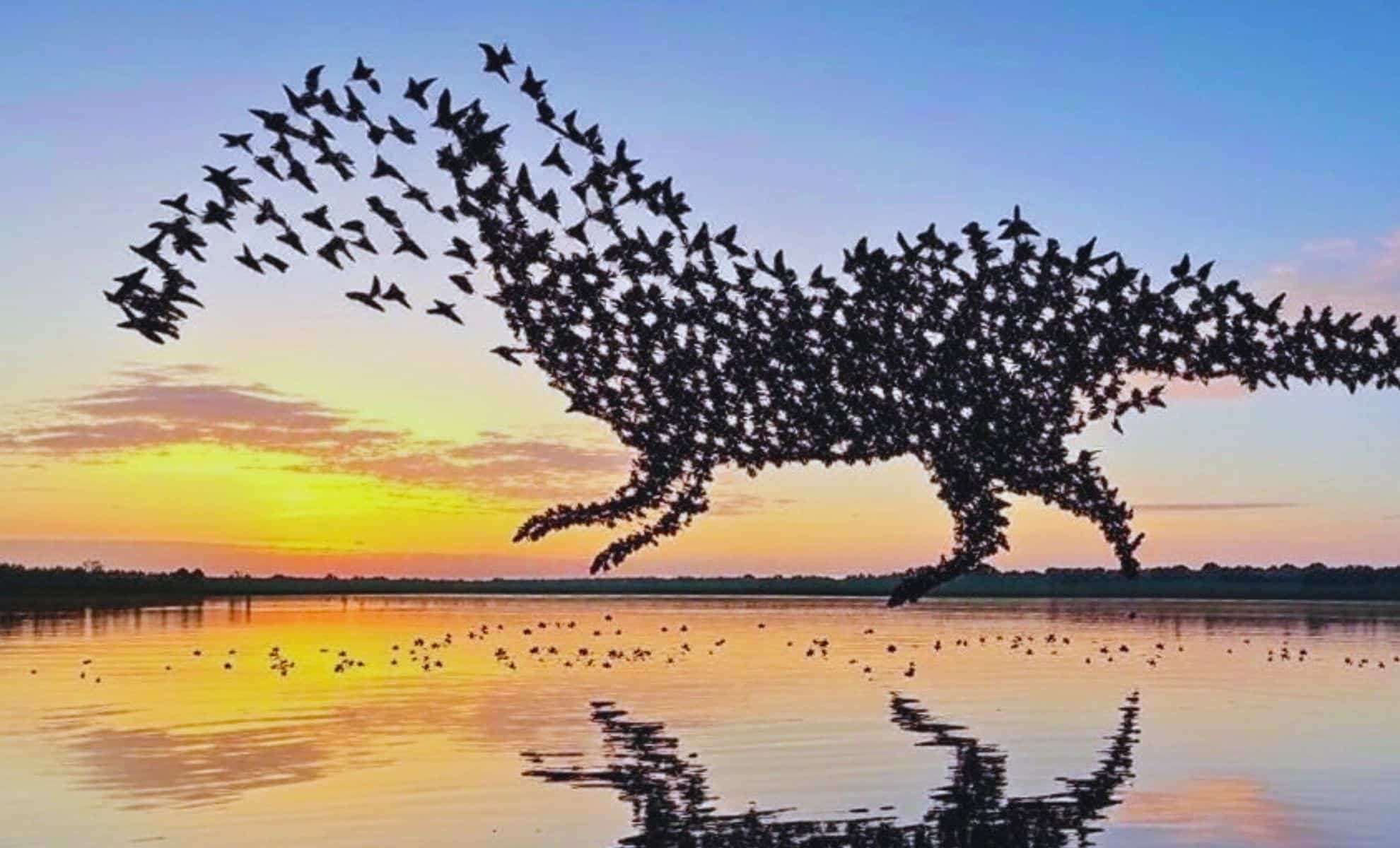
The reign of dinosaurs began more than 230 million years ago, marking a time of extraordinary biodiversity and ecological dominance. While non-avian dinosaurs vanished following a massive asteroid collision 66 million years ago, their theropod descendants evolved into the birds we see today. This remarkable lineage challenges us to rethink: did the dinosaur era ever truly conclude?
Birds: The Living Legacy of Dinosaurs
Contemporary bird species are not merely distant cousins of dinosaurs but are in fact the direct heirs of the theropod lineage, a principal branch of dinosaurs. Fossil records provide compelling evidence for this link, especially fossils like Archaeopteryx, discovered in the 19th century in Bavaria, Germany. This species, often hailed as the earliest bird, bridges reptiles and birds, showcasing traits such as teeth, claws, a lengthy tail, and feathered wings.
According to Dr. Jingmai O’Connor, a paleontology expert at Chicago’s Field Museum, “the development of birds happened both within dinosaurs themselves and through a unique evolutionary path birds took during the 90 million years of the Cretaceous period.”

Major Fossil Sites Unveiling Evolution
Several key locations have yielded groundbreaking fossils that trace the evolutionary path of dinosaurs into birds:
- Liaoning Province, China: Home to Sinosauropteryx, the earliest documented non-avian feathered dinosaur discovered in 1996, featuring basic proto-feathers that link theropods to modern birds.
- Jehol Biota, China: A rich source of feathered dinosaur fossils like Caudipteryx, found in the 1990s, displaying feather structures and avian-like characteristics.
- Solnhofen Limestone, Germany: The fossil site of Archaeopteryx, a pivotal species connecting dinosaurs and birds.
Feathers and Birdlike Features in Dinosaurs
The mid-1990s discovery of Sinosauropteryx transformed how scientists view feathers, revealing that these structures were not unique to birds. Later finds, such as Caudipteryx, showed more advanced feathers resembling those of modern birds, indicating a gradual adaptation from basic insulation to functional flight.
Traits similar to birds appeared over millions of years within theropods, including:
- Feathered limbs and wings: Initially for balance or display before evolving into flight mechanisms.
- Colored eggshells: Shared by theropods closely connected to birds, hinting at inherited reproductive behaviors.
- Beak-like features: Emerging in species nearer to birds, replacing teeth to specialize feeding techniques.
Where to Draw the Line Between Dinosaurs and Birds?
Pinpointing the boundary between bird-like theropods and true birds remains a subject of debate among scientists. Non-avian dinosaurs exhibited features such as feathers, nesting behaviors, and even gliding capabilities. For example:
Dr. O’Connor aptly highlights this challenge: “The fossil evidence blurs the distinction between what defines a bird when you examine non-avian dinosaurs alongside early birds.”
Are We Still Residents of the Dinosaur Era?
Birds today represent the most abundant group of amniotes, with over 11,000 species far outnumbering the roughly 4,000 mammal species. They thrive in nearly every habitat worldwide, from city skylines to remote polar regions, illustrating how dinosaur heritage thrives through adaptability and resilience.
As Dr. O’Connor states, “Taking species diversity as a key success measure, dinosaurs remain the most prolific and varied amniote group currently inhabiting our planet.”
The Persistent Impact of Dinosaurs
Whether it’s an albatross soaring miles above the ocean or a common backyard chicken, birds continue the narrative of survival for a lineage that once dominated the Earth. As fossil discoveries progress, they deepen our understanding of how these ancient creatures evolved and endured from the Mesozoic era into today—revealing that the dinosaur period never fully ended but transformed, taking to the skies instead.
This article originally appeared in Issue 24









0 comments
Sign in to Comment