
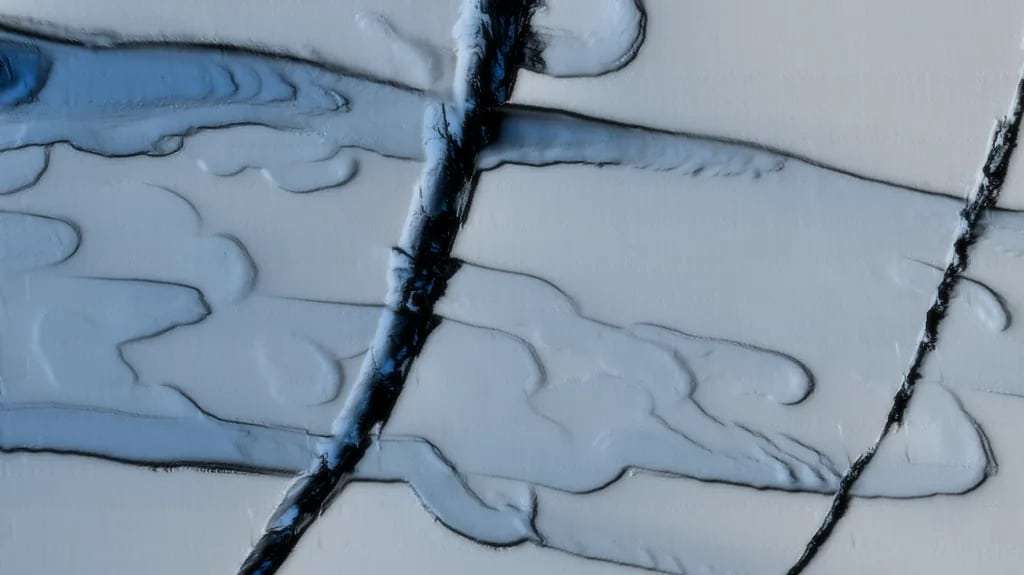
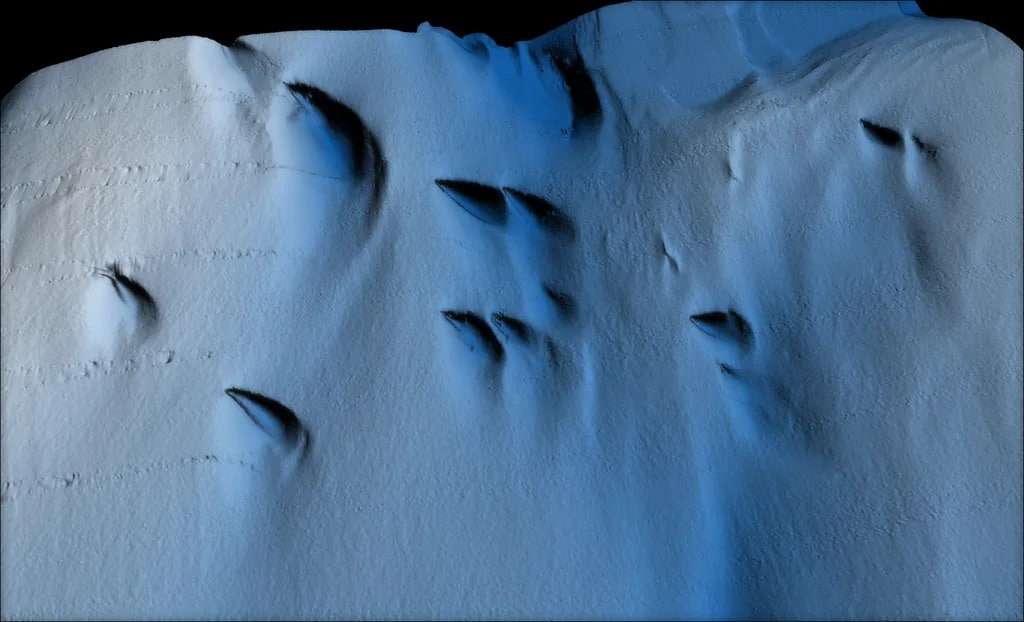
Deep under the Dotson Ice Shelf in Antarctica, scientists have uncovered a previously unseen subglacial terrain characterized by jagged peaks, deep valleys, and distinctive teardrop-shaped formations sculpted by the interplay of melting ice and dynamic ocean currents. This discovery provides critical new perspectives on how ice loss occurs and its wider environmental impacts.
Unveiling Antarctica’s Submerged Geological Wonderland
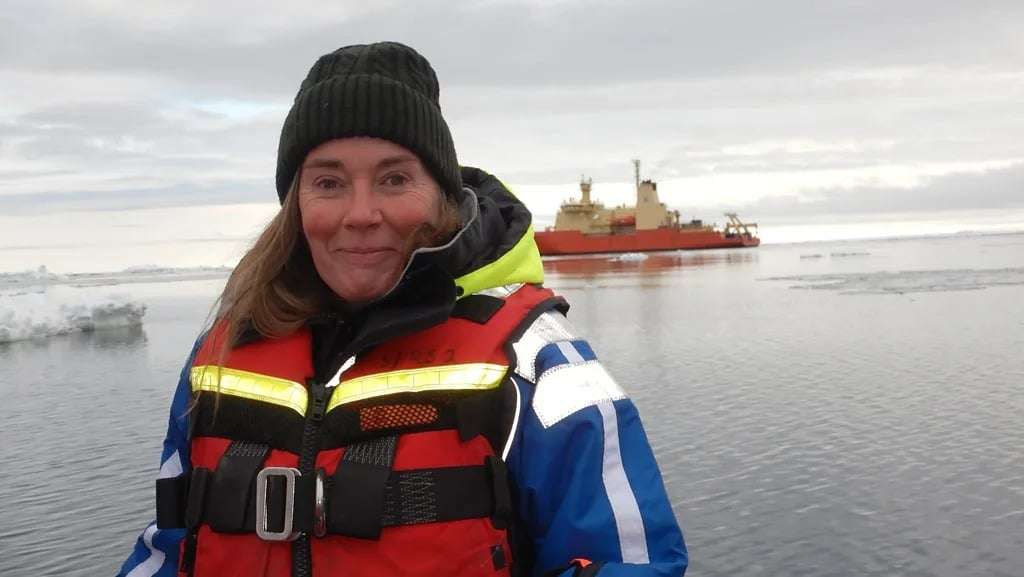
In 2022, a global team spearheaded by Professor Anna Wåhlin of the University of Gothenburg deployed the autonomous underwater vehicle Ran to probe beneath the Dotson Ice Shelf within West Antarctica. Over nearly a month, the craft traversed some 1,000 kilometers beneath 350 meters of solid ice, assembling the inaugural detailed map of the ice shelf’s underwater contours.
The expedition revealed an astonishing landscape underneath the ice, featuring expansive plateaus, hypnotic erosion swirls, and enormous hollowed formations. These findings open a window into the rugged interaction between warm ocean waters and glacial ice, offering fresh clues to the mechanisms behind Antarctic ice melting.

“It looked like the Grand Canyon. There were plateaus and swirly patterns melted into the ice” – Anna Wåhlin
Ice Shelves’ Impact on Rising Sea Levels
Ice shelves, such as the Dotson Ice Shelf, float atop the ocean and do not directly contribute to sea level rise when melting. However, they function as vital supports for terrestrial glaciers, impeding their movement toward the ocean. When these shelves degrade, land glaciers can accelerate, resulting in elevated global sea levels.
The Dotson Ice Shelf is experiencing accelerated thinning compared to others in the Amundsen Sea sector, driven by encroaching warm ocean currents. The adjacent Thwaites Glacier, dubbed the “Doomsday Glacier,” poses a significant risk — should it collapse fully, global sea levels could rise by as much as 65 centimeters.
Changing Ecosystems in the Amundsen Sea Region
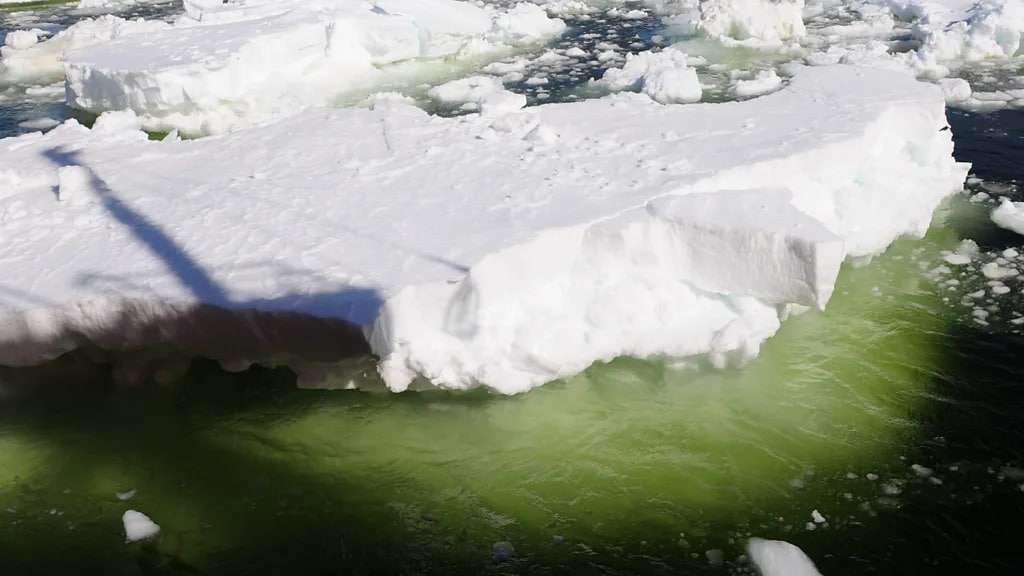
The ongoing ice melt threatens more than sea levels—it also endangers the fragile ecosystems of the Amundsen Sea. Water released from the Dotson Ice Shelf transports iron into ocean waters, which supports blooms of phytoplankton, the foundation of Antarctica’s marine food chain. These tiny organisms play a key role in absorbing atmospheric carbon dioxide, thus helping regulate our climate.
Oceanographer Patricia Yager has compared this underwater habitat to a thriving coral reef system. Nonetheless, rapid changes in ice melting are altering the salinity and stability of these waters, potentially destabilizing both the ecosystem and its crucial role in global carbon cycling.
Obstacles in Antarctic Exploration Efforts
In 2024, the research team headed by Wåhlin undertook another mission to further chart the underside of the Dotson Ice Shelf. The operation was abruptly halted when the submersible Ran vanished beneath the ice. This incident highlights the difficulties inherent to studying such inaccessible, harsh environments. Researchers theorize that interactions with local marine mammals, notably Weddell seals, may have caused the submersible’s failure.
Despite these challenges, the expedition uncovered unanticipated patterns beneath the ice, revealing that much remains unknown about the dynamics that sculpt Antarctica’s icy realms.







0 comments
Sign in to Comment