
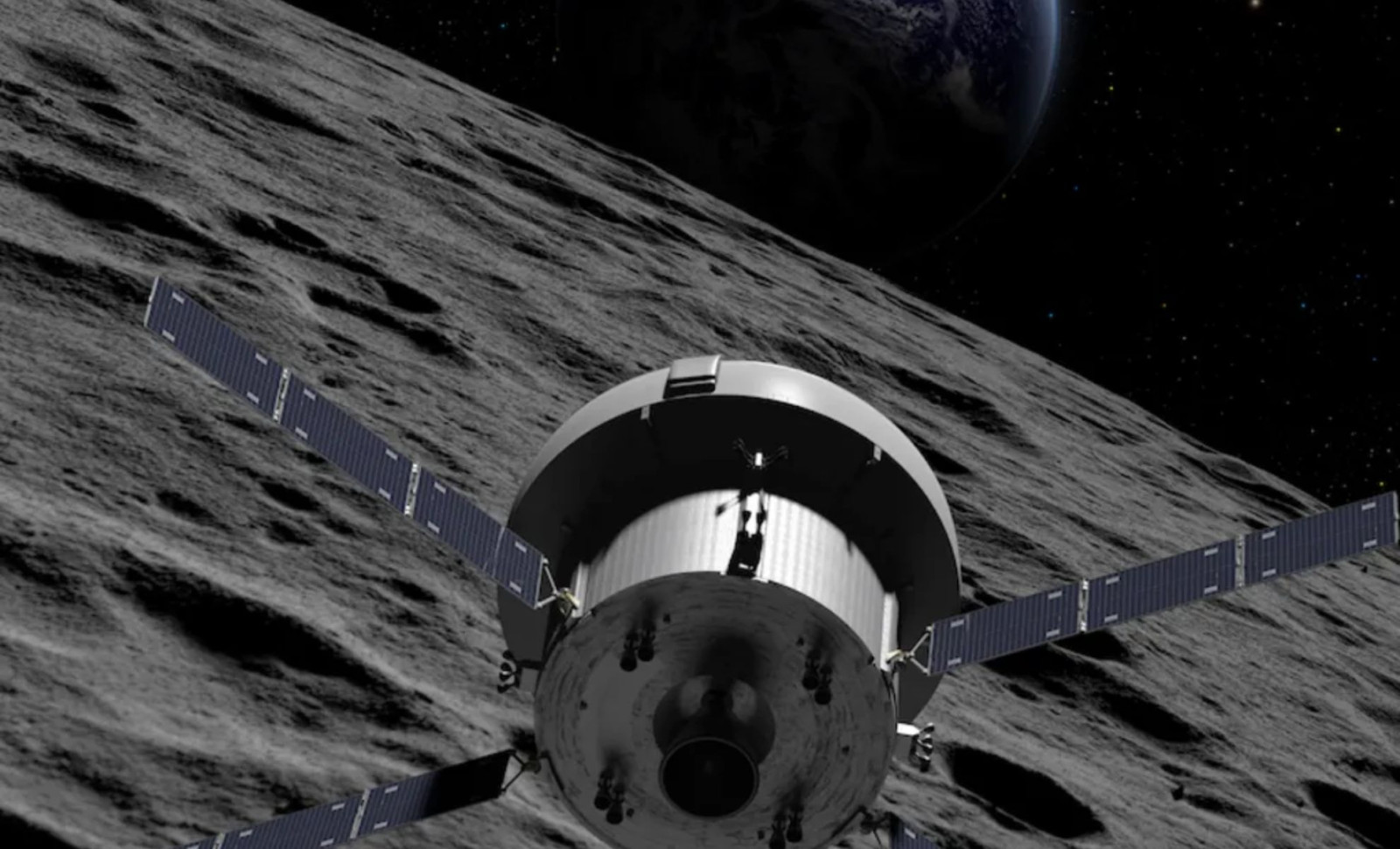
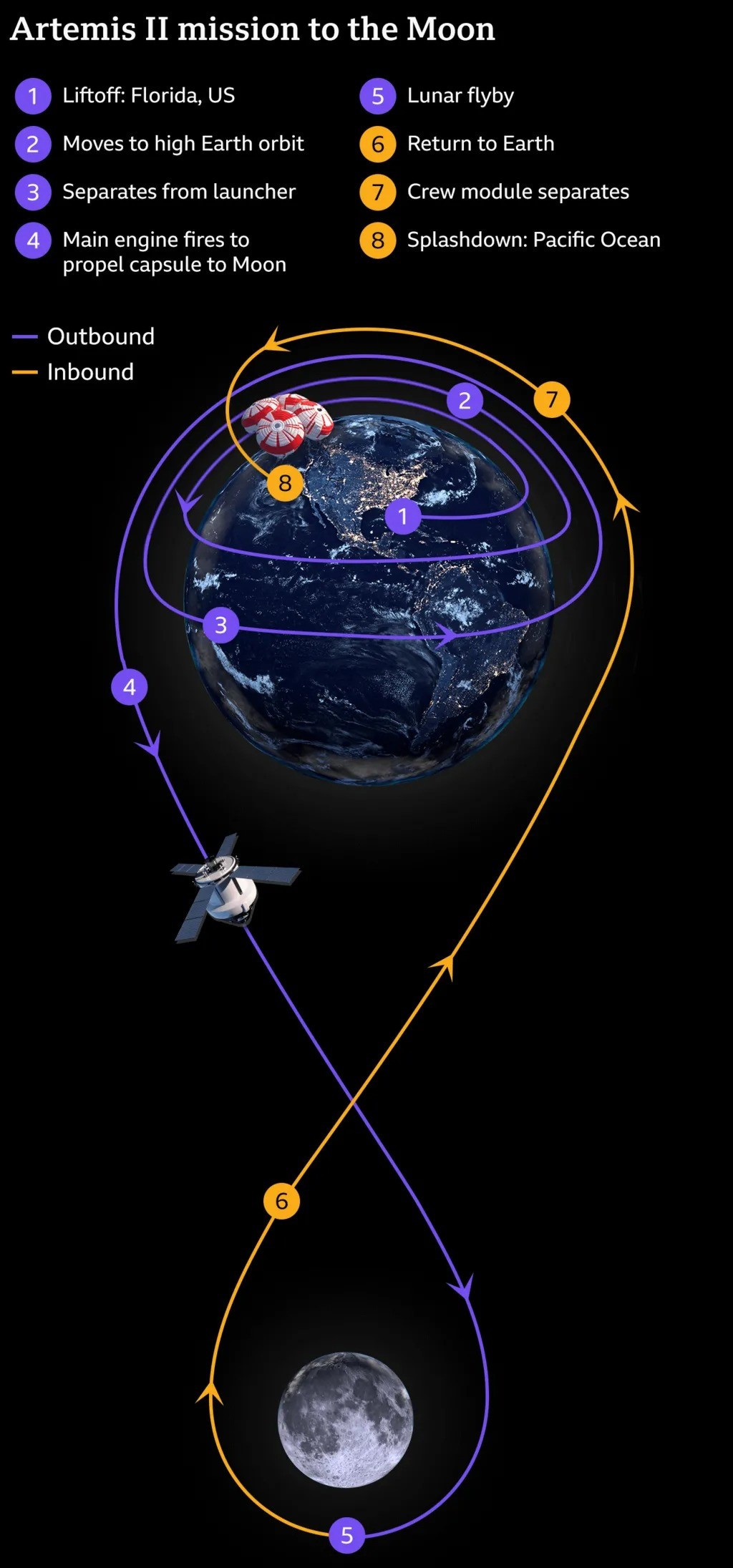
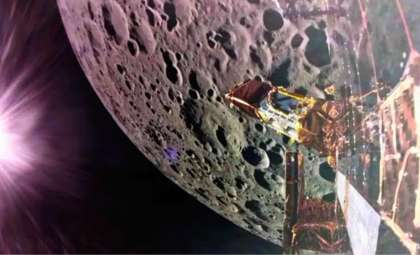
The crew of NASA’s Artemis II mission is gearing up to explore lunar regions never directly seen by humans before, including areas untouched during past Apollo missions. Slated for launch no earlier than February 6, this mission will orbit the far side of the moon without landing, giving four astronauts a rare opportunity to observe this concealed lunar landscape firsthand.
One notable landmark on their observational agenda is Mare Orientale, an enormous impact basin nearly 600 miles wide located on the moon’s far side. This feature remains largely hidden from Earth-based viewing due to its position, but the Artemis II trajectory, combined with optimal lighting conditions, is expected to provide an exceptional vantage point for the crew to study this ancient structure.
Human Insight into Lunar Surface Features
The mission’s four members—Reid Wiseman, Victor Glover, Christina Hammock Koch, and Jeremy Hansen—will dedicate about three hours to visually exploring the lunar surface. NASA exploration scientist Jacob Bleacher highlights how human vision is crucial for detecting subtle variations in texture and brightness that can hint at differences in geological composition and age, something automated instruments might overlook.

“Though many assume the moon is merely a gray surface,” Bleacher explained, “human sight can discern an impressive level of detail.”
A primary investigation target will be Mare Orientale, a lunar basin with distinctive concentric rings and a lava-flooded core formed by an intense ancient impact. While spacecraft such as the Lunar Reconnaissance Orbiter have created detailed maps of the region, astronaut observations may reveal dynamic surface clues invisible to automatic analysis, especially under changing sunlight.
The team plans to alternate between direct observation, photography, and constant communication with Earth-based scientists throughout their survey.
Astronauts Equipped for Geological Spotting
Although no lunar landing will occur, the Artemis II crew has undergone rigorous geology training. This includes immersive exercises in Iceland, where the astronauts practiced identifying volcanic and impact-related formations similar to those found on the moon, as reported by Mashable.
They will carry scientific checklists devised by lunar geologists but retain the freedom to investigate features that capture their interest during the mission.
“I cannot wait to hear their voices when they get to the far side of the Moon… There are a lot of places that human eyes have never seen.”
— NASA Artemis (@NASAArtemis) January 8, 2026
Scientist Marie Henderson is training the Artemis II crew to capture and document their views of the lunar surface for all of us back home. pic.twitter.com/1B02cW4jX3
As views of the moon fill the windows of Orion, the spacecraft transporting them, the astronauts will use their training to distinguish features that could guide future landing site selections and scientific objectives. This mission reflects NASA’s shift toward combining structured plans with adaptability in human exploration.
Revealing the Moon’s Untouched Historical Record
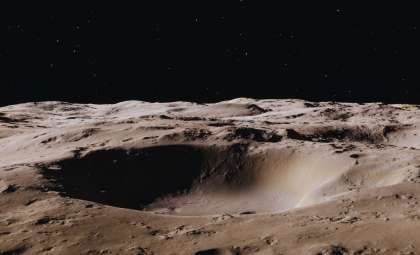
The lunar far side preserves a geological history less altered than the near side, where vast maria or lava plains have obscured older formations. The far side remains densely cratered and largely unaltered, offering a window into the moon’s primordial past.
Because the moon’s rotation matches its orbit around Earth, the same hemisphere always faces us, concealing the far side until the Soviet Luna 3 spacecraft photographed it in 1959. Even during the Apollo program, glimpses of the far side were fleeting and often made under suboptimal lighting conditions, according to Mashable.
The Artemis II mission leverages advantageous timing and flight paths to provide unprecedented visibility of this lunar hemisphere. Astronaut Christina Koch has remarked that the mission may help dispel the myth of the “dark side of the moon” by demonstrating this region receives ample sunlight.
- Categories:
- Space






0 comments
Sign in to Comment