
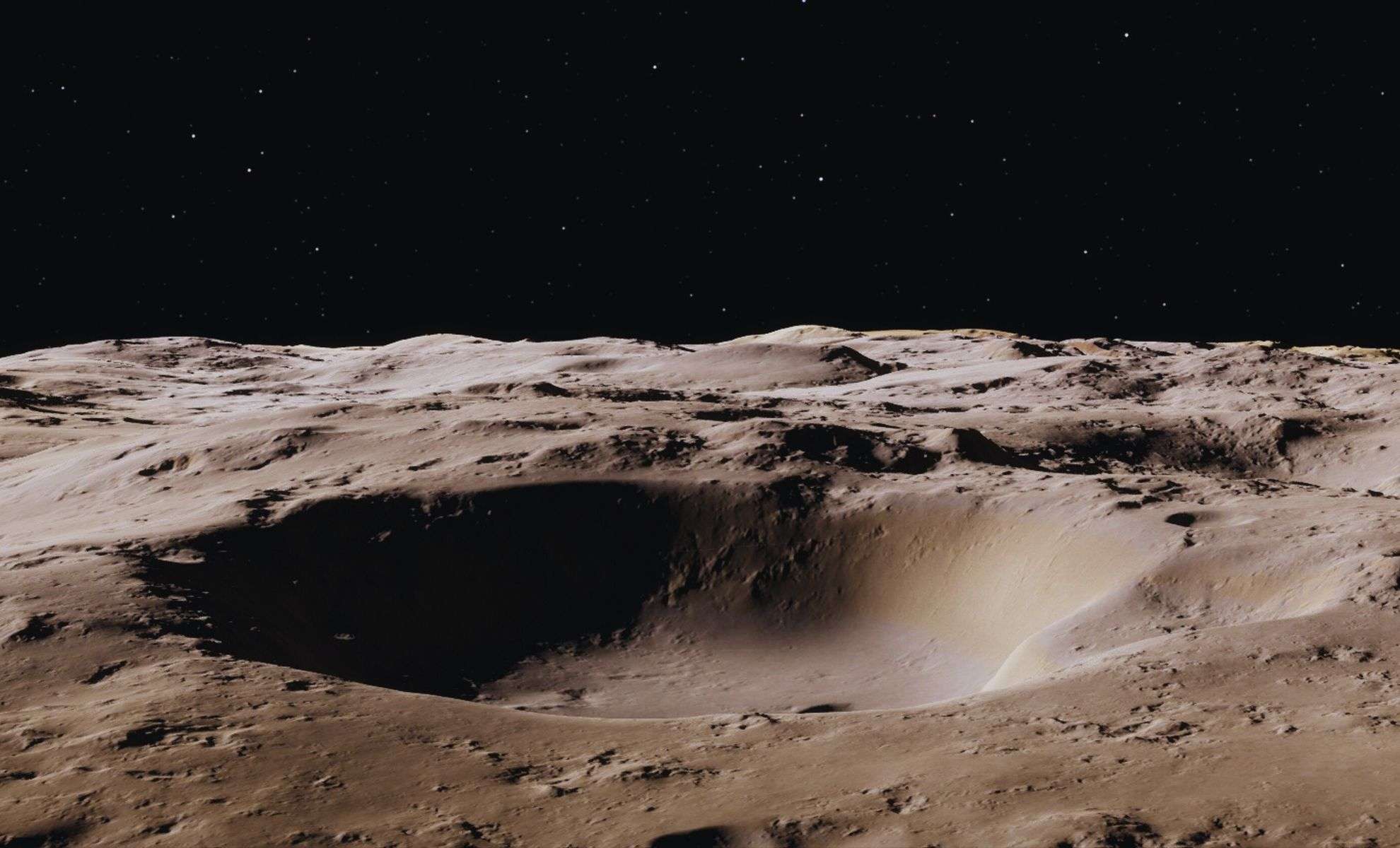
The Moon’s oldest and most expansive crater, the South Pole–Aitken (SPA) basin, is offering new clues that could revolutionize our knowledge of the Moon’s formation and the evolution of similar rocky worlds. Recent findings from the University of Arizona, published in Nature, reveal surprising features within this vast impact site. With NASA’s Artemis program aiming to explore this area soon, astronauts will have a unique opportunity to investigate beneath the Moon’s crust.
A New Perspective on an Ancient Impact
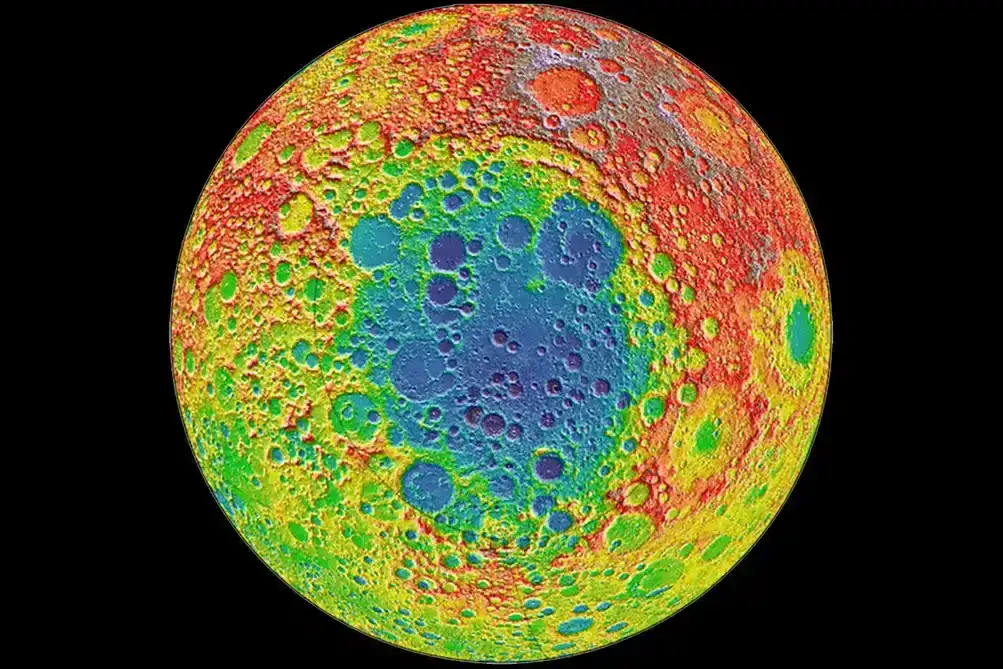
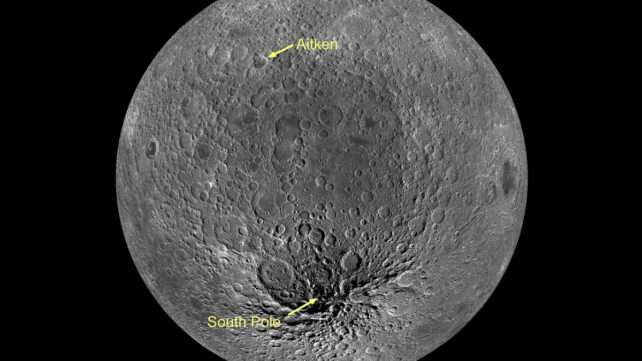
Situated on the Moon’s far side, the SPA basin measures over 1,930 kilometers north to south and about 1,600 kilometers east to west. Formed roughly 4.3 billion years ago by a colossal asteroid collision, this basin stands as one of the Moon’s most ancient landmarks. Previously, scientists thought the impactor approached from the south. However, planetary scientist Jeffrey Andrews-Hanna and his team have proposed a compelling alternative view.
Examining the basin’s distinctive teardrop shape, characteristic of low-angle impacts, the researchers found the crater actually tapers toward the south. This indicates the asteroid likely came from the north. Beyond adjusting impact models, this insight alters expectations about where debris, or ejecta, was scattered. With the Artemis astronauts set to explore the southern rim, they will be positioned perfectly to study materials originating from deep beneath the Moon’s surface.

Unlocking the Moon’s Hidden Record
Unlike smaller impact craters that spread debris evenly, massive basins like SPA distribute ejecta unevenly. The downrange side, believed to be in the south, is covered by a thick accumulation of excavated material, providing access to layers that are otherwise unreachable without deep drilling.
This holds the key to tracing the Moon’s transformation from a molten orb to the dual-character world observed today. In its early days, the Moon hosted a global magma ocean. As it cooled, dense elements sank to form the mantle, while lighter ones rose to create the crust. Certain elements such as potassium, rare earth elements, and phosphorus, collectively termed KREEP, resisted solidification and accumulated in the final molten pockets.
KREEP is significant due to its connection with radioactivity and internal heating. The Moon’s near side features vast volcanic plains called maria, formed due to these heat sources. However, the far side with the SPA basin has remained cold, heavily cratered, and volcanically inactive—a puzzle that has intrigued scientists.
Clues Beneath the Lunar Surface
The study released on October 8, 2025 suggests that the far side’s crust thickened unevenly over time, compressing magma ocean remnants and pushing radioactive elements toward the thinner crust of the near side. This uneven crustal growth likely influenced patterns of volcanic activity across the Moon.
Supporting this idea, scientists discovered high thorium concentrations—a radioactive element linked to KREEP—on the western edge of the SPA basin, while the eastern flank lacks such enrichment. This contrast suggests the impact struck a boundary where pockets of KREEP-rich materials still persisted beneath the far side’s surface.
Future Artemis landings near this boundary could let astronauts collect deep-sourced lunar rocks, offering unique insights into why the Moon’s hemispheres diverged so dramatically.
- Categories:
- Space










0 comments
Sign in to Comment