

Newly returned lunar samples from China’s Chang’e 6 mission have unlocked vital clues about the moon’s primordial geological past. These unprecedented samples shed light on the moon’s volcanic origins and deepen scientists’ comprehension of its early development.
Exploring Uncharted Lunar Terrain
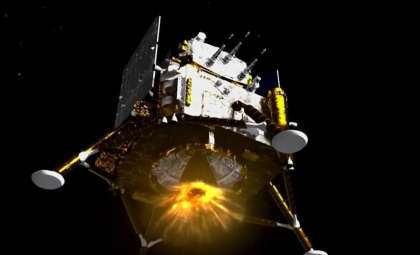
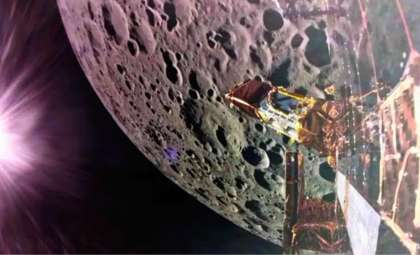
Deployed in May 2024, the Chang’e 6 mission represents China’s second effort to retrieve moon rocks, building on the achievements of Chang’e 5 from 2020. Whereas that mission landed on the near side of the moon, Chang’e 6 set its sights on collecting material from the lunar far side, an area never before sampled.
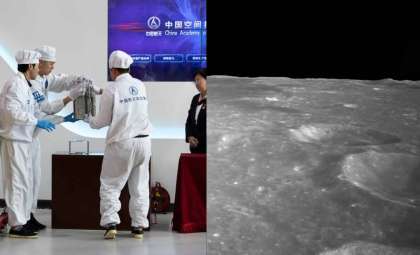
In June 2024, the mission successfully returned approximately 1,935 grams of lunar material from the South Pole-Aitken Basin (SPA), a geologically rich and intriguing region.
Evidence Strengthens Magma Ocean Hypothesis
Investigation of the basaltic rocks brought back provides strong confirmation for the long-held theory that the moon was once enveloped by a massive magma ocean early in its evolution. This molten layer, existing for up to hundreds of millions of years, was instrumental in sculpting the moon’s landscape.
The lunar samples bear chemical likeness to the low-titanium basalts recovered by NASA’s Apollo program from the near side, reinforcing the conclusion that extensive volcanic activity once shaped much of the moon.

SPA Basin’s Role in Lunar Composition
Distinct from the Apollo collections, the Chang’e 6 samples also demonstrated notable differences in ratios of uranium and lead isotopes. This variation is likely linked to the massive impact event that created the South Pole-Aitken Basin nearly 4.2 billion years ago, which modified the moon’s mantle chemistry in that vicinity, accounting for the unique sample characteristics.
Opening New Frontiers in Lunar Research
The newfound variations in density, structural traits, and elemental composition within the Chang’e 6 samples pave the way for novel scientific inquiries. Researchers now have a fresh landscape to reassess established lunar formation theories and propose innovative models.
These insights not only enhance our grasp of the moon’s history but may also illuminate the early development of other planetary bodies in our solar system.
The Chang’e 6 mission signifies a landmark achievement in space exploration, bridging previous unknowns with newfound knowledge. As scientists continue to examine these materials, the enigmatic narrative of lunar evolution unfolds further.







0 comments
Sign in to Comment