

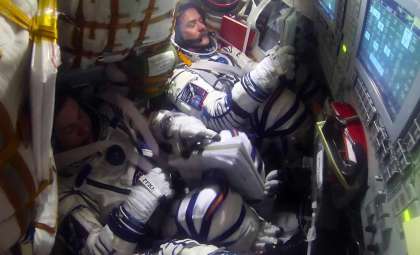
Contrary to popular belief, outer space is silent since it lacks a medium like air for sound to travel. Yet, on a crisp October day in 2003, China’s inaugural astronaut, Yang Liwei, experienced an anomaly that defied this principle. While orbiting the Earth aboard the Shenzhou 5 spacecraft, Yang reported hearing a pattern of knocks—described as if someone were tapping the hull with a wooden mallet—in interviews with Chinese state outlets and the BBC.
There was no apparent explanation. No objects moved outside the capsule, no alarms sounded. The tapping was distinct and rhythmic, but attempts to recreate the sound on Earth have failed. According to standard physics, such sounds should not have been heard in a vacuum.

Decades later, this enigma deepens as other Chinese astronauts on missions in 2005 and 2008 reported similar knocking sounds. Within China’s space community, the noise has become a mysterious but familiar oddity, with Yang advising future crew members not to be alarmed if they hear it.

So what exactly are these sounds astronauts are perceiving outside the Earth’s atmosphere? And why can’t current scientific understanding fully clarify these occurrences?
Unidentified Sounds Long Associated With Space Travel
These acoustic mysteries aren’t unprecedented. During the Apollo 11 test flight in May 1969, astronauts Thomas Stafford, John Young, and Eugene Cernan reported a whistling noise from the far side of the Moon, beyond Earth’s communication range. They affectionately termed it “space music.” NASA withheld the recordings for many years before publicly releasing them in 2008 alongside a documentary.
NASA attributed this noise to radio interference between the lunar module and command module systems. Nevertheless, some researchers remain unconvinced due to the unusual pitch and rhythm.
More recently, NASA’s Van Allen Probes have detected “plasma waves” within Earth's magnetosphere. These electromagnetic signals, converted into audible sounds, resemble chirps, sirens, or groans. These sounds are not transmitted through air but are interpreted by instruments that measure fluctuations in electric and magnetic fields.
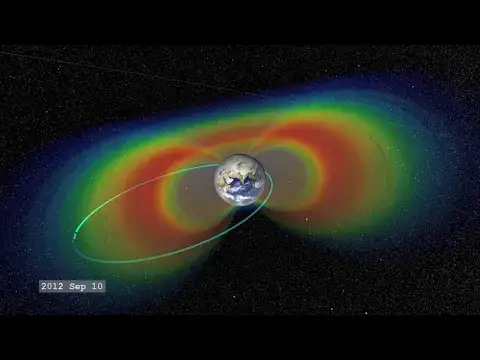
However, Yang Liwei’s experience was different—he heard these sounds personally, not through instruments. This direct auditory phenomenon is far more puzzling and remains unexplained.
The Leading Hypotheses and Their Challenges
Scientists have proposed several ideas, but none fully account for the repeated knocks. One hypothesis considers thermal stress. Spacecraft undergo rapid temperature swings—from blistering sunlight to deep shade in minutes—which can induce expansion and contraction in materials, potentially causing creaks or knocks.
Although plausible, as Prof. Goh Cher Hiang, an aerospace engineer at the National University of Singapore, explained to the BBC, the specific description of consistent and isolated knocks doesn’t align well with typical thermal stress behavior. Moreover, inspections showed no physical damage after the flight.
Another scenario involves impacts from micrometeoroids or orbital debris. Tiny particles, traveling up to 28,000 km/h in low-Earth orbit, could strike the spacecraft causing vibrations. Yet, no corresponding damage was detected, and the sound reportedly occurred multiple times.
A third idea speculates on possible auditory hallucinations induced by isolation, stress, or the unique acoustics inside the capsule. While speculative, there is scant evidence of such occurrences among astronauts without physical triggers.
Mysterious Signals from Jupiter’s Moon Ganymede
Elsewhere in the solar system, NASA’s Juno spacecraft recorded unique audio emissions during its 2021 flyby of Ganymede, Jupiter’s largest moon. Using its Waves instrument, Juno captured a 50-second sequence of electromagnetic signals that transformed into a shifting chorus of frequencies as it moved from night to day side of the moon.
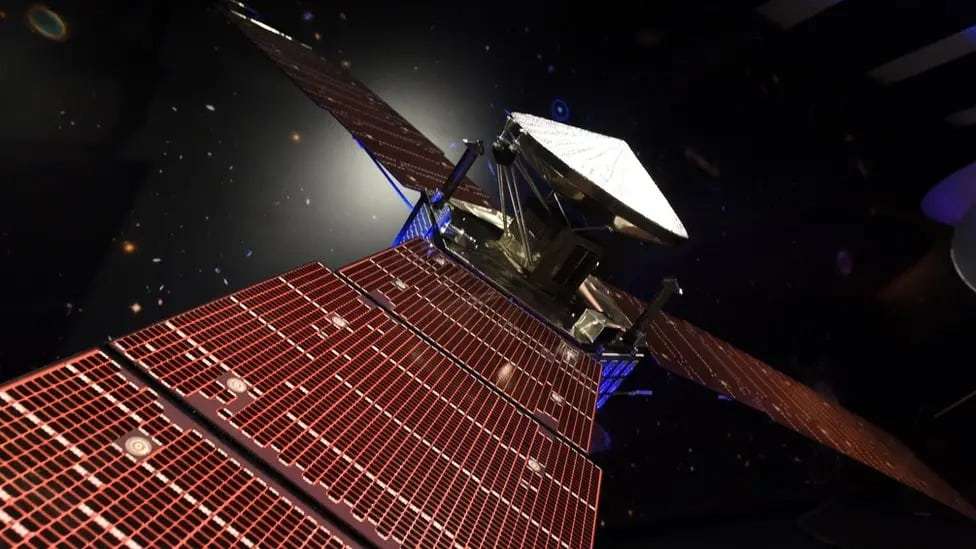
"This audio clip uniquely immerses you in the journey," said Scott Bolton, Juno’s principal investigator, during a press conference. The abrupt frequency changes might reveal previously unknown features of Ganymede’s magnetic field.
While humans did not hear Juno’s sounds directly, the discovery highlights how non-acoustic signals in space can be converted into audible frequencies, challenging the notion that space is entirely silent. It suggests a universe rich with signals still waiting to be deciphered.










0 comments
Sign in to Comment