
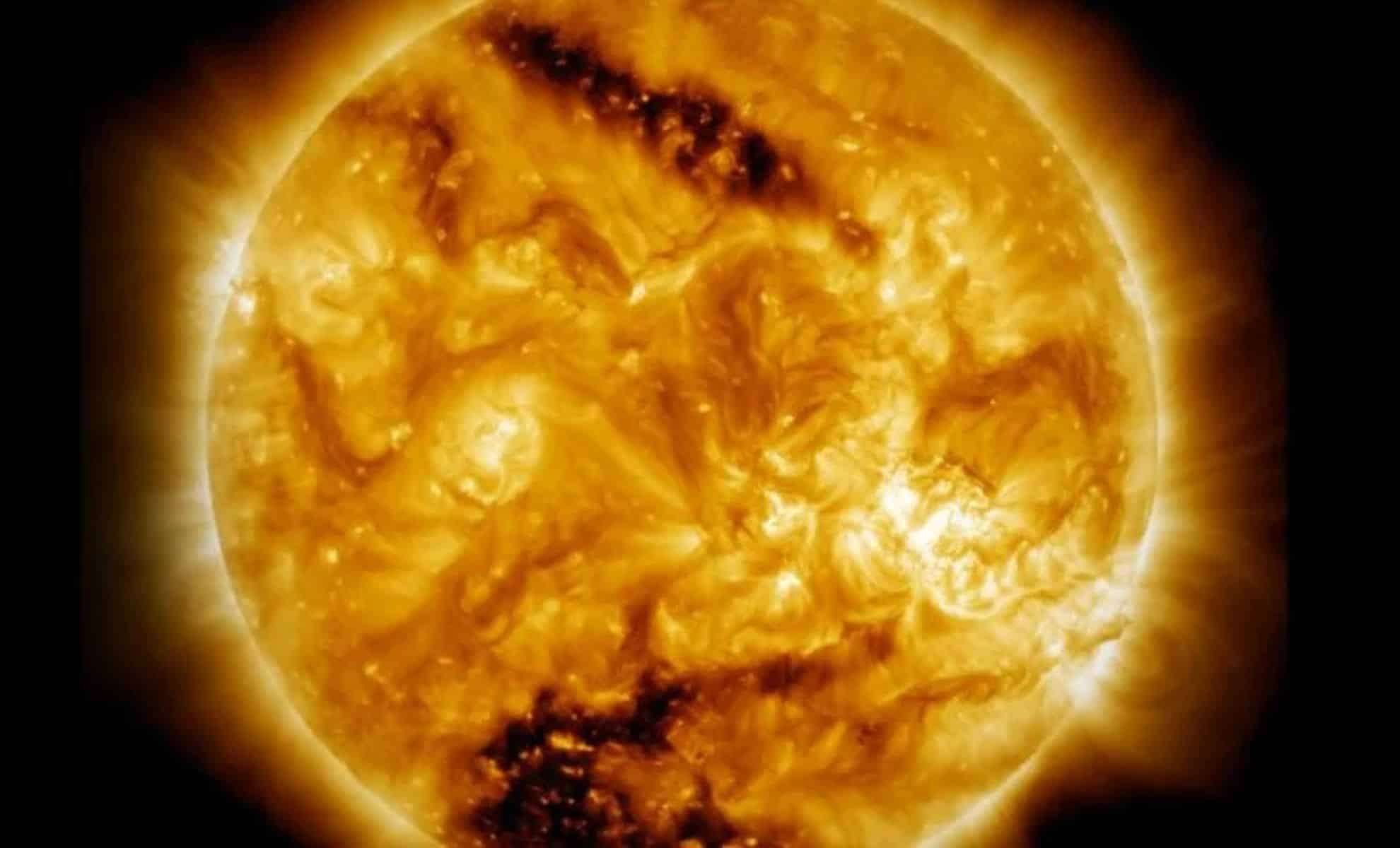
For many years, the extreme temperature difference between the sun’s corona and its surface has baffled researchers.
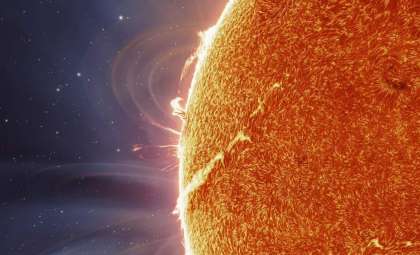
Although the sun’s surface temperature is approximately 10,000 degrees Fahrenheit, its outer atmosphere, the corona, reaches an astonishing 2 million degrees Fahrenheit. This surprising phenomenon has been a scientific puzzle since its discovery in 1939. Recent research from the Princeton Plasma Physics Laboratory (PPPL) provides a promising explanation for this enigmatic heating.
Alfvén Waves and Their Role in Corona Heating
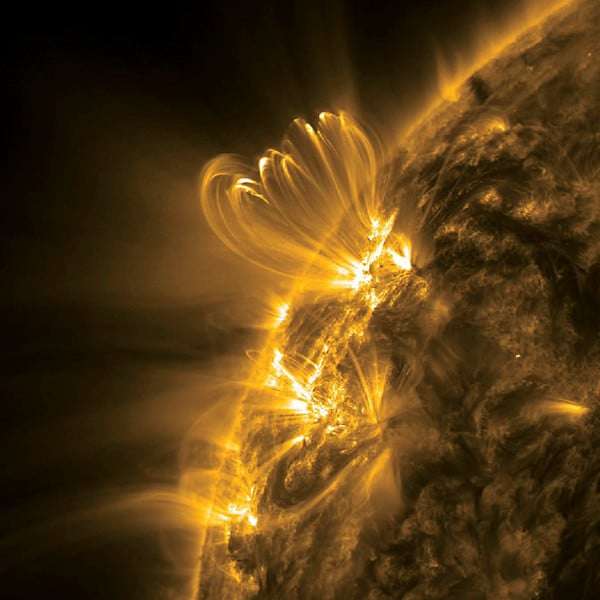
The explanation revolves around the dynamics of plasma waves, particularly Alfvén waves, which are magnetic-driven oscillations in plasma. These waves, originally envisioned by Nobel Prize winner Hannes Alfvén, resemble the vibrations along a guitar string but travel through plasma. Research led by Sayak Bose at PPPL indicates that reflected Alfvén waves inside coronal holes—low-density areas on the sun—play a critical role in heating the corona to such extreme temperatures.

“While scientists knew coronal holes were hot, the exact heating process eluded us,” Bose shared. “Our work shows that the reflection of plasma waves can generate the necessary heat. This is the first time this has been demonstrated in a laboratory under conditions that replicate coronal holes.”
Published in The Astrophysical Journal, their study provides the first practical proof that these waves can bounce back and deliver energy to their origin, causing turbulence within the plasma. This turbulence then raises the plasma’s temperature dramatically.
Laboratory Tests and Computational Models
To confirm their theory, Bose’s team utilized the Large Plasma Device (LAPD) at UCLA, generating Alfvén waves along a 20-meter plasma column mimicking conditions inside the sun’s coronal holes. Their experiments revealed that when the waves encountered regions with changes in plasma density and magnetic fields—resembling the corona—they reflected back, leading to wave interactions and resultant turbulence that heats the plasma.
“It had long been proposed that Alfvén wave reflections might explain the elevated temperatures in coronal holes,” said Jason TenBarge, a visiting scientist at PPPL. “This experiment provides the first tangible evidence that these reflections occur and carry enough energy to cause the heating observed.”
The team also ran detailed computer simulations matching the experimental conditions. The simulations reinforced their experimental conclusions, offering a strong theoretical basis for how Alfvén wave reflections could trigger coronal heating.
Impact on Solar Activity and Space Weather Understanding
This discovery offers more than just a solution to a decades-old question; it carries major significance for space weather predictions. The study enhances our grasp of how energy moves through the sun’s atmosphere—a process influencing the solar wind, streams of charged particles that interact with Earth’s magnetic environment. These solar winds can disrupt satellite operations, GPS signals, and power infrastructure on Earth.
By uncovering the mechanism behind coronal heating, scientists can better anticipate solar flares and coronal mass ejections, intense eruptions that can impact Earth’s technology and infrastructure. “Alfvén waves are fundamental not just to solar physics but to understanding space weather as well,” TenBarge emphasized.
Advancing Solar Physics Research
This landmark progress marks a critical advance, yet many questions remain. While reflected Alfvén waves emerge as key to heating coronal holes, researchers are keen to investigate whether similar processes occur in other regions of the corona and what other factors might contribute to coronal heating.
“Our findings open up many new avenues for exploration,” Bose noted. “The behavior of Alfvén waves is complex and fascinating. Laboratory work and simulations are invaluable in expanding our understanding of the sun’s physics.”
The Princeton team’s pioneering approach combining experimental techniques with advanced modeling promises to reveal further insights about the sun’s influence on space weather and its broader effects on Earth.







0 comments
Sign in to Comment