
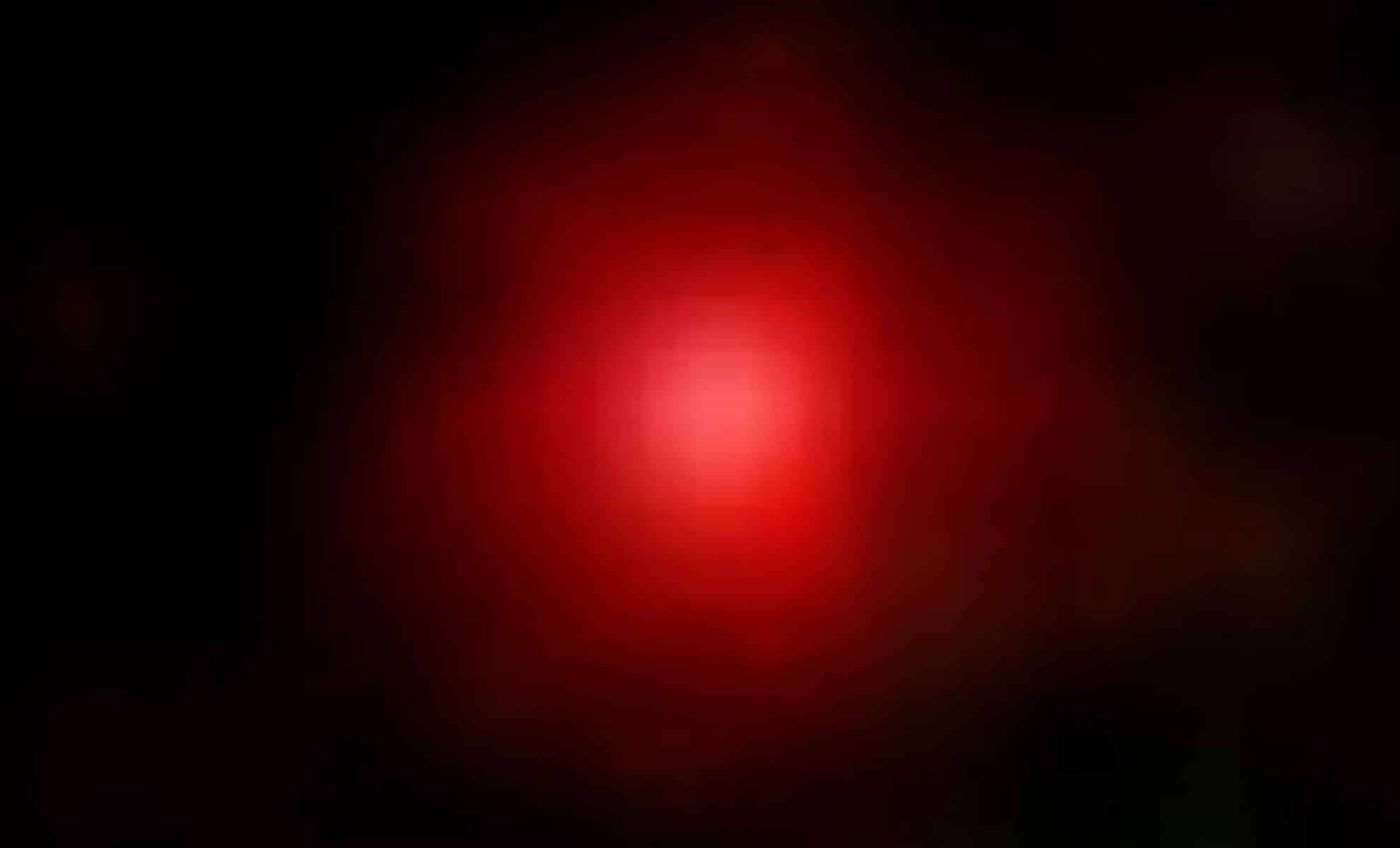
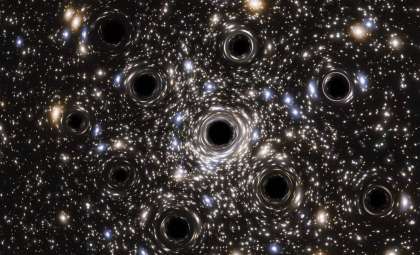
A faint red point observed deep in the cosmos may unlock secrets about the universe's earliest moments. In a recent preprint shared on arXiv, researchers led by Ignas Juodžbalis from the University of Cambridge report that the James Webb Space Telescope (JWST) might have captured the first direct signs of a primordial black hole — a theorized black hole type believed to have formed within seconds after the Big Bang.
An Isolated Black Hole
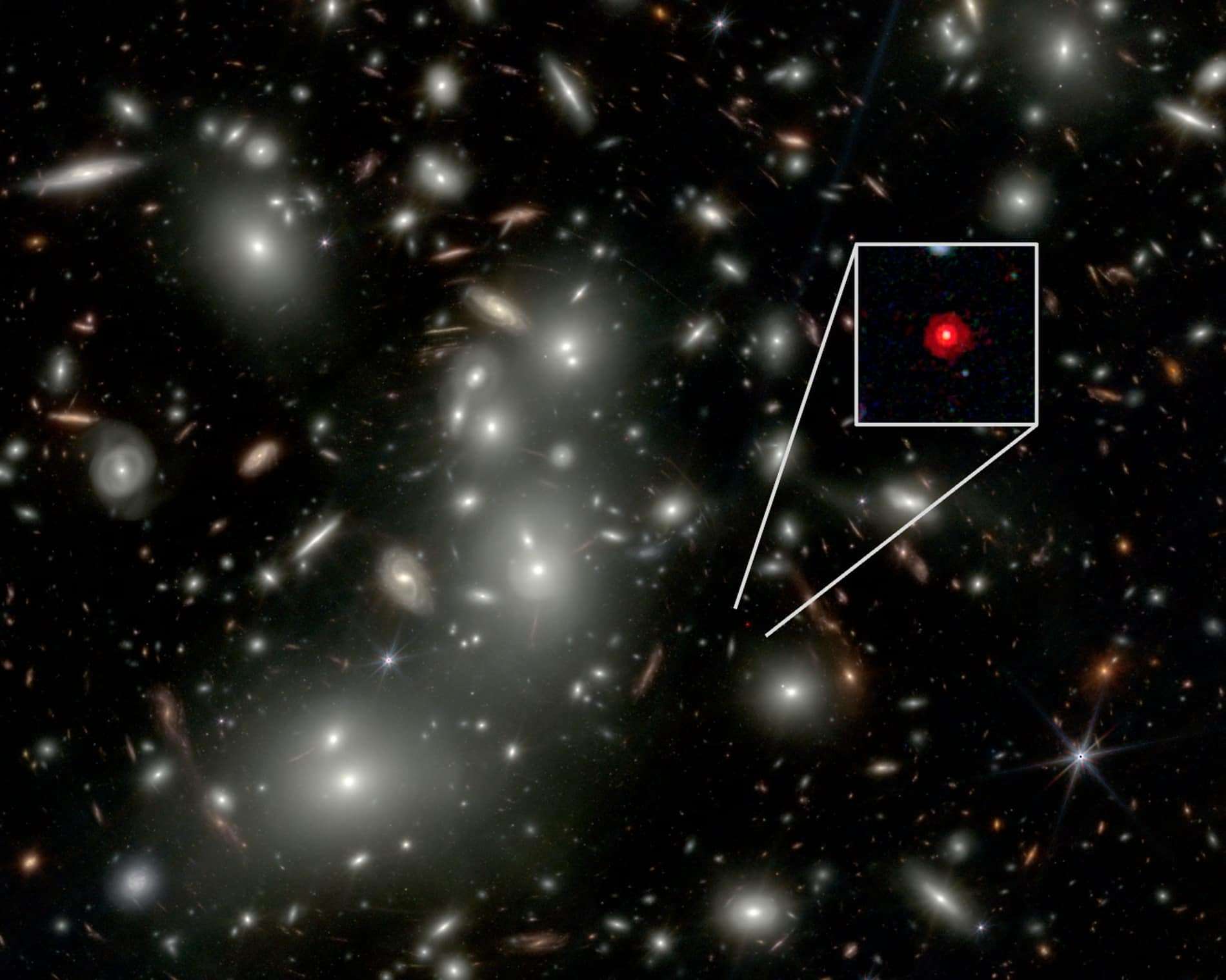
The source, dubbed QSO1, is part of a group of enigmatic "Little Red Dots" (LRDs) recently identified by the James Webb Space Telescope during its probe of the Epoch of Reionization, approximately 600 to 700 million years post-Big Bang. These compact, radiant red sources have puzzled astronomers, with some attributing them to early star clusters. This new analysis, however, points to a far more extraordinary origin: a supermassive black hole predating any known galaxy formation.
QSO1 is remarkable due to its isolation—a colossal 50-million-solar-mass black hole with no discernible host galaxy. As Professor Roberto Maiolino remarked, “This black hole is nearly naked.” Typically, galaxies in the present-day universe are significantly more massive than their central black holes. Yet around QSO1, the surrounding stellar mass is less than half that of the apparent cosmic void, reversing the expected mass relationship.

The area is also chemically pristine, composed nearly exclusively of hydrogen and helium, lacking heavier elements usually created by stars. This composition strongly hints that QSO1 formed before the earliest stars ignited.
Utilizing Gravitational Lensing for Enhanced Observation
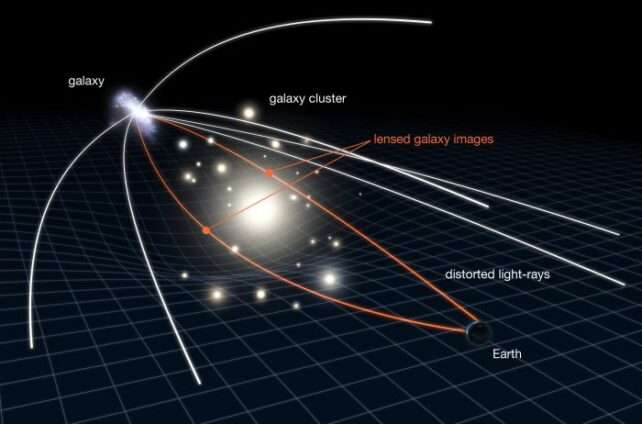
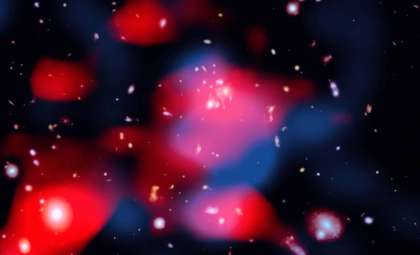
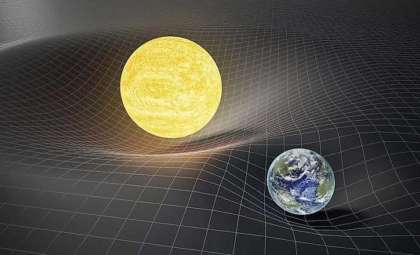
The detailed study of QSO1 was made possible by a fortuitous cosmic alignment. A massive galaxy cluster lies between Earth and QSO1, whose gravitational field bends and amplifies light from QSO1—a phenomenon called gravitational lensing. This "natural telescope" enabled astronomers to examine QSO1's spectral and rotational properties, providing insights into its mass and structural characteristics.
Findings exclude the possibility of QSO1 being a densely packed star cluster. Instead, data correspond to a rotating galaxy centered on a supermassive black hole—yet with almost no galaxy observable around it.
One alternative hypothesis considers QSO1 as a direct collapse black hole, formed when a massive gas cloud collapses directly into a black hole without forming stars first. However, such objects usually emit ultraviolet radiation, which is absent here. This absence challenges the direct collapse model, lending support to the more groundbreaking idea that QSO1 could be a primordial black hole—originating from gravitational collapse in the earliest instants of cosmic time.
Implications for Our Understanding of Cosmic History
This potential discovery threatens to overturn the conventional understanding of cosmic development. For years, the prevailing view held that stars and galaxies formed first, with black holes arising later from their remnants. QSO1 suggests a contrasting narrative: black holes appeared first, providing gravitational seeds for subsequent galaxy formation.
Professor Andrew Pontzen, a cosmologist at the University of Durham unaffiliated with the study, emphasized the broader consequences: “A confirmed primordial origin for black holes would deeply impact fundamental physics.” He cautioned, however, that while the evidence is intriguing, it remains indirect, and further research is necessary for consensus.
Looking ahead, upcoming gravitational wave observatories will offer fresh perspectives on the early universe by detecting black hole mergers across vast distances. If primordial black holes exist and are common, they should produce signature gravitational wave patterns distinct from other black hole events.
- Categories:
- News




0 comments
Sign in to Comment