
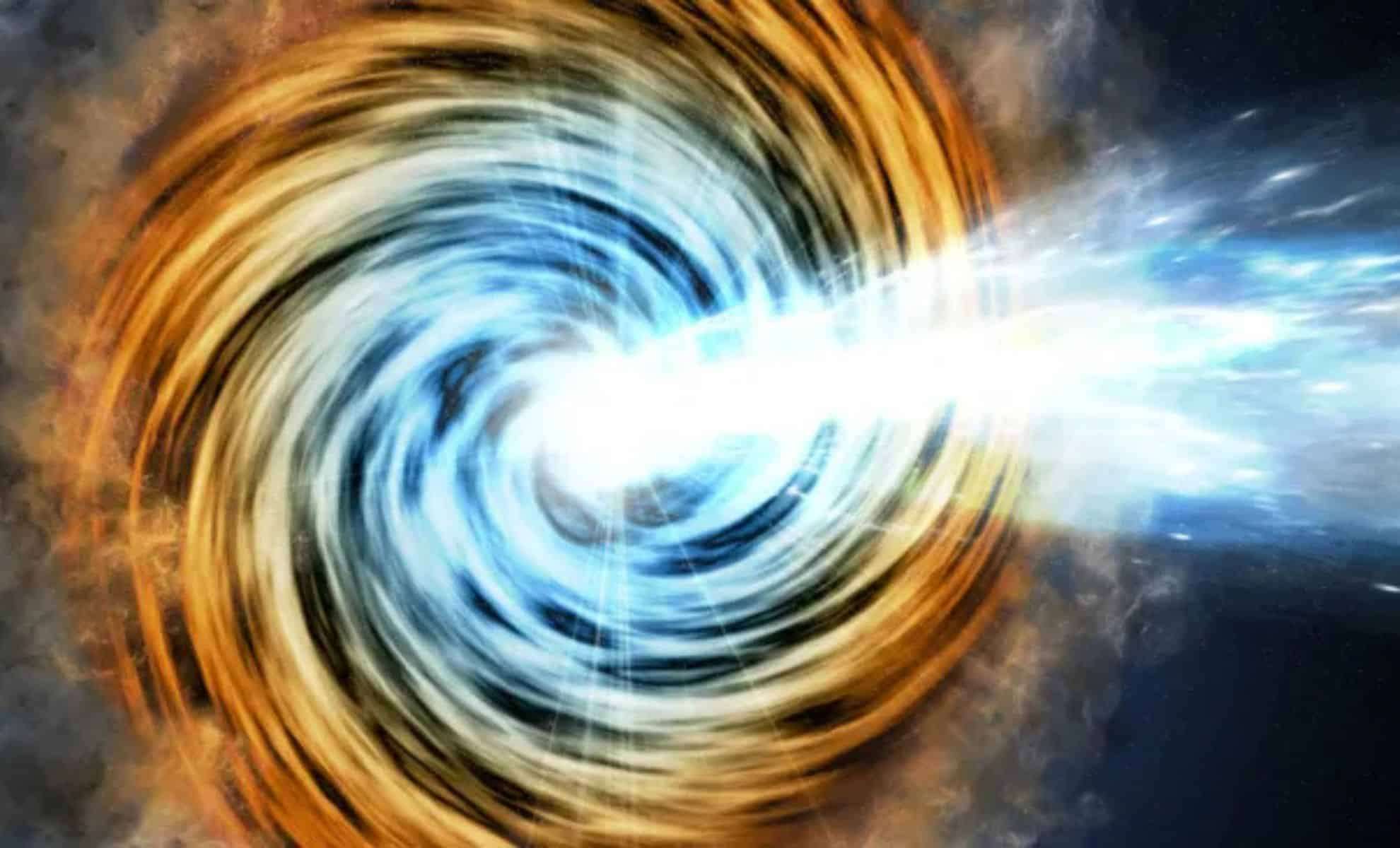
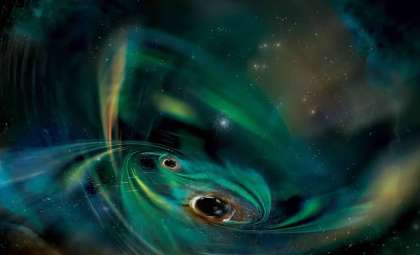
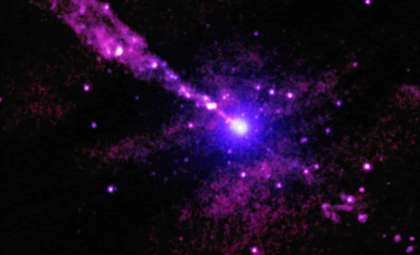
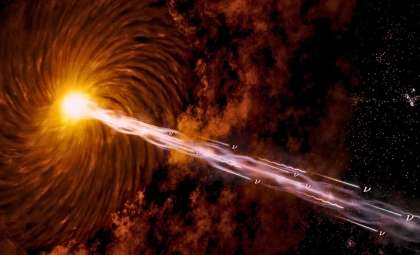
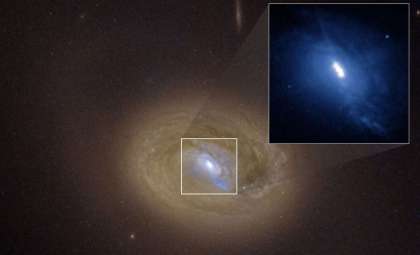
Astronomers have uncovered a remarkable cosmic entity: a supermassive black hole named J0410−0139, situated approximately 12.9 billion light-years from our planet. Weighing as much as 700 million suns, this black hole is projecting a powerful energy jet straight toward Earth. Classified as a blazar, it ranks among the brightest and most energetic celestial phenomena known, representing the most distant blazar ever recorded.
This energetic emission from J0410−0139 dates back to when the universe was a mere 800 million years old, offering a rare glimpse into the early cosmos. By utilizing cutting-edge observatories—including the Atacama Large Millimeter/submillimeter Array, NASA’s Chandra X-ray Observatory, and the European Southern Observatory’s Very Large Telescope—scientists have begun to unlock the secrets of this cosmic giant and its role in shaping our understanding of the universe’s infancy.
A Unique Insight into a Cosmic Giant
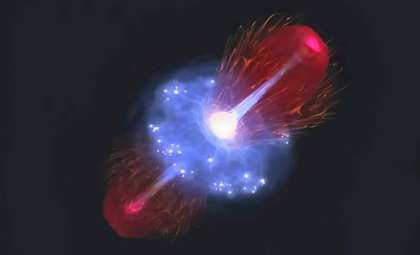
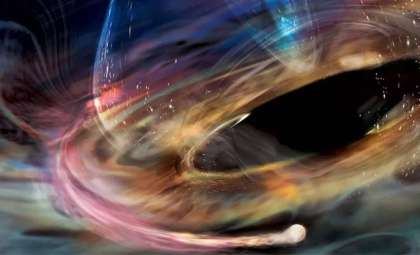
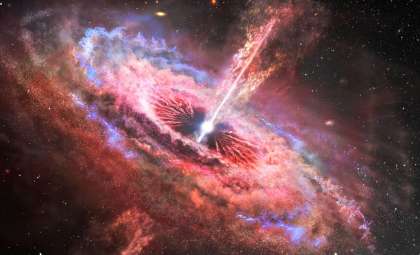
Blazars belong to a class of quasars, which are supermassive black holes emitting vast jets of energy as they consume matter from surrounding accretion disks. When one of these jets points directly at Earth, the object shines with exceptional brightness and intensity, earning it the blazar designation. These rare cosmic phenomena provide vital clues about the mechanisms governing black holes and their environments.

“The alignment of J0410−0139’s jet with our viewpoint offers a direct window into the core of this extraordinary cosmic engine,” noted Emmanuel Momjian, co-author and astronomer at the National Radio Astronomy Observatory. “Studying this blazar allows us to explore the relationship between jets, black holes, and their surroundings during a pivotal period in the universe’s history.”
Observing the jet of J0410−0139 grants researchers invaluable data about the primordial universe, shedding light on black hole formation, matter dynamics near these entities, and their influence on the development of galaxies.
The Most Ancient Blazar Recorded
The identification of J0410−0139 sets a new benchmark as the farthest blazar detected, exceeding the previous record-holder, PSO J0309+27, by roughly 100 million years. While this might seem a slight difference, it carries significant weight in the study of cosmic progression. During this era, the universe experienced rapid evolution, with black holes like J0410−0139 playing a vital role.
“Think of hearing about a $100 million lottery winner,” explained Eduardo Bañados, lead study author from the Max Planck Institute for Astronomy. “Such a rare prize implies many others participated without winning. Likewise, spotting even a single [quasar] jet aimed at us suggests numerous other [quasars] existed in that epoch with jets pointed elsewhere.”
This finding implies that supermassive black holes were more widespread in the young universe than earlier estimated. Although only a small fraction had jets directed toward Earth, their presence reflects a vibrant and dynamic cosmic environment.
Insights into the Early Cosmos
The emission from J0410−0139 offers a rare snapshot of the universe’s infancy, just 800 million years following the Big Bang. At this young stage, groundbreaking processes such as the emergence of first-generation galaxies, stars, and black holes were underway. Examining blazars like J0410−0139 helps scientists reconstruct how these primordial structures arose and evolved.
Blazars display the staggering influence of supermassive black holes, with jets spanning millions of light-years and affecting their host galaxies and cosmic surroundings. By studying these jets, researchers gain crucial knowledge about black hole accretion physics, magnetic interactions, and the origins of such intense energy emissions.
Future Horizons
The revelation of J0410−0139 marks only the beginning. Astronomers anticipate uncovering many more blazars from this distant epoch. “Where there is one, there’s one hundred more [waiting to be found],” remarked Silvia Belladitta, co-author of the research. Discoveries to come will enrich our grasp of cosmic dawn and the pivotal role supermassive black holes played in it.
The team is now concentrating on identifying additional far-flung blazars and analyzing their characteristics. Upcoming observatories such as the James Webb Space Telescope are expected to be critical in detecting these ancient objects and unraveling the mysteries surrounding the universe’s earliest chapters.
- Categories:
- News



0 comments
Sign in to Comment