

After decades of speculation and advanced space exploration, NASA has verified the presence of a planet-wide electric field influencing Earth’s atmospheric dynamics. As detailed in recent findings in Nature, this elusive “ambipolar electric field” may be as fundamental to Earth’s environment as gravity and magnetic forces.
The confirmation, achieved via NASA’s Endurance mission, resolves a longstanding enigma about how particles escape Earth’s upper atmospheric layers, a puzzle that has challenged scientists since the 1960s.
An Invisible Force Driving Supersonic Particle Flows
In the late 1960s, satellites monitoring Earth’s polar regions detected mysterious, fast-moving streams of cold air speeding into space. This phenomenon, termed the polar wind, defied explanation because the particles were too cool to reach such velocities on their own, and solar radiation alone did not account for the behavior.

“There had to be a force pulling these particles out,” explained Dr. Glyn Collinson, lead scientist for the Endurance mission. While researchers suspected a faint electric field was involved, its detection required technological advances until now.
Detecting a Subtle Voltage in the Upper Atmosphere
The pivotal moment arrived on May 11, 2022, when NASA launched a sounding rocket from Svalbard, Norway toward a region known for atmospheric particle outflow. During its brief 19-minute journey reaching 477 miles (768 km) altitude, the rocket measured an electric potential of 0.55 volts—similar in strength to a small watch battery.
“Though a half-volt seems minor,” noted Collinson, “it perfectly accounts for the polar wind.”
In the razor-thin air of Earth’s ionosphere, this modest voltage is sufficient to propel hydrogen ions outward, overcoming gravitational pull by more than tenfold. Even denser oxygen ions become lighter, ascending slowly and enabling a gradual leakage of atmospheric particles into space.
The Mechanism of Atmospheric Escape
This electric field acts as a vast conveyor belt, lifting portions of our atmosphere away over time. The Endurance mission observed a 271% rise in ion density at elevated altitudes, solidifying the field’s critical role in particle escape.
“It functions like a conveyor belt, moving atmospheric particles up and out,” said Collinson.
This process does not depend on extreme heat or solar activity bursts; rather, the subtle force steadily transports charged particles beyond Earth's gravitational hold. Over millions of years, this escape alters the makeup of the atmosphere, especially affecting elements like hydrogen.
The Wider Implications for Earth and Other Worlds
Grasping how Earth’s atmosphere dissipates is essential for understanding its evolution. Researchers now propose this ambipolar field has been active for millions or even billions of years, quietly influencing the air we rely on.
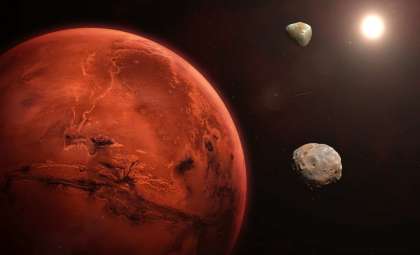
“An ambipolar field should exist around any planet with an atmosphere,” Collinson stated. If true for Earth, it likely applies to planets like Mars and Venus too.
This suggests similar fields could contribute to atmospheric loss on planets where conditions for life may have existed or persist. Exploring these effects can enhance our search for life beyond Earth and improve assessments of planetary atmosphere stability over time.
- Categories:
- News




0 comments
Sign in to Comment