
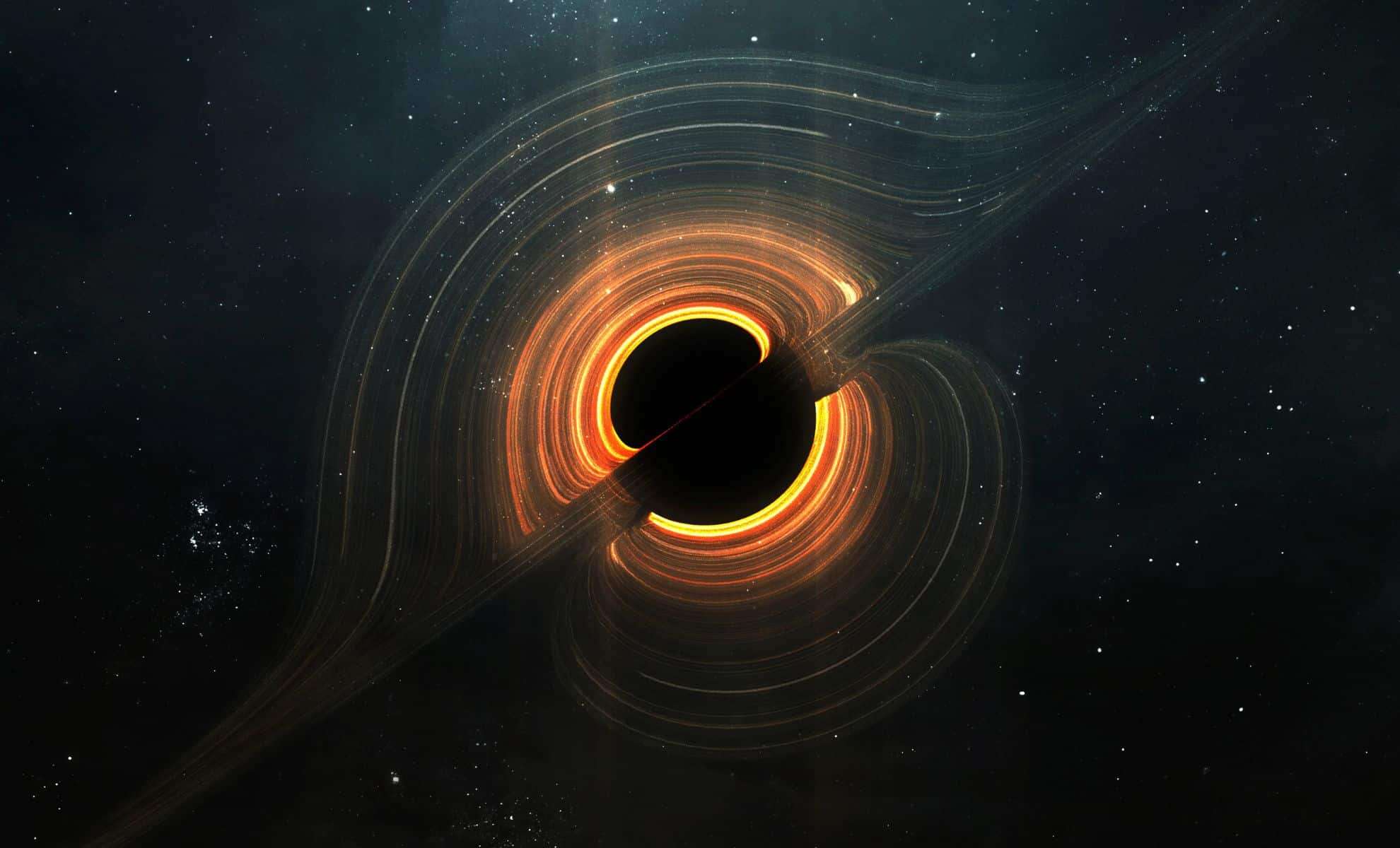
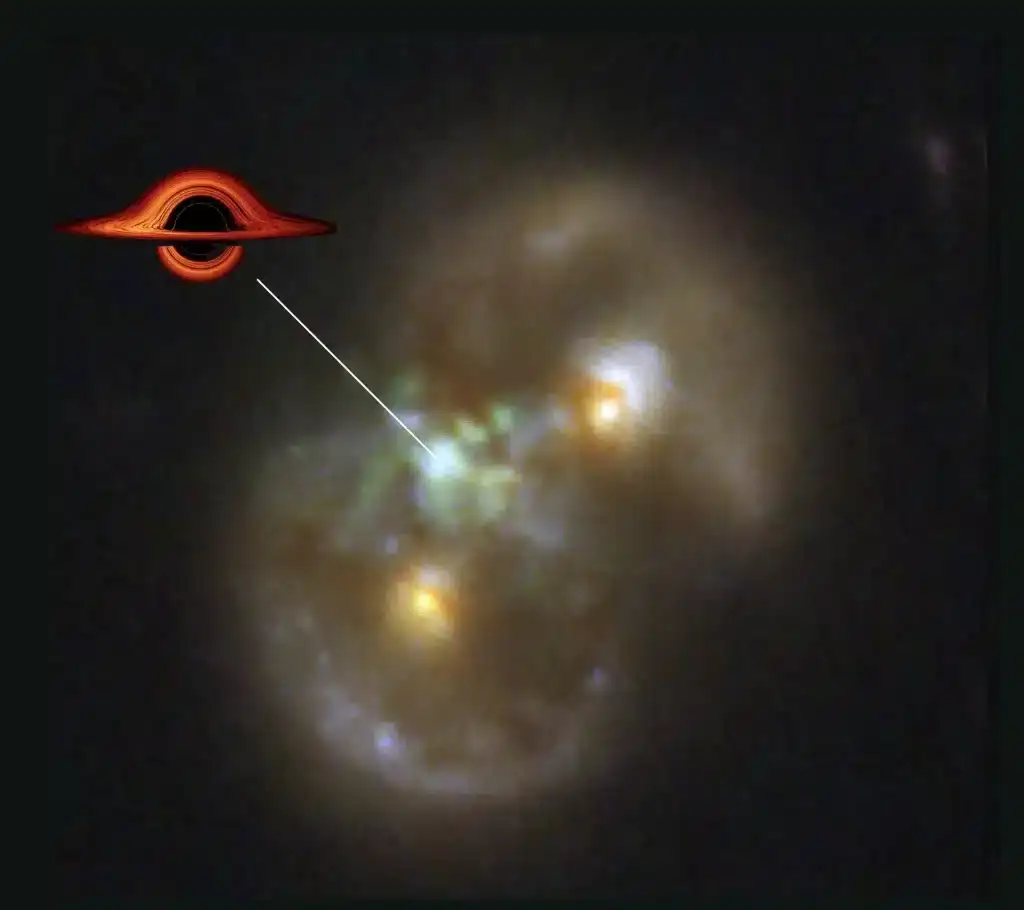
Using the powerful instruments of the W. M. Keck Observatory in Hawaiʻi alongside NASA’s James Webb Space Telescope (JWST), scientists have uncovered a unique cosmic system dubbed the Infinity Galaxy. This figure-eight-shaped structure is a product of two merging galaxies and may be undergoing the formation of a supermassive black hole.
A recent study published on July 15, 2025, in The Astrophysical Journal Letters suggests that this galaxy might showcase the first direct evidence of a supermassive black hole being born, offering new insight into black hole origins during the early cosmos.
A Galaxy Defying Astrophysical Expectations
The Infinity Galaxy emerged from the collision of two disk galaxies, forming a remarkable shape that mirrors the infinity symbol. Even more striking is the finding of a supermassive black hole weighing roughly one million solar masses, located not in either of the original galaxy centers but rather at the intersection of the figure-eight pattern.

This extraordinary location hints at an unusual black hole formation mechanism. Led by Pieter van Dokkum from Yale University, the research team believes the black hole is in a nascent phase, still enveloped by thick gas and aggressively accreting matter—an observation without precedent.
Challenging Established Black Hole Models
The Infinity Galaxy was initially identified in data from the COSMOS-Web survey, part of JWST’s extensive deep-sky catalog. Its nature was further examined with detailed observations across multiple platforms, including the Very Large Array (VLA), which detected radio signals from gas and jets, and the Chandra X-ray Observatory, which recorded high-energy emissions indicative of material falling into a black hole.
Using the Low-Resolution Imaging Spectrometer (LRIS) at Keck, the team precisely determined the galaxy’s redshift, dynamics, and central black hole mass. “Keck’s flexible observing approach enables rapid decision-making, allowing us to pursue challenging, high-impact targets unattainable by fixed-schedule observatories,” noted Pieter van Dokkum.
This adaptability was crucial for obtaining vital data that confirmed the black hole’s exact position and its uncommon location between the merging galaxies.
Simulating the Formation of Massive Black Holes
According to van Dokkum’s team, the galactic collision generated shockwaves compressing vast gas concentrations to the degree that gravity induced collapse into a black hole rather than star formation. While rare in the current epoch, such events were likely common in the chaotic early universe when galactic mergers happened frequently.
Future observations using Keck’s adaptive optics later this year aim to probe the surroundings of the newly forming black hole more closely. Complementary computational models will help validate whether these extreme interaction conditions naturally lead to supermassive black hole creation.
Should these findings hold true, the Infinity Galaxy could exemplify the processes that influenced the formation of early galaxies, including our own Milky Way.
- Categories:
- News






0 comments
Sign in to Comment