
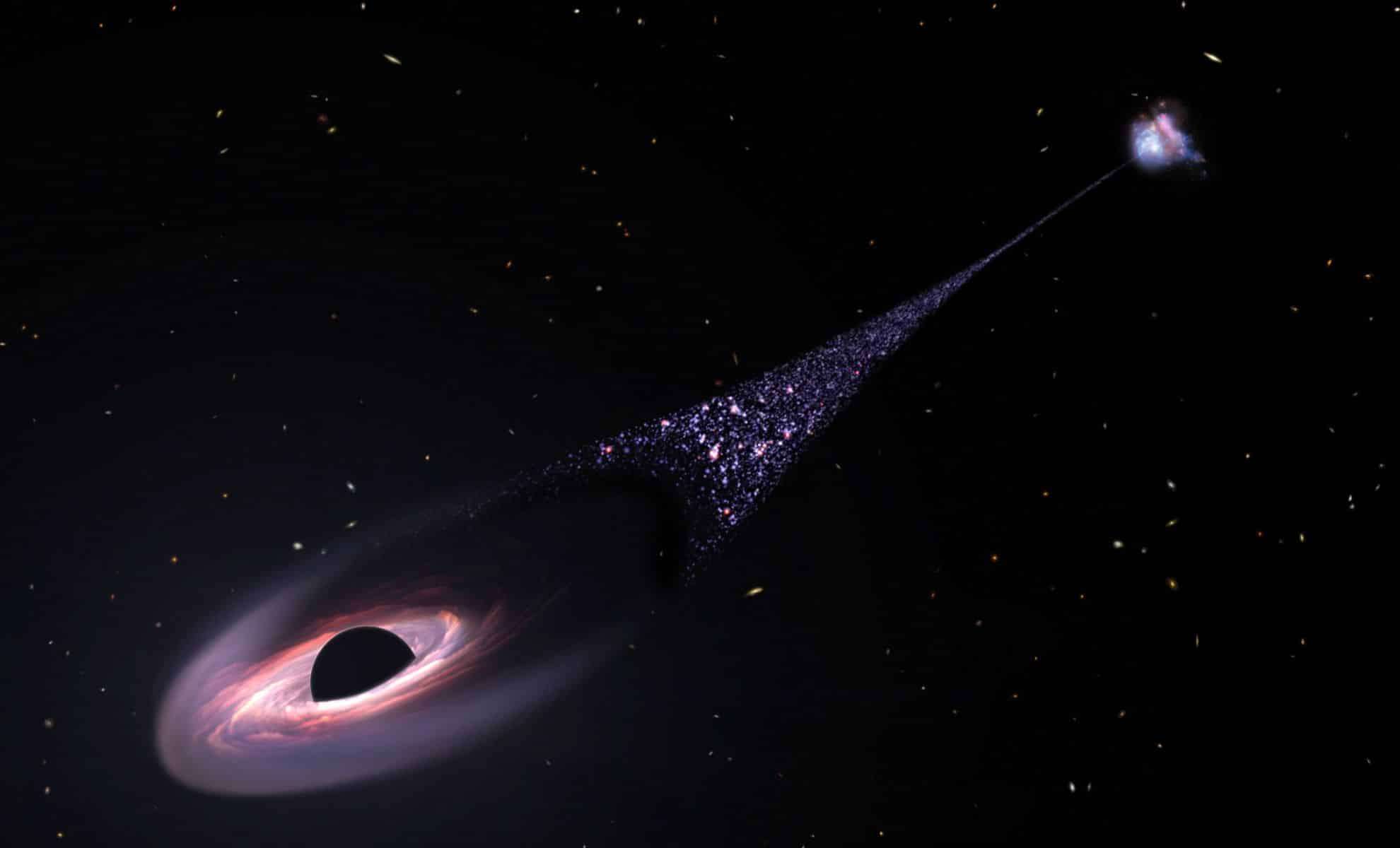
Our solar system’s home, the Milky Way, faces an extraordinary cosmic encounter ahead. Scientists have revealed that a supermassive black hole residing in the Large Magellanic Cloud (LMC)—a satellite dwarf galaxy orbiting the Milky Way—is on a collision course with our galaxy. Although this event will unfold billions of years from now, it could transform how we perceive black hole development and the evolution of galaxies. Current research indicates this cosmic merger will provide an unparalleled chance to observe the growth of black holes, from relatively modest origins to titanic masses.
Unveiling a Remarkable Black Hole in Our Galactic Neighborhood
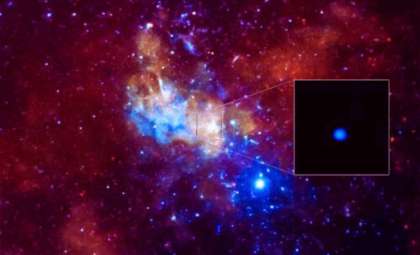
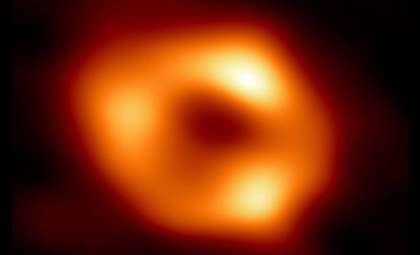
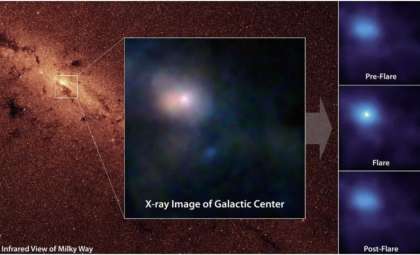
In cutting-edge work spearheaded by Jiwon Jesse Han at the Harvard & Smithsonian Center for Astrophysics, astronomers have pinpointed a supermassive black hole situated within the Large Magellanic Cloud that is gradually making its way toward the Milky Way. Estimated to possess a mass around 600,000 times that of the Sun, this black hole is considerably lighter than the Milky Way’s central black hole, Sagittarius A*, which holds a mass near 4.3 million solar masses. This exciting finding currently appears on arXiv and awaits peer review in The Astrophysical Journal.
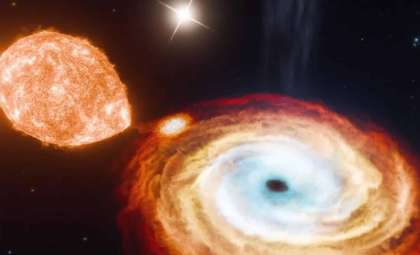
Detecting a black hole that does not actively absorb matter posed a significant challenge, since such objects do not radiate light or other signals directly. Instead, the researchers used innovative indirect strategies, focusing on the motion of hypervelocity stars. These stars, traveling at unusually high speeds, revealed clues through their trajectories that pointed to powerful gravitational influences from a massive, unseen source. The team applied the Hills mechanism, where a black hole interacts with two stars, ejecting one at hypervelocity, aiding in identifying this invisible giant.

How the Hills Mechanism Enabled the Breakthrough
Black holes are notoriously elusive because, without nearby infalling matter, they emit no detectable radiation. One of the most effective ways for astronomers to infer a black hole’s presence is by analyzing unusual stellar motions. When stars move at velocities or paths unexplained by known gravitational forces, it often points to a black hole’s hidden pull. The Hills mechanism describes a scenario where the gravitational interplay between a black hole and a binary star system propels one star outward at incredible speed. By backtracking the movements of these hypervelocity stars, the team traced their origin to the Large Magellanic Cloud, deducing the existence of a black hole about 600,000 solar masses there.
This discovery sheds new light on how black holes may accumulate mass. Contrary to the idea that black holes are born enormous, this evidence supports theories that they gradually grow by absorbing stars and other matter in their surroundings, ultimately becoming the immense gravitational wells located at galactic centers. This insight challenges prevailing concepts and adds valuable data on the lifecycle of black holes, bridging the gap between stellar-mass black holes and their supermassive counterparts.
Galactic Collision on a Cosmic Timescale
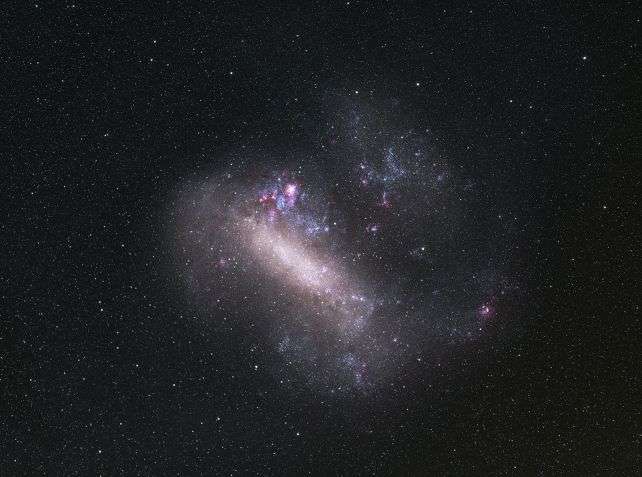
Located roughly 160,000 light-years from Earth, the Large Magellanic Cloud orbits the Milky Way as a dwarf companion. Predictions indicate that in about 2 billion years, the two galaxies will collide and merge. This convergence will initiate a dramatic sequence of events, including the eventual meeting of their central supermassive black holes. The black hole in the Large Magellanic Cloud is expected to drift toward our galaxy’s core and eventually combine with Sagittarius A*, resulting in a black hole of even greater mass. Though this cosmic event is far in the future, it offers a vital window for astronomers to investigate the processes governing galaxy mergers and black hole growth.
Astrophysicists consider galactic collisions and the ensuing black hole mergers pivotal in creating the largest black holes in the universe. As these titanic forces unite, bigger and more powerful black holes emerge. The newly unveiled hidden supermassive black hole in the LMC deepens our grasp of this phenomenon and highlights the importance of galaxy interactions in shaping cosmic evolution.
- Categories:
- News




0 comments
Sign in to Comment