
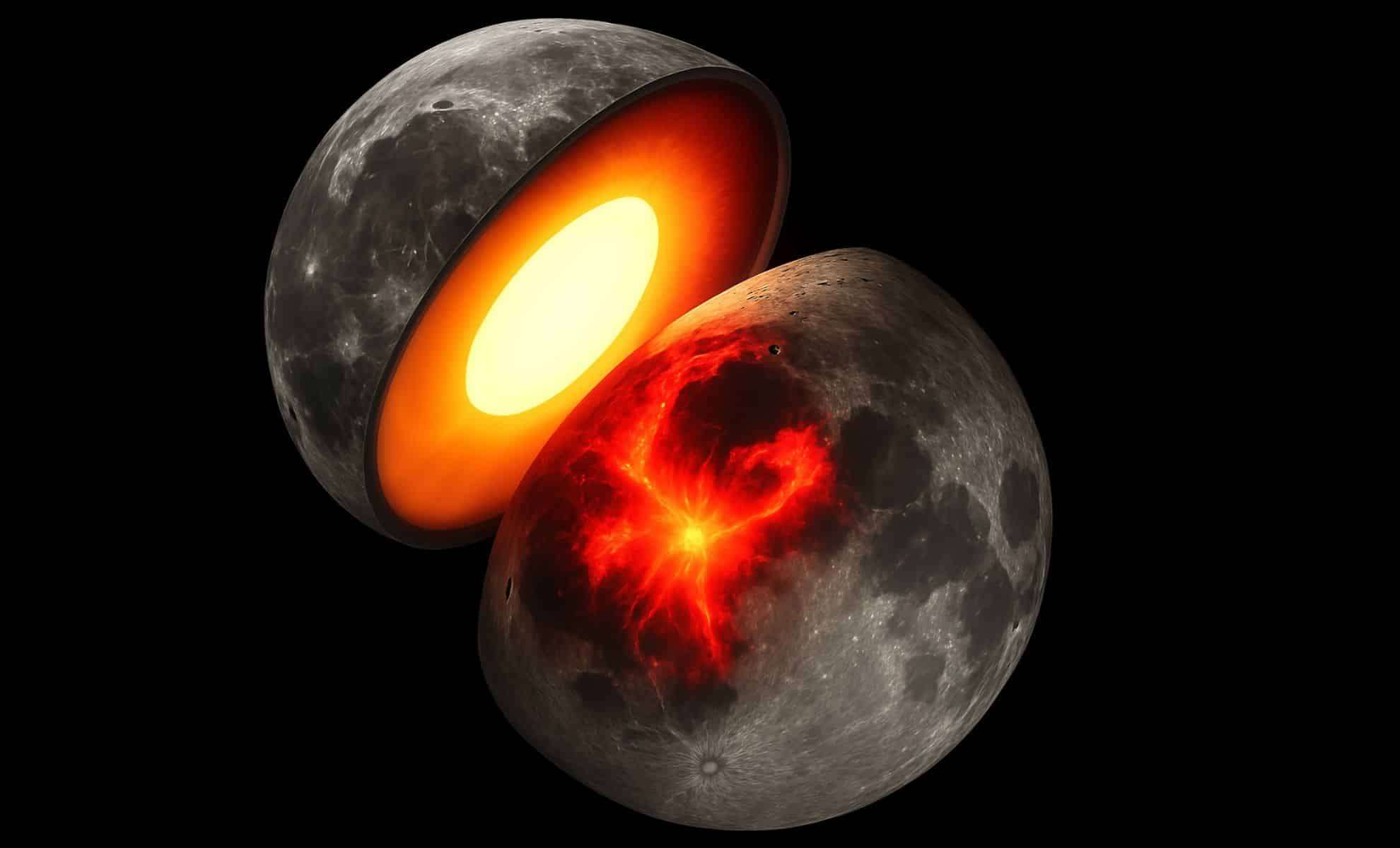
Two pioneering investigations led by NASA, featured in Nature, have uncovered remarkable details about the inner makeup of the Moon and the asteroid Vesta—two distinctly different objects in space. By harnessing detailed gravitational measurements obtained from spacecraft orbiting these bodies, scientists mapped subtle internal features without direct sampling. These discoveries overturn previous ideas and deepen our knowledge of planetary formation in the solar system.
Harnessing Gravity to Investigate Distant Interiors
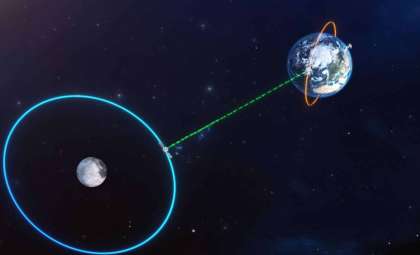
Instead of using physical samples or seismic measurements, the research teams employed a gravity mapping technique that detects tiny shifts in spacecraft trajectories caused by gravitational variations. The internal structure of the Moon was evaluated using data from NASA’s GRAIL mission, while the asteroid Vesta’s interior was inferred from the Dawn mission.
“Gravity provides a powerful window into the unseen depths of planetary objects,” explained Ryan Park, the study’s lead author and head of the Solar System Dynamics Group at NASA’s Jet Propulsion Laboratory. “Our approach requires no surface data—only precise tracking of spacecraft movements to construct a global picture of internal composition.”

This technique enabled researchers to detect minute variations in orbit speed and location, shedding light on complex subterranean features. It represents a novel method in exploring interiors of moons, asteroids, and even remote dwarf planets.
The Moon’s Uneven Flex Offers Clues to Its Thermal Past
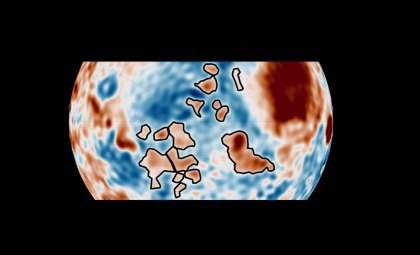
Known for its contrasting faces, the Moon’s near side is smooth with expansive basaltic plains called mare, while the far side presents a rugged terrain. By studying GRAIL data, scientists found these differences extend far beneath the surface, with hemispheres exhibiting distinct responses to Earth’s gravitational pull.
“Our results show that the near side of the Moon undergoes greater flexing compared to the far side, indicating fundamental interior structural variations,” Park commented. “Initially, the outcome was so unexpected we repeated the analyses numerous times, culminating in a decade-long effort.”
The findings suggest that billions of years ago, heat-producing radioactive elements gathered beneath the near side, fueling extensive volcanism. This explains the broad basaltic plains visible from Earth and hints at a warm and more malleable mantle beneath that hemisphere. These insights reshape models of lunar evolution and improve predictions for upcoming missions.
Unexpected Structure: Vesta’s Possible Lack of a Core
Unlike the Moon, Vesta was thought to be a fully layered asteroid, comprising a metallic core, rocky mantle, and crust. However, gravitational data from the Dawn spacecraft, analyzing how Vesta wobbles as it rotates, revealed surprising characteristics tied to its moment of inertia.
“Our gravity-based method is sensitive to temporal or spatial shifts in a body's gravitational field, such as the Moon’s tidal flexing or an asteroid’s rotational wobble,” said Park. “Observing Vesta’s wobble allowed us to precisely measure its moment of inertia, which directly relates to internal composition.”
The results challenge expectations, showing Vesta’s mass is more evenly spread, potentially with a small or absent iron core. This disrupts the classic layered model of planetary formation and hints that Vesta might have originated from collision debris under unusual conditions. It raises broader questions about the internal diversity of minor planetary bodies.
Expanding Horizons: Gravitational Mapping Beyond the Moon and Vesta
This gravity-based investigative method is already being extended to other celestial bodies like Ceres and Io, revealing fresh insights into their internal structures and geological processes. For Io, gravitational measurements during its orbit around Jupiter imply it may lack a global subsurface magma ocean, contradicting earlier theories.
“The versatility of our technique means it can be applied widely across the solar system to explore planetary interiors,” Park said. “Future missions stand to benefit greatly from this approach to uncover hidden internal features.”
As this powerful, non-invasive method continues to advance, it promises to transform how scientists understand the building blocks of planetary bodies, offering a revolutionary lens for exploring our cosmic neighborhood. From revealing the Moon’s deep heat history to redefining Vesta’s structure, gravity is becoming an indispensable tool to probe the solar system’s secrets.
- Categories:
- News



0 comments
Sign in to Comment