
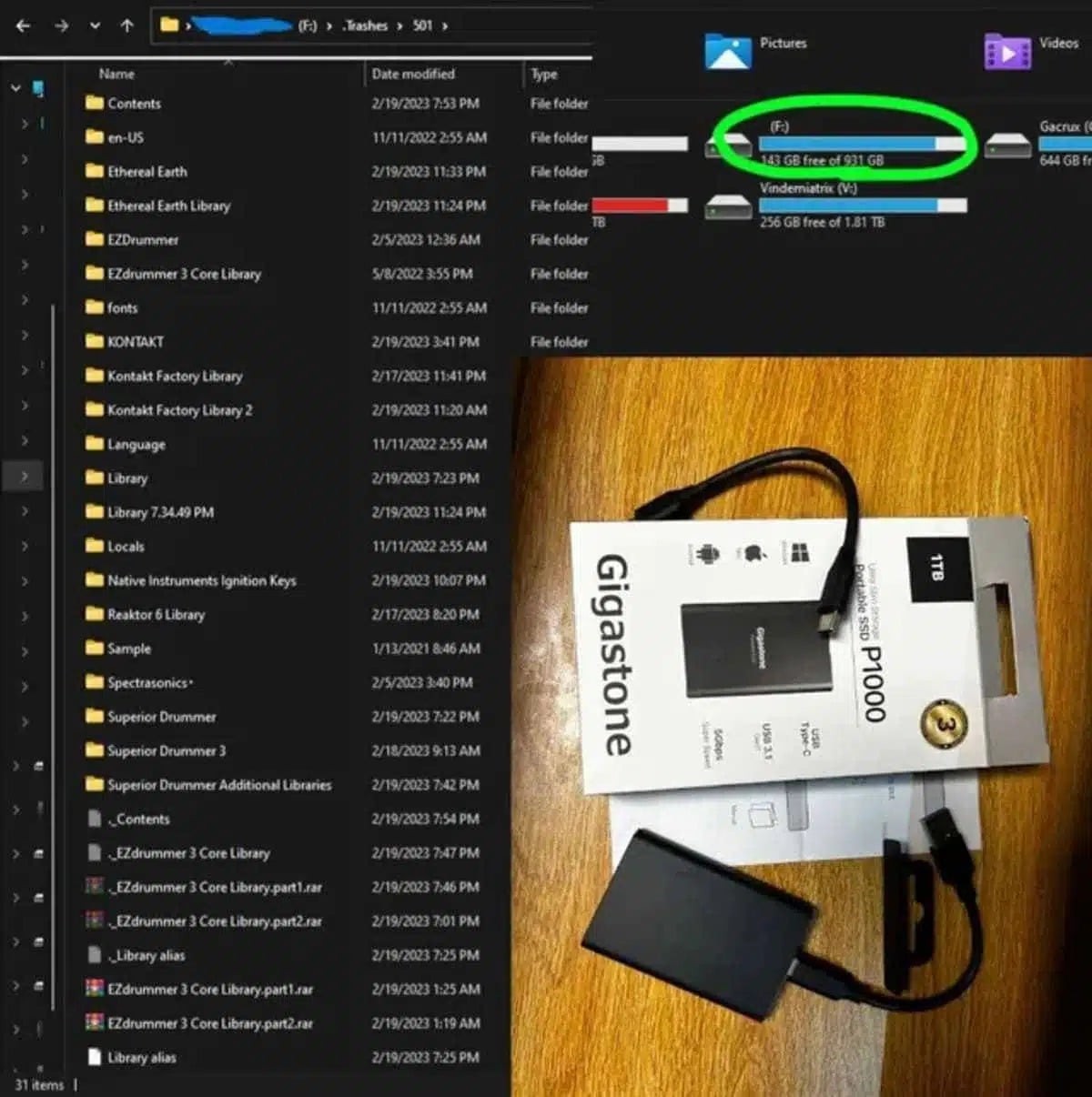
A brand-new 1TB SSD purchased from a retail store seemed untouched at first glance. The purchaser anticipated an empty drive for a straightforward upgrade, but instead uncovered about 800 GB of sophisticated music production programs such as Kontakt and Reaktor preinstalled without authorization.
These were cracked versions archived in .rar files, collectively worth over $1,000, and clearly should not have been accessible on a retail product. The Reddit user, known as All-Seeing_Hands, documented the find on the r/pcmasterrace subreddit, where it quickly ignited discussions about risks arising from unvetted returns in global supply chains.
This incident sheds light on more than poor stock management. It reveals a significant gap in how second-hand tech, especially storage devices, are processed. Without thorough data wiping, devices put back on shelves may harbor illegitimate software, malicious programs, or sensitive user data unbeknownst to new owners.

A 2020 investigation by the UK’s Information Commissioner’s Office (ICO) found that over 60% of used storage units still contained previous users’ information. That study concentrated mainly on privacy vulnerabilities. The SSD case pushes this issue further, highlighting the risks of software piracy and security breaches through recycled electronics.
Cracked Software Poses Threats Beyond Copyright Issues
The illicit apps discovered on the SSD represent more than copyright infringement. Many pirated programs, especially those packaged in compressed files, carry hidden malware that can evade initial antivirus scans and execute when accessed.
According to Kaspersky’s 2023 MDR report released by Kaspersky, tampered audio software and unauthorized plugins were prominent malware vectors targeting creative professionals, linking to over 1.3 million infections annually.
Kaspersky’s findings also noted that attackers frequently reuse tools leaked from past campaigns, enabling more automated and sophisticated cyberattacks without direct intervention.
While malware-induced high-severity attacks slightly declined in 2023, infection tactics within music production software have become subtler, making detection tougher and allowing stealthy system compromises.
Refurbished Devices, Renewed Hazards
The most probable cause is a previous customer return that was only superficially inspected before being resold. Retailers generally run automated device diagnostics to verify hardware function but rarely check the content of storage or carry out secure data wipes.
On Reddit, users recommended tools like CrystalDiskInfo to evaluate a drive’s power-on hours, which can expose prior usage history and uncover hidden partitions, useful for spotting drives labeled new but actually used.
A 2020 ICO report warned that selling storage devices without comprehensive data deletion exposes consumers to significant risks of privacy breaches and abandoned trust. The questioned SSD likely skipped mandatory sanitization steps, potentially subjecting its purchaser to legal complications, malware threats, or both.
The presence of unauthorized commercial audio production suites also raises potential legal issues. Companies like Native Instruments actively monitor for unlicensed software and enforce compliance, meaning unwitting users installing such files could face serious civil penalties.
A Systemic Weakness Exposed
This story is not an isolated incident but a symptom of retail practices that prioritize efficient inventory turnover over comprehensive data security. High throughput, minimal manual review, and cost-saving strategies leave vulnerabilities in place.
Despite published guidelines from the National Institute of Standards and Technology (NIST), including the respected SP 800-88 Rev. 1 for data destruction, many sellers fail to fully comply, selling devices without thorough data erasure.
To the average consumer, a drive containing residual files might look brand new, boot without issue, and pass surface-level tests. Yet these devices may conceal spyware, backdoors, or copyright violations unseen at point of sale.
This case emphasizes a critical flaw in technology distribution: packaging or device condition does not guarantee content security. The threat is real, and it has already reached a consumer’s personal computer.
- Categories:
- News










0 comments
Sign in to Comment