
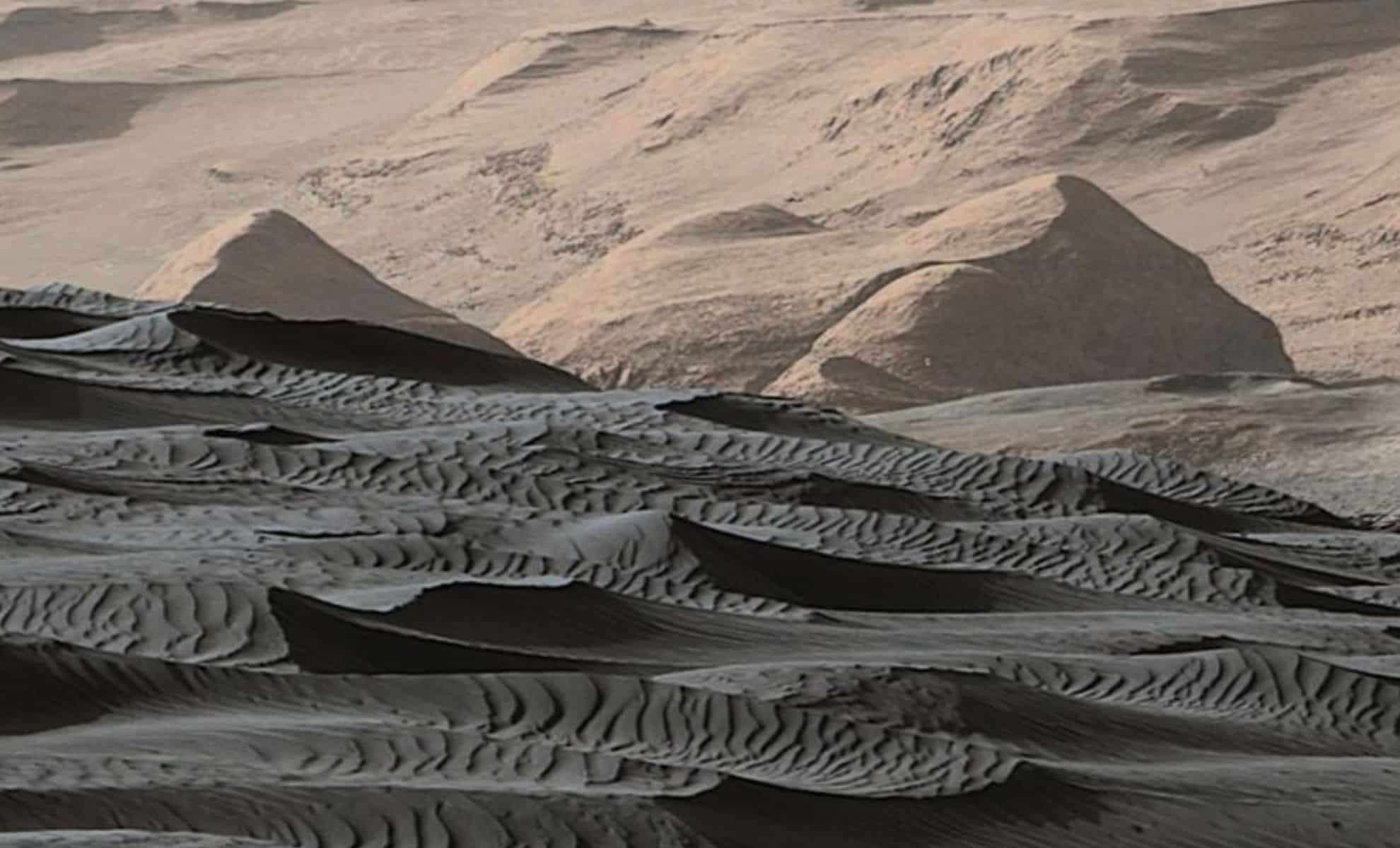
The Algodones Dunes, located at the junction of California, Arizona, and Mexico, might not seem like an obvious place to study Mars, yet this desert environment is proving invaluable for researchers investigating the Red Planet’s sand behavior. Scientists such as Lauren Berger from Texas A&M University are examining the sand formations here to uncover how wind sculpts landscapes both on Earth and Mars. In a recent article for Space.com’s Expert Voices: Op-Ed & Insights, Berger discusses how earthbound dune studies shed light on the complex dynamics of Martian sands, which are frequently reshaped by dust storms. This research is crucial for upcoming Mars missions, revealing how wind patterns and sand movement could impact human explorers.
Linking Earth’s Winds to Mars’ Sandy Terrain
Wind-sculpted formations, known as aeolian bedforms, include sand ripples and dunes found both on Earth and Mars. On Earth, these features appear in deserts and dry regions, shaped by varying wind strengths and sand grain sizes. Mars, although much colder and equipped with a thinner atmosphere, hosts its own versions of these formations. Lauren Berger studies mainly sand ripples and dunes formed by winds on both planets to unravel the mechanisms driving their development. The Martian environment, with an atmosphere only about 1% as dense as Earth’s, presents a different set of conditions, yet the resulting patterns provide key insights into the planet’s wind and weather systems.
Despite the Martian atmosphere’s low density, the wind’s influence on sand movement is significant and informative. Comparing Earth’s dunes and ripples with Mars’ allows scientists to interpret wind speeds, directions, and the frequency of dust storms on the Red Planet. This comparative approach helps researchers simulate dune formation on Mars and anticipate terrain changes, thereby supporting strategies for human exploration and habitat planning.

Detailed Investigation at the Algodones Dunes
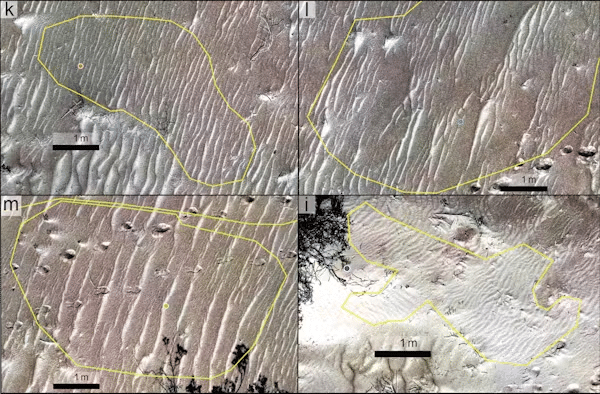
In late 2022, Lauren Berger and her colleagues conducted an extensive field survey at the Algodones Dunes in California. This location, renowned for its extensive and shifting sand formations, served as an ideal natural laboratory for studying coarse sand ripples. The team employed tools such as GPS units, drone technology, and traditional geological instruments—including trowels and sample containers—to carefully record ripple dimensions, heights, and spacings, which are foundational characteristics of aeolian bedforms and vital to understanding wind-sand interactions.
High-resolution aerial photos, taken by drones, enabled the researchers to analyze dune patterns in unprecedented detail upon returning to their labs. These images allowed them to reconstruct dune landscapes and examine features with precision, while also highlighting the challenges of fieldwork, like occasional equipment difficulties in sandy terrain. Nevertheless, the collected data promises to enhance our understanding of wind-driven sand structures on both Earth and Mars.
Remote Sensing Advances in Martian Surface Mapping
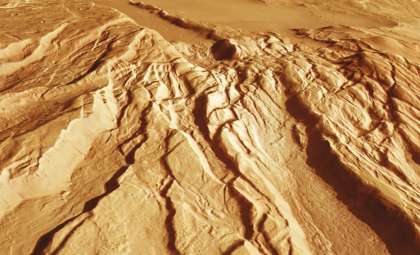
The use of remote sensing technologies stands out as a major element in this research, especially since direct human observation of Mars’ surface is limited. Instruments like the Mars Reconnaissance Orbiter (MRO) provide expansive imagery that reveals dunes and aeolian landforms spanning the Martian terrain. By merging this orbital data with field observations from Earth, Berger’s team is enhancing the understanding and cataloging of compound dunes on Mars—dune systems comprising multiple overlapping layers formed over time.
These compound dunes are scientifically valuable as they may document the history of environmental and atmospheric shifts on Mars. By comparing drone photos of Earth’s dunes with Mars orbiter images, Berger is contributing to the establishment of the first comprehensive compound dune database for Mars, an essential tool for future mission planning.
Significance of Mars’ Sand Dynamics for Human Exploration
Gaining a detailed understanding of Mars’ changing sands is vital for mission safety and efficiency, particularly with manned expeditions on the horizon. Despite Mars’ thin atmosphere, winds can exert powerful effects, with massive dust storms capable of enveloping the entire planet and disrupting equipment, rovers, and habitats. Recognizing where dunes form and shift will help scientists and engineers select safer locations for landing, exploration, and base construction.
Berger’s research aims to identify regions on Mars where sand movements pose minimal risk, aiding in the development of precise maps of wind-driven activity. Such information will be critical for agencies like NASA to avoid hazardous zones and improve mission outcomes. As the era of human Mars exploration approaches, mastering knowledge of its aeolian landscapes will be key to protecting explorers and ensuring mission success.
- Categories:
- News


0 comments
Sign in to Comment