
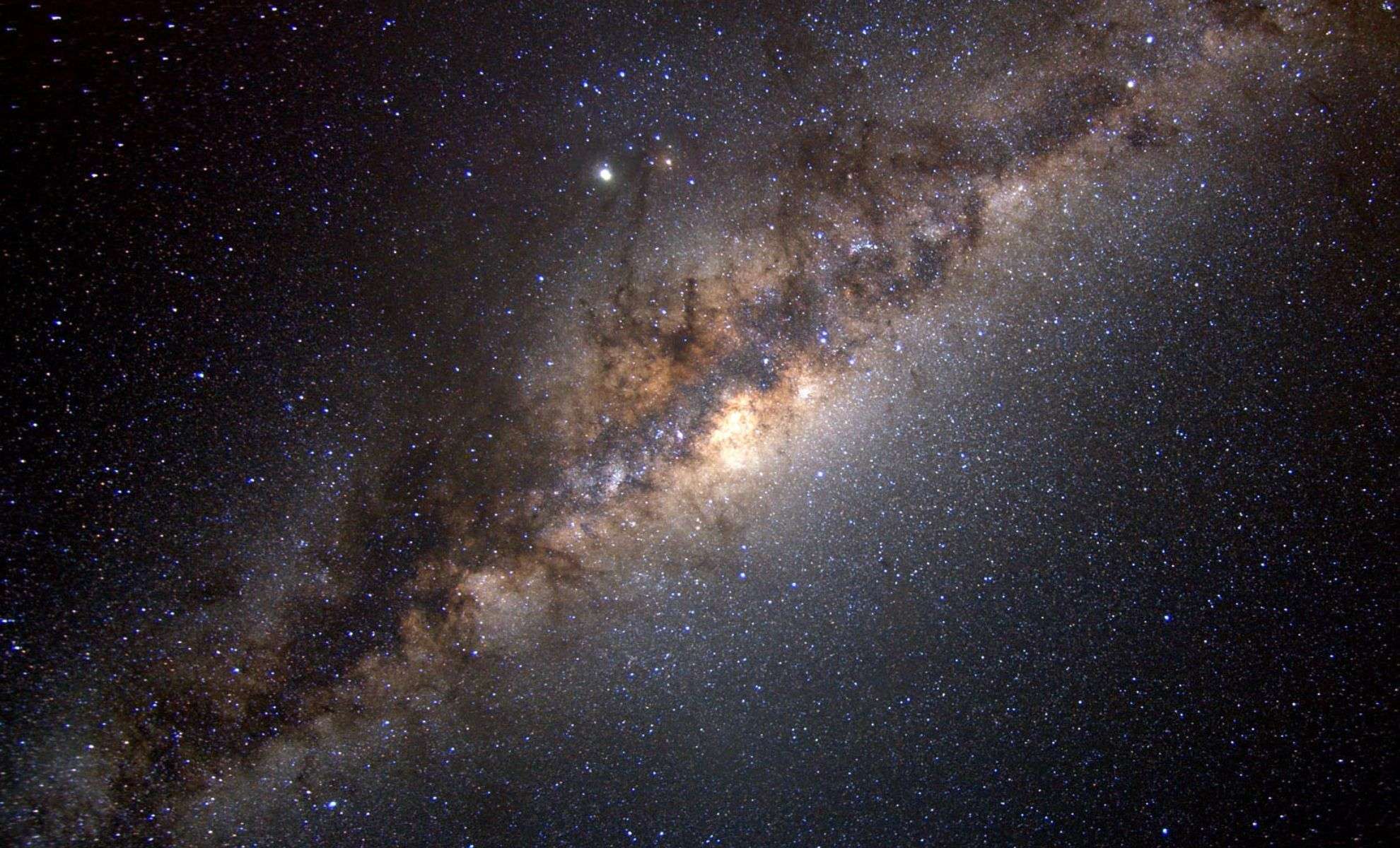
A team at MIT has uncovered three of the oldest known stars residing in the halo of our galaxy. These stellar relics, formed approximately 12 to 13 billion years ago, provide valuable clues about the early epoch of galaxy development.
Ancient Stars Found Orbiting in the Milky Way's Halo
MIT astronomers have discovered a trio of stars named Small Accreted Stellar System (SASS) stars, which orbit within the halo surrounding the Milky Way's main disk. This stellar halo acts as a vast, diffuse sphere enclosing the galaxy’s core.
Originating from small, primordial galaxies that merged into the Milky Way eons ago, these stars now act as important witnesses to the universe's youth.

Their detection not only enhances our comprehension of early star formation events but also introduces a novel approach to investigating how galaxies assembled in the nascent universe.
Discovery Sparked by University Coursework
This breakthrough arose from a Fall 2022 MIT class project in “Observational Stellar Archaeology,” where students analyzed data from ancient stars. Supervised by MIT professor Anna Frebel, the students worked with authentic astronomical observations to isolate stars with extremely low chemical abundances—signals indicative of early stellar origins.
By engaging directly with cutting-edge research, the project bridged education and innovation. It not only enriched students’ learning experiences but also contributed significantly to the field of astrophysics.
Techniques Behind the Stars' Identification
The students examined data obtained from the Magellan-Clay telescope at Las Campanas Observatory, targeting stars with minimal amounts of elements such as strontium and barium.
They pinpointed three stars exhibiting remarkably low levels of these heavy elements, dating their formation to 12–13 billion years in the past.
This elemental scarcity aligns with conditions shortly after the Big Bang, when the cosmos mainly contained hydrogen and helium. To confirm this, researchers analyzed the spectra of the stars to measure element signatures, employing sophisticated stellar models.
The specific absorption features within the stars' spectral data revealed the concentration of various elements, offering key insights on their history and provenance.
Insights Into Early Dwarf Galaxy Evolution
The identification of SASS stars in the Milky Way offers an accessible avenue to study faint, early ultrafaint dwarf galaxies—some of the first galaxies to form in the universe.
Due to their extreme faintness and distance, these dwarf galaxies are difficult to examine directly, but analogous stars close by like the SASS stars provide a useful stand-in to trace their chemical development. Studying these stars sheds light on how early galaxies emerged and evolved.
This discovery deepens our understanding of galaxy formation as a whole and clarifies the impact of dwarf galaxies during the universe’s formative phases. Ongoing searches for comparable ancient stars will continue to expand knowledge about cosmic origins and evolution.
Significance Beyond Astronomy
Uncovering these primordial stars not only enriches our perspective on the early cosmos but also exemplifies how educational programs can drive impactful scientific research. The success of this MIT classroom initiative underscores the value of embedding practical research into academic curricula.
This educational model motivates students and simultaneously produces valuable scientific outcomes that can lead to groundbreaking findings. Through fostering teamwork and offering hands-on data analysis, universities can make vital contributions to expanding cosmic knowledge.
The discovery of the SASS stars powerfully illustrates the synergy between education and astronomy, highlighting student contributions to advancing our understanding of the universe.
- Categories:
- Astronomy ,
- News ,
- Space








0 comments
Sign in to Comment