
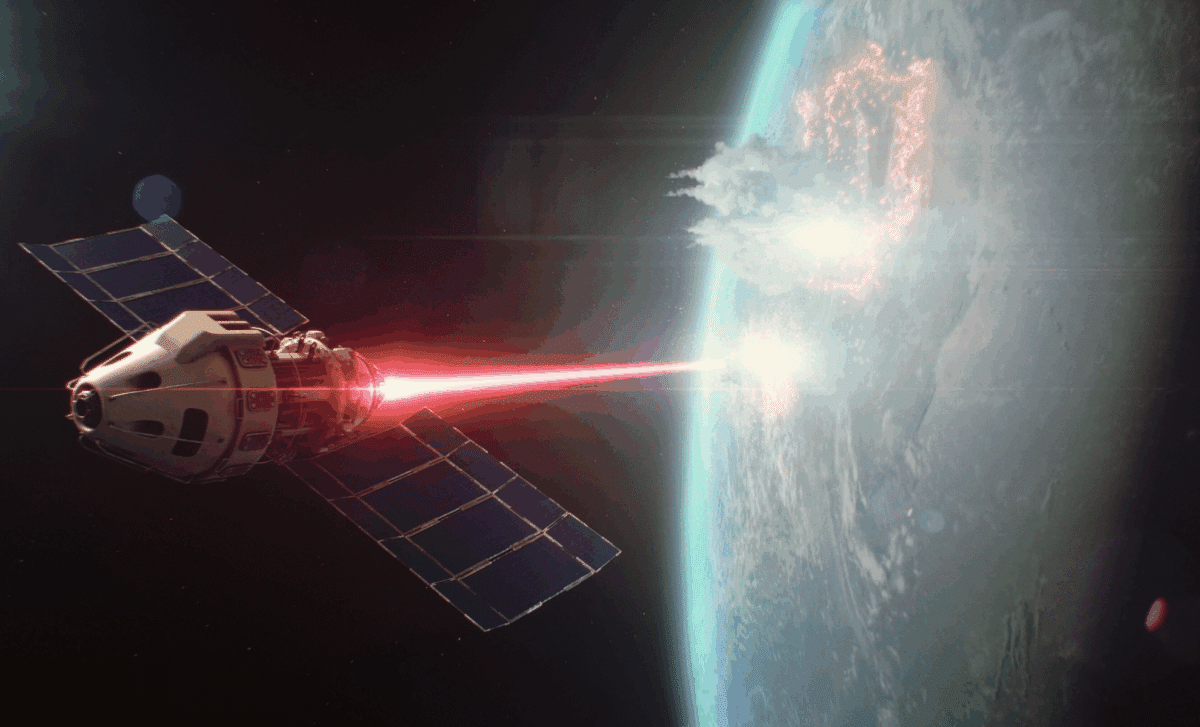
In an extraordinary achievement, Chinese scientists have successfully performed laser ranging with a lunar satellite during broad daylight, a feat never accomplished before. This marks a significant advancement in space exploration, overcoming the longstanding challenge posed by solar interference. According to Xinhua News, the breakthrough used the Tiandu-1 satellite combined with a cutting-edge near-infrared lunar laser system, potentially revolutionizing China’s lunar navigation and positioning technologies, including their plans for the International Lunar Research Station.
Revolutionizing Space Measurement Techniques
On April 27, 2025, China pushed the boundaries of space technology by achieving the first daytime laser ranging between Earth and the Moon. This milestone was realized through the development of an innovative laser ranging system by Chinese scientists who addressed numerous technical obstacles. Previously, such measurements were confined to nighttime when the absence of sunlight reduces interference. Daytime laser ranging has been hampered by intense solar background noise—an obstacle now successfully mitigated.
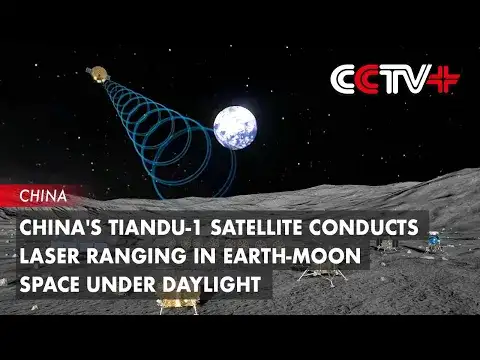
The Yunnan Observatories under the Chinese Academy of Sciences (CAS) spearheaded this effort, employing an advanced near-infrared lunar laser ranging system equipped with a powerful 1.2-meter telescope. This setup allowed the detection of laser reflections from the Tiandu-1 satellite orbiting roughly 130,000 kilometers away. The success paves the way for more precise Earth-Moon positioning, crucial for upcoming deep-space exploration missions.

Mastering Solar Noise: Technological Innovations
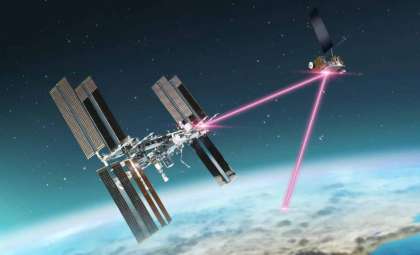
This breakthrough centers on overcoming solar interference, which has long prevented accurate laser ranging during daytime. Laser ranging involves sending a beam from Earth to a satellite, which then reflects it back. The time taken for the light to return is measured to calculate the exact distance with exceptional accuracy.
Sunlight, however, creates scattered light that produces noise, disrupting the detection of the returned signal. Chinese researchers developed a highly sensitive detection system that effectively minimizes solar radiation disturbance. This advancement enables precise distance measurements even when the Moon is fully sunlit, marking a vital step for improved accuracy in measuring Earth-Moon distances.
Tiandu-1 Satellite: Backbone of China’s Lunar Navigation
The Tiandu-1 satellite was instrumental in this experiment. Launched on March 20, 2024, it serves as a technology demonstrator for communication and navigation systems critical to China’s expansive lunar exploration goals. The effort is part of the Deep Space Exploration Laboratory’s mission to establish an advanced Earth-Moon communication and navigation framework.
Tiandu-1 collaborates with other spacecraft, such as Tiandu-2, to form a constellation that offers seamless communication between the Earth and the Moon. This network is intended to support future lunar missions, including landings and the creation of long-term research bases. The successful laser ranging experiment bolsters these plans by providing refined navigation capabilities pivotal for sustained lunar operations.
Significance of Daytime Laser Ranging for Lunar Exploration
Daytime satellite laser ranging represents a strategic enhancement for China’s deep-space agenda. It allows an expanded operational timeframe as measurements are no longer restricted to nighttime windows. This capability increases data collection opportunities whenever satellites are visible from Earth stations.
This innovation also contributes to the International Lunar Research Station (ILRS), a collaborative venture between China and Russia aiming for construction commencement by 2035. The ILRS will act as a vital lunar research hub, supporting astronaut presence and robotic missions focused on exploring the Moon’s south pole. Reliable and precise laser ranging will be essential for guiding spacecraft, rovers, and surface vehicles, facilitating future human exploration on the lunar surface.
- Categories:
- News










0 comments
Sign in to Comment