
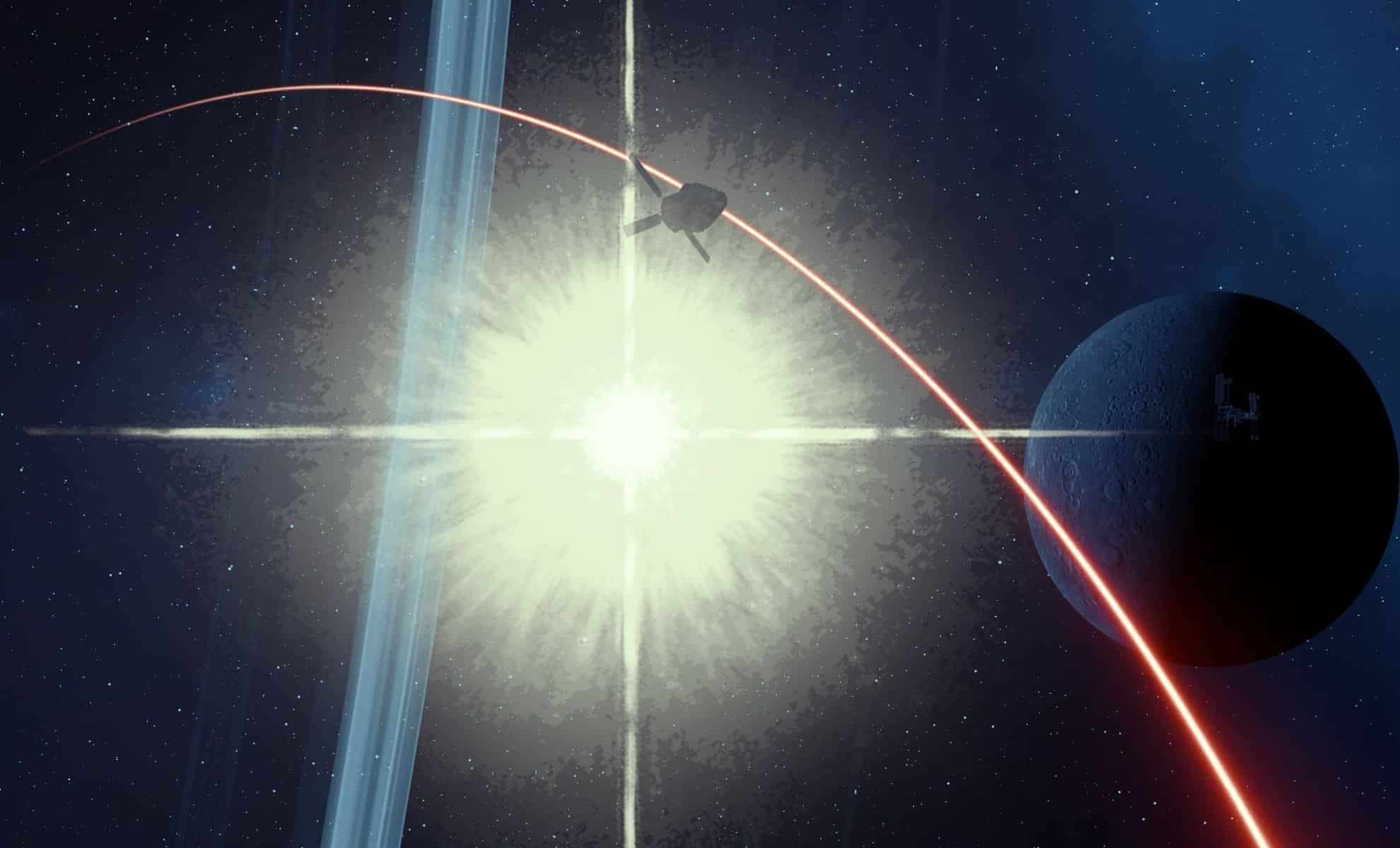
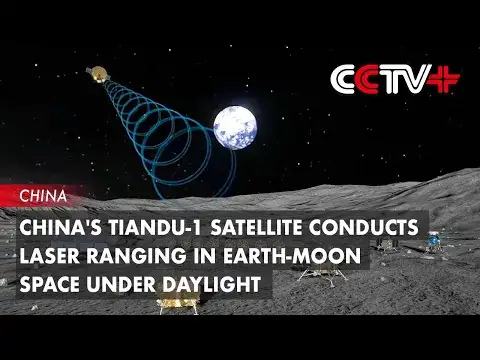
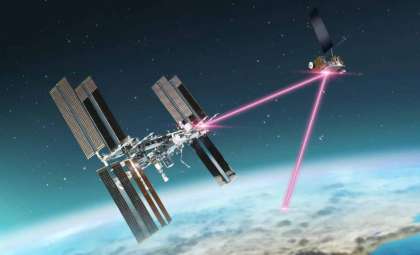
In a groundbreaking accomplishment for space science, China has precisely targeted the Moon with a laser beam traveling over 80,778 miles (130,000 km) during daylight hours, capturing accurate distance data. This feat, performed by the Deep Space Exploration Laboratory (DSEL) utilizing the Tiandu-1 spacecraft, marks the first time Earth-to-Moon laser ranging has been successfully executed in full sunlight. According to the Chinese Academy of Sciences (CAS), the advancement opens new avenues for dependable communication and positioning in upcoming lunar missions. China's lunar ambitions gain a significant boost, reinforcing its frontier leadership in space innovation and steering toward a permanent Moon base targeted for 2035, as well as enhancing technologies for exploring deep space.
Overcoming the Obstacles of Daytime Laser Distance Measurement
Laser ranging is a long-established method for spatial measurement but has traditionally been challenged by solar brightness, especially when tracking lunar satellites. Until now, such laser signals were only transmitted during nighttime to avoid interference from sunlight. The DSEL team's accomplishment shatters this barrier, enabling consistent, real-time data acquisition regardless of lighting conditions. Using the Tiandu-1 satellite, this experiment represents the inaugural Earth-to-Moon laser ranging performed under intense daytime solar illumination. The project team highlights this as a pivotal enhancement that “pushes the boundaries of current technology,” vastly improving reliability for future extraterrestrial missions.
The trial depended on highly engineered nanosecond laser pulses sent from Earth to the Tiandu-1 satellite, which orbits a third of the way toward the Moon. These pulses reflected back, allowing measurement of distance at centimeter-grade precision. While similar laser tracking exists for satellites closer to Earth, measuring at lunar distances posed substantial difficulties due to the high velocity of the spacecraft and the harsh space environment.

Achieving Unmatched Precision at Lunar Distances
Precision in laser ranging is exceptionally challenging when factors include the rapid motion of lunar satellites and the immense distances involved. The DSEL team compared their task to “targeting a sub-millimeter object—like a single hair—from over 6.2 miles (10 km) away with exact tracking.” Successfully hitting such a dynamic target amid powerful daylight signals showcases the sophistication of this technology.
This level of accuracy is essential for China's envisioned lunar communication and navigation infrastructure. The capability to obtain measurements whenever Tiandu-1 is visible greatly enhances both the frequency and fidelity of spatial data during Moon missions. This innovation is particularly critical as China prepares for crewed lunar landings and seeks to build a permanent human presence on the Moon within the coming decade.
Boosting Lunar and Deep-Space Mission Technologies
The success of daylight laser ranging stands as more than a technical victory; it is a foundational advance in China's expansive space goals. This technology will be vital for the forthcoming Queqiao satellite network, designed to offer continuous communication, precise timing, and autonomous navigation for moonlanders, robotic explorers, and human crews alike. With the challenge of solar interference mitigated, DSEL plans to enhance laser experiments to cover longer distances and increase pulse rates. Such improvements will be indispensable for maintaining steady contact with missions to the Moon, Mars, and beyond.
Consistent, high-precision laser ranging technologies are key to piloting lunar landers and coordinating rover teams investigating the lunar surface. These tools are expected to unlock access to permanently shadowed lunar regions that potentially harbor vital water ice deposits — a crucial resource for sustaining astronauts. Moreover, these advances are foundational for China's planned International Lunar Research Station, a stable outpost near the Moon's south pole anticipated to become operational by the mid-2030s.
China’s Long-Term Moon Exploration Strategy
China’s lunar exploration efforts continue to gain momentum. After the success of the Chang’e-6 mission, which retrieved samples from the Moon’s far side in May 2024, more complex missions are on the horizon. The China National Space Administration (CNSA) envisions a human lunar landing by 2030, progressing towards a permanent lunar settlement by 2035 in partnership with Russia. The daylight laser ranging success adds critical impetus, evidencing the rapid development of technologies necessary for sustained lunar presence.
China’s progress in laser ranging and related space systems also affirms its drive to dominate global space exploration initiatives. Beyond the Moon, China is building space infrastructure to manage the increasing volume of satellites expected to orbit Earth—potentially surpassing 100,000 by 2030. The CNSA is actively developing a comprehensive space traffic management framework to enhance satellite operational safety and optimize launch coordination in this crowded orbital environment.
- Categories:
- News






0 comments
Sign in to Comment