
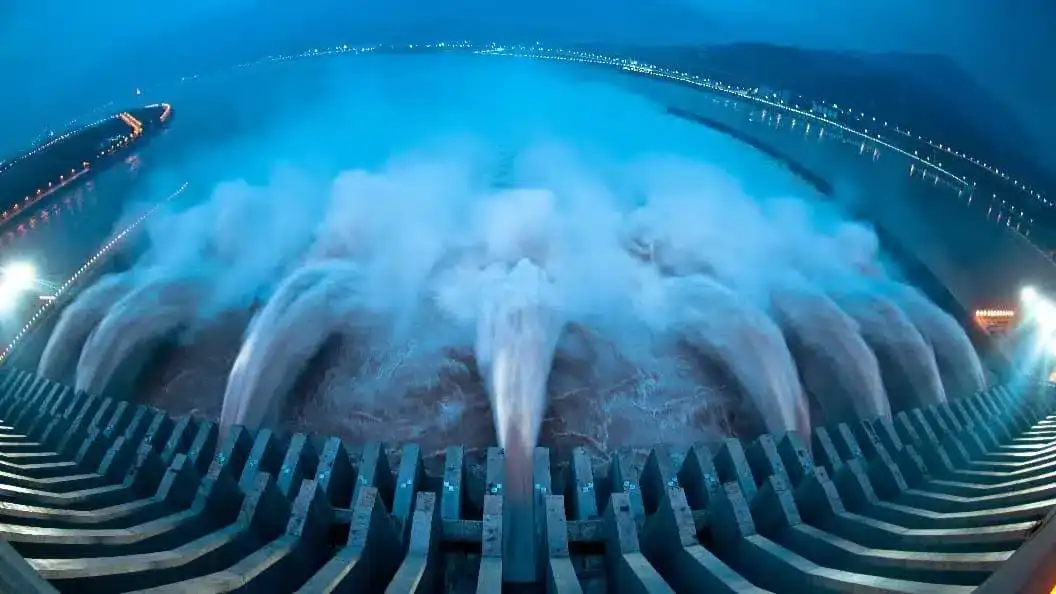
China is advancing its renewable energy frontiers with the ambitious Motuo Dam Project in Tibet, poised to become a hydroelectric powerhouse. Expected to generate an astonishing 60 gigawatts of electricity, this dam will outproduce the renowned Three Gorges Dam by a factor of three. Reported by the Xinhua News Agency, the project demands an estimated investment of $165 billion. This endeavor highlights China’s commitment to clean energy while also raising significant environmental and geopolitical concerns.
China’s Renewable Energy Strategy
China continues to dominate global renewable energy deployment, installing more solar capacity than the combined total of all other countries. Despite this, coal-fired power plants remain an integral part of China’s energy mix as the nation transitions to greener alternatives.
Hydropower plays a crucial role in this shift, with 193 active plans to develop projects capable of producing up to 270 gigawatts, roughly equivalent to Germany’s entire electrical output. Impressively, 80% of these initiatives exceed 100 megawatts, surpassing Europe’s largest facility, France’s Grand’Maison Dam, which generates 1800 megawatts. Currently, 59% are in preliminary stages of development or under study.

Environmental and Social Challenges
The proposed Motuo Dam location in the Tibetan region faces mounting opposition due to its anticipated social displacement and environmental impact. Construction threatens to uproot local populations without sufficient involvement of community leaders or authorities, presenting a contentious issue given China’s decades-long governance in Tibet. So far, over 120,000 individuals have been displaced by 34 operational dams, with forecasts estimating between 750,000 and 1 million people could eventually be impacted if all 193 projects proceed.
Implications for Water Resources
Situated on the Yangtze River, the Motuo Dam could significantly influence water distribution across South Asia. Approximately 1.8 billion people depend on Tibetan river systems, including communities in Tibet and India. China has guaranteed "no adverse downstream effects," but India has declared it will take necessary measures to secure its water interests. Notably, despite its population of 1.4 billion, China controls a mere 6% of the planet’s freshwater reserves.
Strategic and Economic Impact
Beyond environmental and social considerations, the Motuo project is poised to enhance China’s geopolitical leverage by managing critical water supplies while fulfilling expanding domestic energy demands. Economically, exporting electricity to neighboring nations could strengthen China’s influence as a dominant regional power.
Risks from Climate and Seismic Activity
Despite the substantial advantages, the Motuo Dam faces risks stemming from rising temperatures and seismic vulnerabilities. Elevated heat levels could reduce the dam’s operational stability and safety, while Tibet’s earthquake-prone environment introduces further uncertainty that must be addressed.
As China pursues the Motuo Dam amid these complex challenges, it walks a fine line between technological progress and responsible stewardship. The success or failure of this undertaking will reverberate through China’s energy future and impact environmental and political dynamics on a global scale.
- Categories:
- Climate change















0 comments
Sign in to Comment