
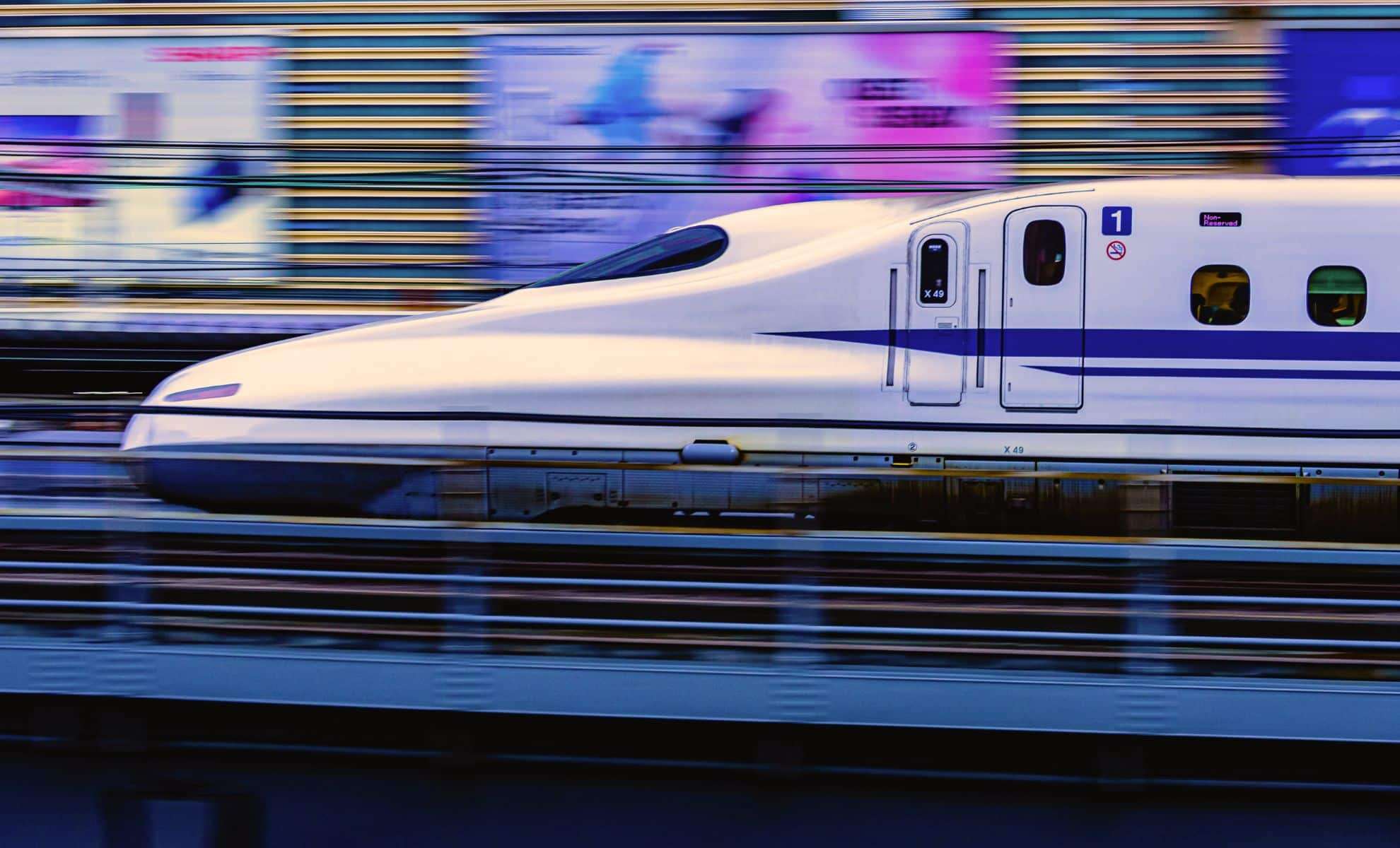
Scientists in China claim to have addressed one of the most challenging issues limiting magnetic levitation (maglev) trains at ultra-high speeds—namely the loud and disruptive “tunnel boom.” This advancement could enable commercial maglev lines to reach speeds of up to 1,000 km/h, significantly reducing travel durations for long-distance routes.
Resolving a Persistent Noise Challenge
The findings reported by The Guardian focus on the powerful shock waves that form when fast trains enter or leave tunnels. The phenomenon resembles a piston effect, where air is abruptly compressed in the tunnel ahead of the train, streaming low-frequency pressure waves out the tunnel opening. At very high velocities, these waves combine into an intense, thunderous explosion—known as the tunnel boom.
This problem has challenged not only maglevs but also traditional high-speed rail like France’s TGV and Japan’s Shinkansen. For instance, the TGV’s typical speed of 320 km/h generates a milder tunnel boom compared to a maglev traveling at 600 km/h, where the shock occurs in tunnels as short as 2 km—much shorter than the approximately 6 km required for conventional trains. Beyond noise pollution, the boom can inflict structural damage to the tunnels and disrupt environments near the tracks.

Innovating with Silencer-Inspired Technology
The Chinese research group, affiliated with the China Aerospace Science and Industry Corporation (CASIC), drew inspiration from firearm suppressors to mitigate the noise. They implemented 100-meter-long porous buffers at tunnel entrances and exits, supplemented with porous material coatings along the tunnel walls. These features enable the gradual release of compressed air prior to train entry, preventing sudden pressure surges that create the tunnel boom.
The researchers’ initial computer models and scaled tests demonstrated up to a 96% reduction in tunnel boom intensity. Field experiments in Shanxi province during late 2024, involving a prototype maglev nearing 1,000 km/h, validated the system’s effectiveness in controlling shockwaves without compromising the train’s speed or performance.
Expanding Speeds From 600 to 1,000 KM/H
While the current maglev prototype operates at 600 km/h, CASIC engineers assert this breakthrough eliminates a major hurdle for pushing speeds closer to 1,000 km/h. It also promises quieter rides, less tunnel wear, and enhanced passenger experience.
Once deployed, a high-speed connection between Beijing and Shanghai could reduce travel from the existing 4.5 hours to just 2.5 hours—matching flight times with substantially fewer CO₂ emissions. Although official plans for commercial deployment remain unannounced, experts anticipate maglev becoming an integral part of China’s expanding high-speed rail infrastructure, complementing its extensive 48,000 km network.
The Global Competition to Lead High-Speed Rail
Japan stands as China’s principal competitor in long-distance maglev development. Its Chuo Shinkansen utilizes superconducting maglev technology aiming to connect Tokyo and Osaka at speeds of 505 km/h in around 67 minutes. However, delays have put the project’s original 2027 opening in question, giving China a chance to take the lead if its noise suppression system can be scaled swiftly.
Both nations view maglev as a viable substitute for regional flights, offering comparable transit times with lower environmental impact. The future of this noise-reducing buffer technology hinges on successful real-world operation, yet current results point to a potential end for the tunnel boom barrier in supersonic rail travel.
- Categories:
- News












0 comments
Sign in to Comment