

A breakthrough in space exploration has emerged as scientists unveil a novel strategy to extract water from moon soil, holding promising prospects for sustainable lunar living.
A team from the Chinese Academy of Sciences (CAS) alongside the Ningbo Institute of Materials Technology and Engineering has engineered a pioneering approach to produce water on the Moon itself, thereby easing reliance on costly water shipments from Earth. This innovation is poised to play a crucial role in supporting enduring human presence on the Moon.
Converting Regolith into Water: Understanding the Mechanism
The process involves heating lunar soil (regolith) embedded with hydrogen accumulated over eons due to the solar wind. When subjected to temperatures above 1,200 Kelvin (930°C/1700°F), this trapped hydrogen interacts with oxygen bound in lunar minerals, producing water vapor. This vapor can then be collected and condensed to provide usable water for astronauts. Professor Wang Junqiang, a leading scientist on the project, stated, “Our research demonstrates that hydrogen retained within lunar soil is a promising resource for extracting H₂O directly on the Moon.”

A vital element in this method is the mineral ilmenite (FeTiO₃), prevalent in lunar dust. Ilmenite’s structure captures solar wind hydrogen in minute tunnels, and upon heating, releases it for water generation. Researchers estimate that processing one ton of lunar soil could yield over 50 kilograms (110 pounds) of water—sufficient to fulfill the daily needs of around 50 individuals. This could offer a reliable, local water source for lunar expeditions, dramatically cutting down Earth-supplied water necessities.
Impact on Establishing Lunar Bases and Future Exploration
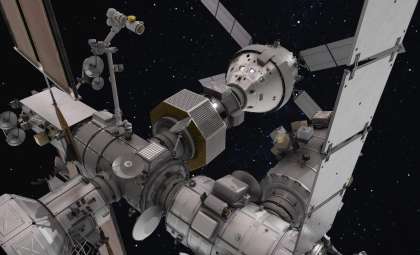
This advancement carries significant consequences for global space programs, such as NASA, China’s National Space Administration (CNSA), and the European Space Agency (ESA), all aiming to create permanent lunar outposts by the 2030s. These bases will likely be positioned near the Moon’s south pole, where water ice deposits exist within permanently shadowed craters. Extracting water on-site through this technique could lessen the challenges and costs linked to hauling water from Earth.
Beyond drinking needs, the extracted water can undergo electrolysis to separate it into hydrogen and oxygen. The oxygen can sustain life support systems, while hydrogen serves as rocket fuel or an energy source. Such a resource loop would facilitate longer lunar stays and could inform extended missions to Mars and farther destinations.
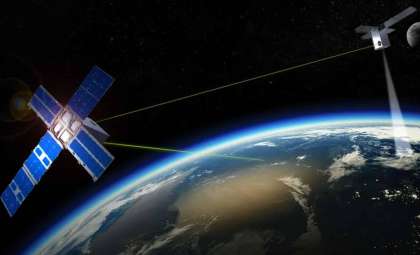
Nonetheless, this method depends heavily on solar energy and functions only during the Moon’s approximately two-week lunar day. During the subsequent two-week lunar night, when darkness prevails, solar power is unavailable, halting water extraction. Scientists are investigating solutions such as deploying solar concentrators to direct sunlight during the night phase or employing energy satellites to ensure continuous power supply.
Challenges Ahead and Potential of In-situ Resource Utilization Systems
Despite operational hurdles, this achievement marks a notable leap toward sustainable lunar exploration. In-situ resource utilization (ISRU) technologies, which harness extraterrestrial resources like water, oxygen, and fuel, are vital for cutting expenses and logistical complexity in space missions. By minimizing dependence on Earth-bound supply chains, ISRU makes extended lunar habitation far more attainable and cost-efficient.
This development additionally opens avenues for extracting other crucial lunar resources, including metals for construction and helium-3—a rare isotope that might fuel nuclear fusion reactors for energy generation. As this water extraction technique advances, it sets the foundation for more autonomous space missions, potentially supporting humans on Mars and beyond.
The broad potential of this innovation could redefine space exploration strategies, with the Moon becoming a vital testbed for ISRU technologies that empower deeper solar system ventures than ever before.









0 comments
Sign in to Comment