
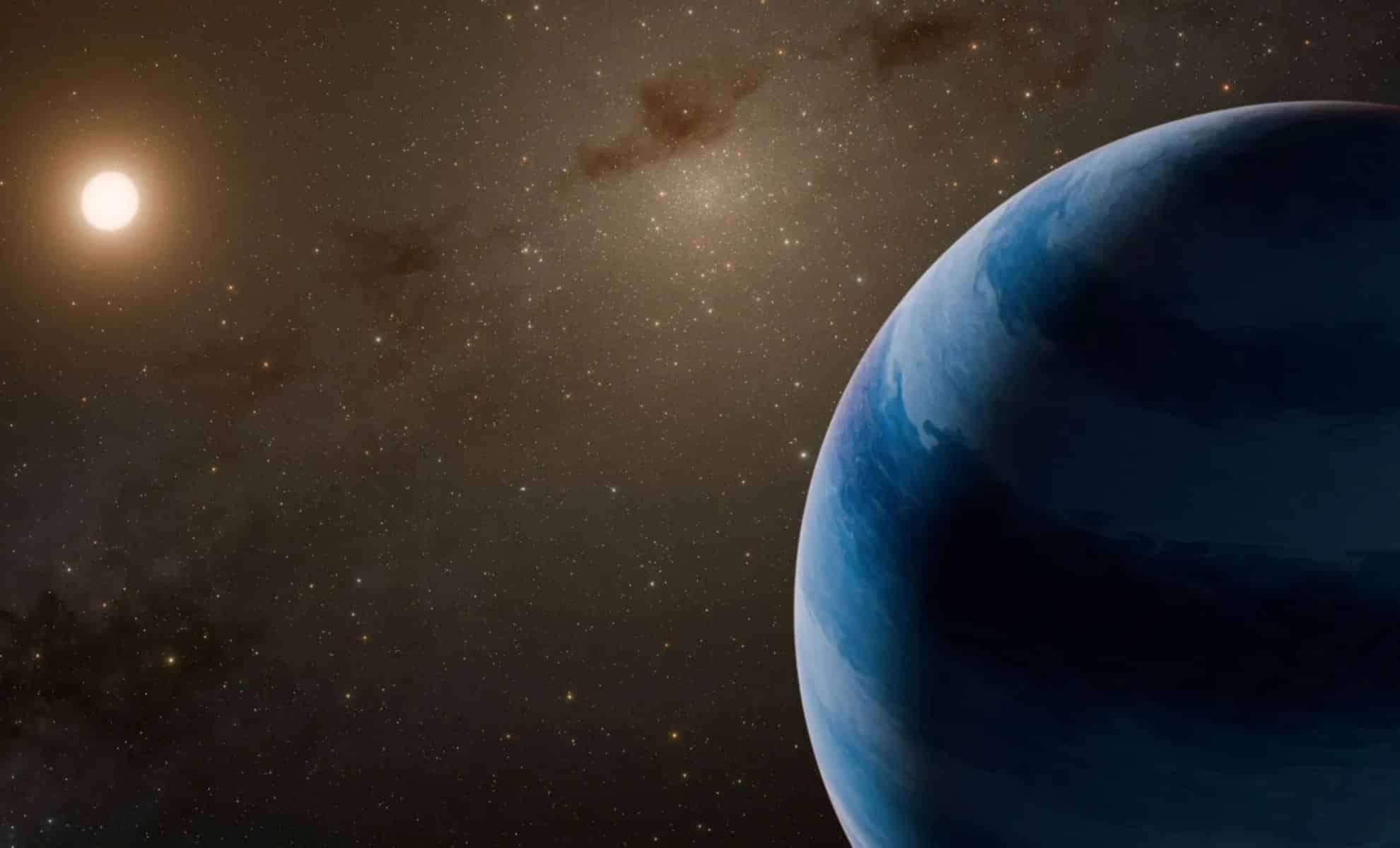
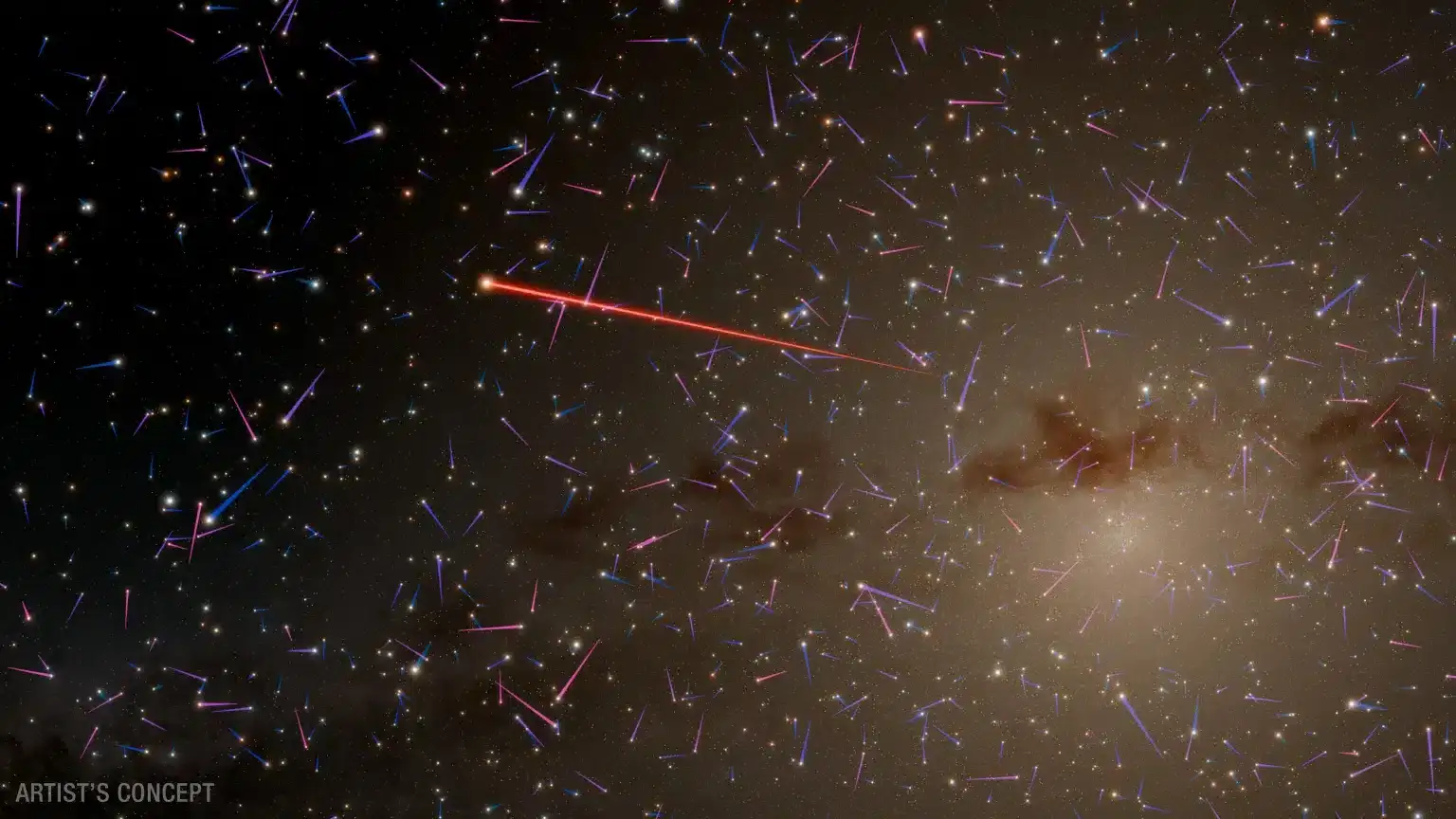
Researchers at NASA have revealed a remarkable exoplanetary system featuring a dim star and its planet hurtling through space at an extraordinary velocity of 1.2 million miles per hour (540 kilometers per second). This pace is nearly twice as fast as the movement of our solar system as it journeys around the Milky Way. Confirmation of this velocity could establish it as the quickest known exoplanet system, offering fresh perspectives on stellar motions and the formation of planetary systems within the galaxy’s densely populated core.
Initially detected in 2011 through microlensing, a method leveraging gravitational light distortion to find faint celestial objects, this unusual pair has been further studied using observations from the Keck Observatory and the ESA’s Gaia satellite. These recent data have been vital for understanding the system’s speed and characteristics.
Super-Neptune in Orbit Around a Rapidly Moving Star
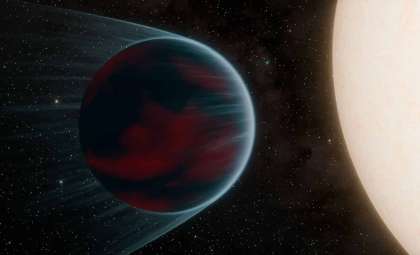
The pair appears to consist of a super-Neptune-sized planet, substantially larger than Neptune, circling a low-luminosity star. If positioned in our solar system, the planet’s orbit would fall between those of Venus and Earth, making it an engaging object for further examination. Nevertheless, the star’s faintness positions the planet well beyond the habitable zone, meaning it is unlikely to harbor life.

Sean Terry, a postdoctoral investigator at the University of Maryland and NASA Goddard Space Flight Center, explained, “This is likely a super-Neptune type planet orbiting a small star at a distance comparable to between Venus and Earth’s orbits in our system. However, due to the star’s weak luminosity, that distance places it outside the habitable zone. If validated, it would be the first discovered planet orbiting a hypervelocity star.” This finding broadens our knowledge of exoplanets linked to stars traveling at exceptional velocities.
The system’s velocity hints it might ultimately break free from the Milky Way’s gravitational grasp, journeying into intergalactic space. While hypervelocity stars—stars surpassing galactic escape velocity—are known, identifying such a star with a bound planet is extraordinarily rare and scientifically valuable.
Measuring Mass and Movement Challenges
Understanding the exact properties of this stellar and planetary duo is no small feat. Scientists can accurately determine the mass ratio between star and planet; however, calculating their definitive masses depends on their distance from Earth—much like how an object’s magnification alters as a magnifying glass moves closer or farther.
Senior research scientist David Bennett from the University of Maryland and NASA’s Goddard Center stated, “While the mass ratio calculation is straightforward, deriving the actual masses involves greater complexity.” Pinpointing these values is essential to grasp how the system operates and to predict if it will maintain its remarkable velocity.
Researchers are also striving to verify that the star observed today corresponds to the system identified in 2011 through microlensing. Confirming the star’s trajectory and speed relative to earlier observations is key for linking it definitively to the previously detected system.
Bennett noted, “To confirm the star’s association with the 2011 signal, further observation after about a year is required to trace its movement and verify it aligns with the origination point of that signal.” This ongoing study aims to determine whether the current star is the original system member or if the 2011 detection might have been a rogue planet or an exomoon.
Future Directions and Exploration
Advancing this discovery hinges on continued monitoring and emerging technology. As astronomers accumulate more detailed data, they hope to ascertain if the system truly belongs to a fast-moving star-planet pair or if the alternative hypothesis of a rogue planet accompanied by an exomoon fits better.
Aparna Bhattacharya, a research scientist involved in the study, remarked, “Should high-resolution imaging reveal the star remains stationary, it would indicate it is not the source of the original signal, favoring the rogue planet with exomoon scenario.” These insights are vital for improving our understanding of planetary development in the dense stellar environments near the galactic bulge.
The soon-to-launch Nancy Grace Roman Space Telescope is expected to significantly propel the exploration of hypervelocity exoplanet systems. Its capability to conduct high-resolution surveys in the galactic core will enable the detection and analysis of more rapidly moving star-planet systems, elaborating on their formation and evolution under extreme conditions.
Terry commented, “We utilized MOA for its wide coverage initially, supplemented with detailed follow-ups from Keck and Gaia. However, the Roman telescope’s comprehensive observational power and strategic surveys will soon remove the need for additional instruments.” This heralds an exciting future for high-definition studies into the movement and characteristics of exoplanetary systems across the Milky Way.
This article has been republished from the following materials. Note: material may have been edited for length and content. For further information, please contact the cited source.
- Categories:
- News








0 comments
Sign in to Comment