

Following over half a century orbiting Earth, the Soviet-era spacecraft Kosmos-482, launched back in 1972, is approaching its final descent. This historic satellite, originally intended for exploring Venus, is now on track to burn up in Earth's atmosphere, marking the end of a remarkable space journey. Coverage from ScienceAlert brings attention to this event as well as the growing challenges posed by orbital debris.
The spacecraft's mission was cut short due to a malfunction in its timer system, which resulted in it becoming trapped in Earth's orbit rather than continuing toward Venus. Although it never fulfilled its exploratory purpose, Kosmos-482 has remained in orbit for decades and is anticipated to reenter around May 10th. Experts emphasize that, despite the visible reentry, the risk to people on the ground is minimal.
Half a Century in Orbit Comes to an End
Launched over 50 years ago for an ambitious space endeavor, Kosmos-482's plight shifted from a pioneering mission to space debris following its failure. The spacecraft has since silently circled Earth, largely unnoticed amid new advances in space technology. As it prepares for reentry, scientists are tracking its trajectory closely to gather data on the spacecraft's composition and behavior upon atmospheric entry.

Although space debris is a well-known issue, Kosmos-482 stands out due to its extended time exposed to space conditions, making its impending descent especially significant for researchers studying how long orbital objects endure in space.
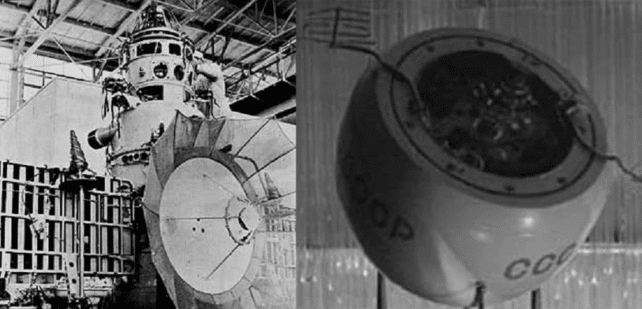
Will It Survive Reentry?
As Kosmos-482 nears Earth, experts debate whether parts of it might withstand the extreme heat of reentering the atmosphere. Designed initially as a lander capable of enduring Venus' atmosphere, it may have a higher chance of surviving Earth’s atmospheric reentry than typical spacecraft fragments.
Satellite tracking expert Marco Langbroek notes in his recent blog that “since this is a probe engineered to endure Venus' atmospheric conditions, it might remain largely intact during Earth’s reentry.” However, uncertainties remain due to its prolonged exposure to space and the reentry’s slow, shallow path. Its descent is being closely observed to provide insights into how such aged objects behave.
Nonetheless, the odds of Kosmos-482 surviving the heat are low, with most parts expected to disintegrate. Any surviving debris could reveal valuable information about spacecraft construction techniques and materials from the space race era, enhancing our understanding of historical space technology.
Addressing the Escalating Space Debris Crisis
While Kosmos-482 is expected to mostly burn upon reentry, it underscores the wider issue of increasing space debris in Earth's orbit. The surge in satellite launches contributes to a growing cloud of defunct objects orbiting our planet, complicating space navigation and safety.
The eventual outcome of this spacecraft’s reentry—whether complete disintegration or surviving fragments—will advance knowledge for managing orbital debris. Although space agencies are developing technologies to minimize new space junk, finding solutions for the existing clutter remains a pressing challenge for the future of space exploration.
- Categories:
- News












0 comments
Sign in to Comment