
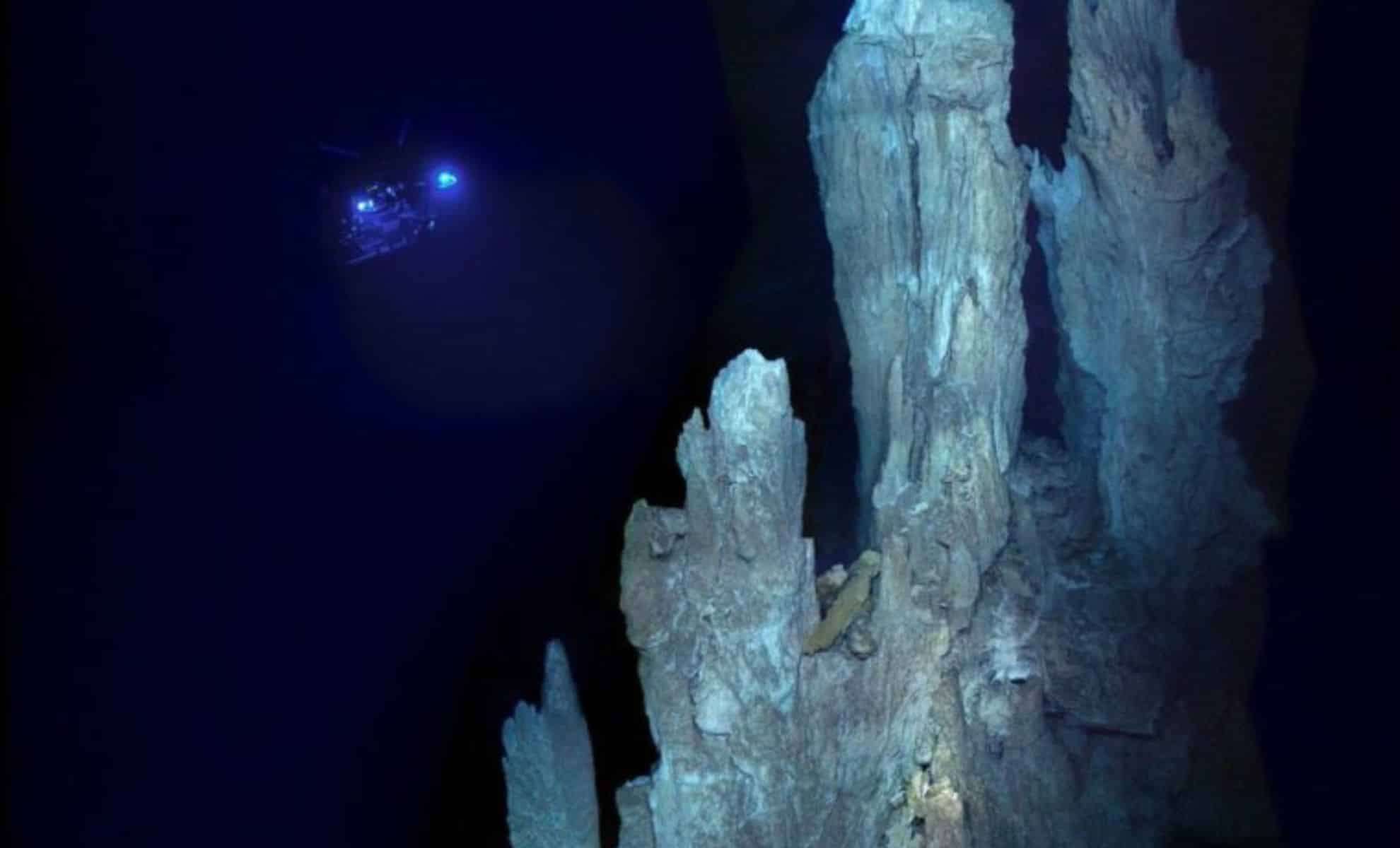
Far below the Atlantic Ocean's surface, nearly 700 meters (2,300 feet) down, an extraordinary realm emerges—a collection of imposing towers emitting an eerie blue glow under the lenses of remote submarines. This enigmatic site is known as the Lost City Hydrothermal Field, unparalleled on our planet. Unveiled to the scientific community in 2000, this expansive system of towering carbonate structures rises majestically from the ocean floor, evoking images of a forgotten ancient metropolis.
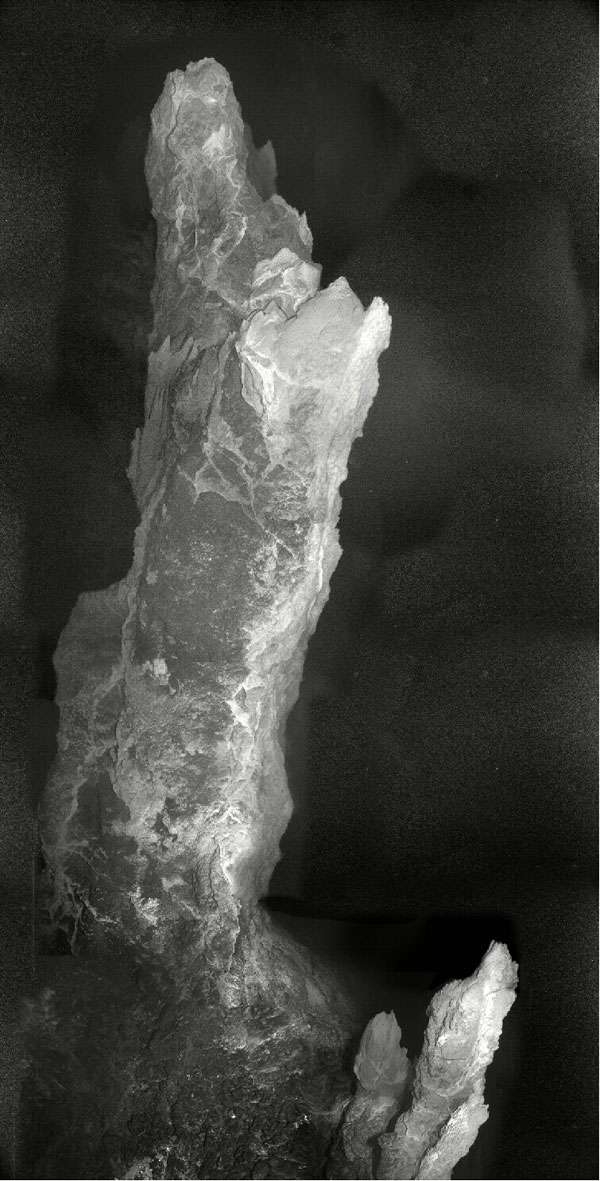
These massive spires, created from mineral-laden fluids escaping from beneath the Earth’s crust, vary dramatically in form, ranging from small, mushroom-like shapes to the colossal Poseidon—a majestic tower nearly 60 meters (200 feet) tall. Unlike typical black smoker vents heated by volcanic magma, Lost City’s ecosystem functions through different processes. Here, chemical reactions deep in the mantle produce hydrogen and methane, crucial compounds that sustain life in this unique environment, making it a geological and biological marvel.
Beyond its captivating geology, the Lost City harbors life in its crevices. Bacterial colonies adhere to the mineral-covered surfaces, subsisting on hydrocarbons released by the vents. This biologically rich habitat, independent of sunlight and relying solely on chemical energy, represents one of Earth’s most extreme and alien-like ecosystems. Scientists speculate such environments might even exist beyond our world.

Insights Into Extraterrestrial Life Potential
The Lost City not only expands our understanding of life beneath Earth’s oceans but also hints at conditions elsewhere in our solar system. Researchers propose that comparable hydrothermal settings could be present on icy ocean moons such as Europa (orbiting Jupiter) and Enceladus (orbiting Saturn), both housing vast hidden seas beneath thick ice shells.
Microbiologist William Brazelton emphasized to The Smithsonian the significance, stating, “This ecosystem could very well be active on Enceladus or Europa as we speak.” These moons exhibit geological features resembling hydrothermal vents, where chemical-rich waters might fuel life beneath the ice.
“And possibly Mars in its ancient past.” This evokes the tantalizing idea that ancient Martian hydrothermal systems might have supported microbes when the planet was wetter. The discovery implies that if life thrives in the Lost City’s dark, chemical-fueled conditions, similar forms might exist in hidden oceans beyond Earth.
An Unusual Geological Ecosystem
The Lost City’s distinctive charm lies in its delicate, almost ethereal carbonate formations. Scientists from the University of Washington describe the vents as nearly “weeping fluid,” producing intricate clusters of multiclad carbonate fingers that stretch outward like open hands. This remarkable structure highlights the alien-like nature of the site and offers a rare visual fascination for marine biology.
In contrast to black smokers, which are short-lived and volcano-dependent, the Lost City has been a stable geological phenomenon for at least 120,000 years. Constantly releasing hydrogen and methane at remarkable volumes, this system provides a window into Earth’s ancient geological activity and the processes that may have spurred early life.
Core Discoveries at the Lost City Hydrothermal Field
A Rare Subsea Habitat Under Threat
Despite its value to science, the Lost City confronts a growing challenge from deep-sea mining. In 2018, the Polish government obtained rights to mine near this delicate hydrothermal region. Although the vent structures themselves lack precious metals, nearby mining could stir sediment clouds harmful to this fragile ecosystem.
As seabed mining advances globally, experts urge immediate protective regulations to safeguard this extraordinary habitat. Many argue for recognizing the Lost City as a World Heritage Site to guarantee its protection. Without swift measures, this irreplaceable scientific landmark—crucial for understanding Earth's history and life's cosmic potential—might be irreversibly damaged.
Preserving an Ancient Geological Treasure
Today, the Lost City Hydrothermal Field stands as a testament to Earth’s dynamic terrain and life’s persistence in extreme places. Having endured for over 120,000 years, it continuously informs scientific knowledge about deep ocean ecosystems, life’s origins, and the quest for alien life.
Ongoing technological advances promise deeper insights yet highlight the urgency to protect this submerged marvel from human threats. The Lost City’s future as a source of discovery and inspiration depends largely on current conservation efforts.
Concealed under ocean waves and shielded from time, the Lost City could hold clues to some of science’s most profound mysteries. Whether these secrets endure hinges on our commitment to its preservation.
- Categories:
- News



0 comments
Sign in to Comment