
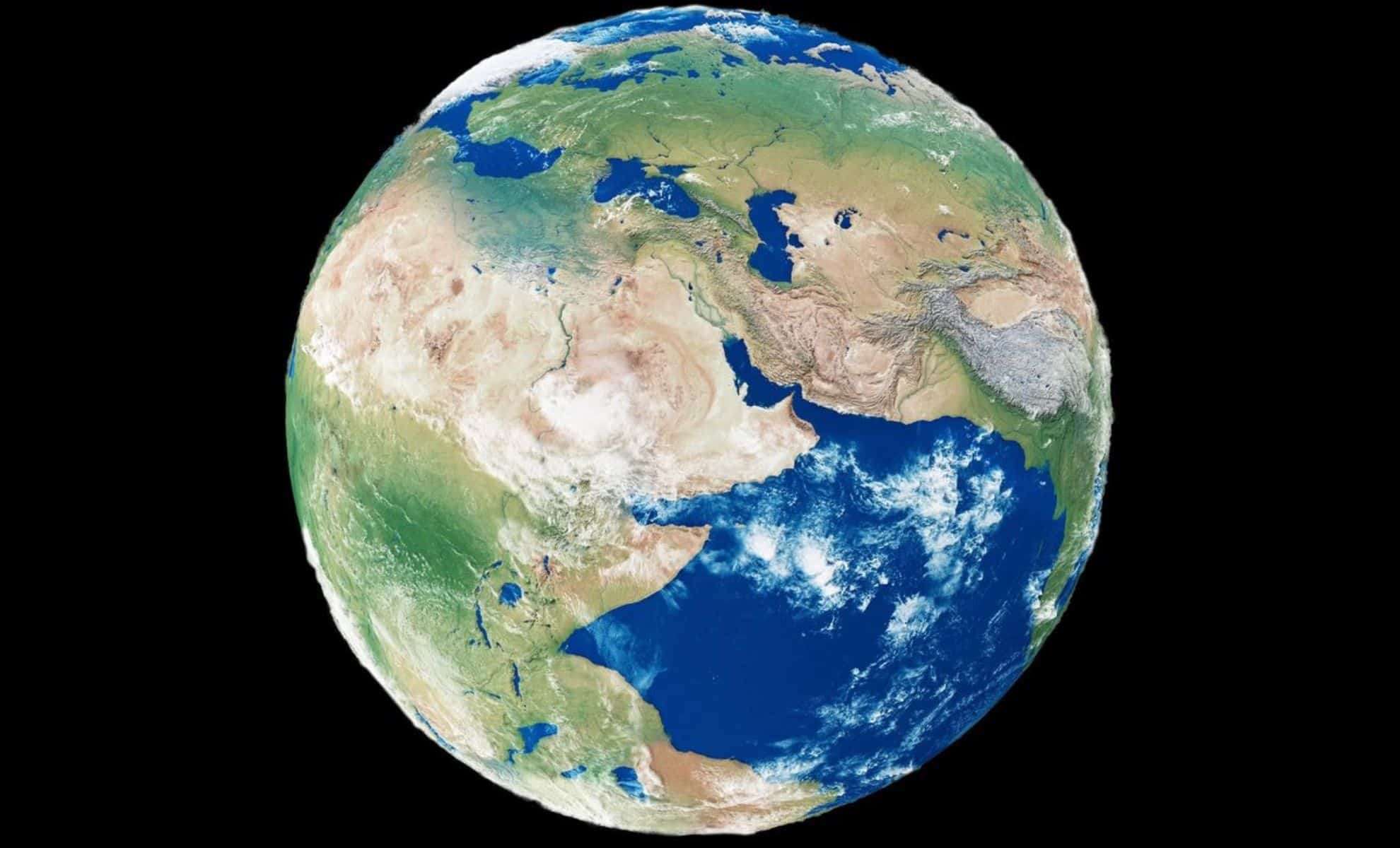
Far beneath the Earth's crust lie two vast regions known as low-shear velocity provinces (LLSVPs), which are prompting a reevaluation of our planet’s geological history. Positioned below Africa and the Pacific, these immense accumulations of rock and minerals rest thousands of miles beneath the surface, deep within the mantle. Their exact formation and role remain a mystery, but emerging studies indicate they could be as ancient as Earth itself, offering unprecedented insight into the planet’s earliest epochs.
Seismologist Arwen Deuss from Utrecht University explains that interpreting these subterranean giants involves ‘‘listening’’ to the Earth’s oscillations. “During a major earthquake, the entire planet resonates much like a bell,” Deuss stated in a New Scientist interview. “In this way, Earth behaves like a musical instrument.”
This seismic ‘‘music’’ enables researchers to examine the LLSVPs’ internal makeup, as these formations slow seismic waves passing through the mantle. Such earthquake-generated signals provide a unique window into Earth’s deep interior, where the LLSVPs exist like ancient landmasses amid a ’graveyard’ of tectonic debris.

A Realm Full of Subducted Crust
The substantial LLSVPs are surrounded by layers composed of subducted tectonic plates—portions of Earth’s crust thrust deep into the mantle over geologic time. Deuss refers to this surrounding material as a “slab graveyard,” created through subduction, the process where one tectonic plate is pushed beneath another toward the mantle’s depths.
“These enormous formations are encircled by a graveyard of sinking plates driven there by a mechanism called ‘subduction,’” Deuss noted. “One plate plunges beneath another and descends from the surface to depths approaching three thousand kilometers (nearly 1,900 miles).”
This mantle-stored debris provides crucial context for the LLSVPs’ unusual traits. While these regions are extremely hot, seismic waves maintain their strength traveling through them, unlike waves moving through the subducted crustal fragments. Earlier assumptions suggested the heat would reduce wave energy, but the opposite effect is observed.
Clues in Crystal Dimensions Reveal Ancient Origins
The secret behind the LLSVPs’ properties may stem from the size of their mineral grains. Research led by Deuss and her colleagues proposes that these vast domains consist of larger, less abundant crystals. Grain size pertains to the dimensions of the crystals composing the rock; larger grains mean fewer boundaries between them, and these boundaries usually attenuate seismic energy. Because the LLSVPs contain fewer grain boundaries, seismic waves can traverse them with minimal energy loss.
This grain size insight also points to the great age of these formations. The growth of such massive crystals requires immense periods, suggesting the LLSVPs far predate the neighboring subducted plates. “Before, their nature was unclear—whether they were short-lived or stable features lasting millions or even billions of years,” Deuss said.
Recent discoveries indicate these hidden superstructures may represent some of the planet’s earliest geological remnants, potentially tracing their origins back to Earth’s infancy. If so, they offer a unique physical record from the dawn of our world.
The Planet’s Seismic Symphony
A particularly intriguing aspect of this work is how researchers study the LLSVPs—by interpreting Earth’s ‘‘seismic symphony.’’ Earthquakes generate waves that propagate through the planet, their behavior changing with the materials they encounter. By decoding these seismic vibrations, scientists can infer characteristics such as density, composition, and temperature of mantle materials.
“Earth essentially acts like a musical instrument,” Deuss explained. The resonant seismic signals offer critical clues about the internal structure, akin to how a bell’s tone reveals its makeup and condition.
This novel technique continues to uncover remarkable features of the LLSVPs, challenging previous geological assumptions.
Insights into Earth’s Deep Past
The enormous LLSVPs beneath Africa and the Pacific Ocean stand as enduring relics of Earth’s formative eons. Wrapped within a vast graveyard of tectonic fragments and made up of crystals that took eons to develop, these formations possibly hold key answers about the planet’s early evolution.
Thanks to cutting-edge seismic monitoring, researchers are peeling back the layers of mystery surrounding these deep ‘‘supercontinents.’’ Ongoing studies promise to deepen our understanding of Earth’s internal dynamics from its birth right through today.
- Categories:
- News







0 comments
Sign in to Comment