
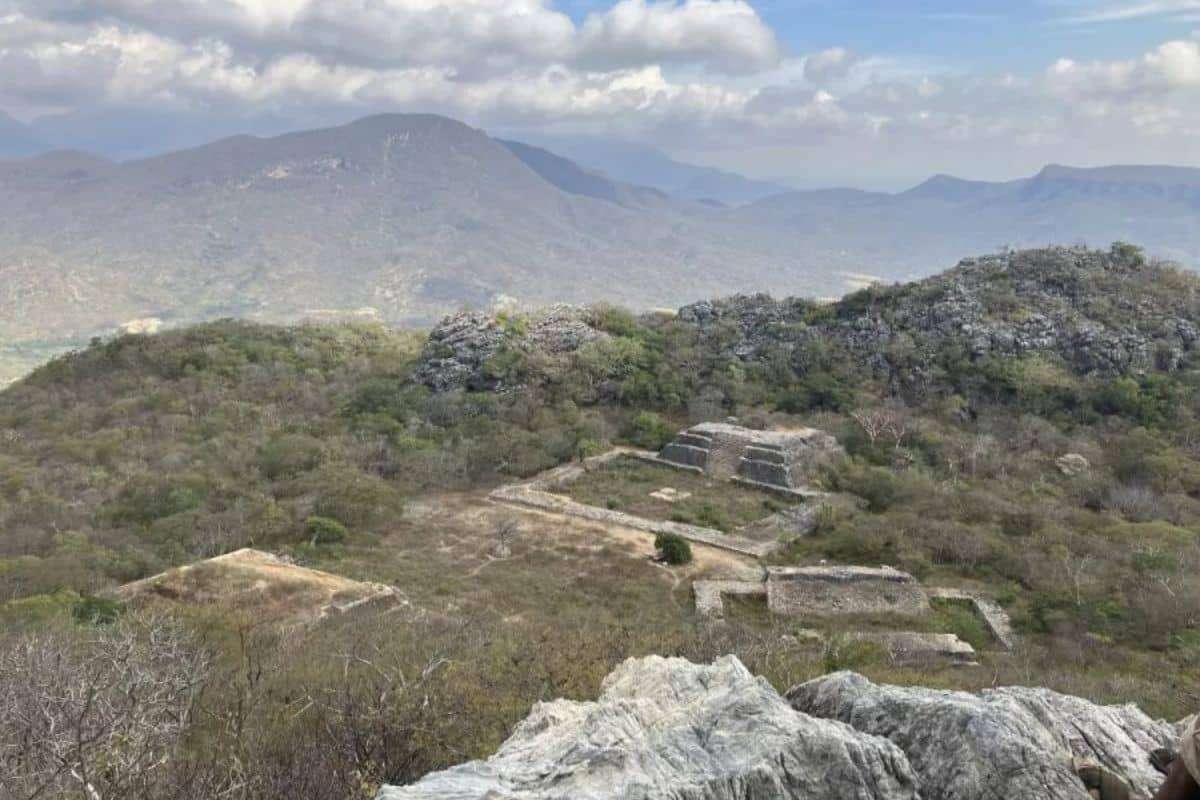
Deep within the lush southern Mexican jungle, archaeologists have uncovered an expansive Zapotec city from the 15th century that had long remained concealed. Utilizing advanced LiDAR technology, this significant find, spearheaded by archaeologist Pedro Guillermo Ramón Celis, overturns previous beliefs that Guiengola was merely a minor military post.
Novel aerial LiDAR imaging revealed an extensive urban landscape dotted with over 1,100 structures, defensive walls, and ceremonial sites, portraying a vibrant pre-Columbian metropolis remarkably preserved through time.
Unveiling a Lost Jungle Metropolis
Situated in the challenging terrain of Oaxaca, near the Pacific shore just 17 miles away, the true magnitude of Guiengola had eluded archaeologists due to the dense forest canopy.
Thanks to LiDAR (Light Detection and Ranging), which uses laser pulses to penetrate thick vegetation and construct high-resolution 3D maps, researchers unveiled the full expanse of the city within just a few hours of flight—achieving in hours what foot surveys could take decades to accomplish.
These scans exposed a fortified settlement covering approximately 360 hectares (890 acres), featuring temples, ball courts, elite compounds, and 2.5 miles of defensive walls.
“Since the settlement dates back only 500 to 600 years, its condition is exceptionally intact,” explains Ramón Celis. “Walking through the jungle, you encounter houses still standing—with visible doorways, corridors, and fences dividing residences.”

More Than a Military Fortress
Contrary to its former classification as a mere military outpost, Guiengola was actually a major Zapotec urban hub. The city prospered during the Late Postclassic period amidst ongoing conflicts with the expanding Aztec Empire. Historical documents recount a lengthy seven-month siege led by Aztec ruler Ahuizotl, underlining Guiengola’s strategic role.
Despite being besieged, the Zapotec inhabitants successfully defended the city, securing dominance over the Pacific coastal region of Oaxaca by the end of the 15th century. Soon after this victory, the city was likely abandoned in favor of more fertile and water-abundant areas like Tehuantepec, where many Zapotec descendants remain today.
A Remarkably Preserved Snapshot of the Past
One outstanding feature of Guiengola is its exceptional preservation. Unlike other ancient Mesoamerican urban centers often altered substantially after the arrival of Europeans, Guiengola was deserted before colonial contact.
This abandonment has turned the site into a rare, undisturbed time capsule of Zapotec civilization before European influence. Ramón Celis, whose roots trace to the Tehuantepec region, has nurtured a lifelong fascination with Guiengola.
His ongoing investigations seek to decode the social structures and political systems of this ancient city, revealing how Zapotec society was organized and connected within greater Mesoamerica.
Mapping the Ancient City’s Complex Layout
The LiDAR imagery has already shed light on the spatial arrangement and social hierarchy within Guiengola. The city was segmented into specialized districts, separating ceremonial and administrative zones from commoner areas via protective barriers. Elite ball courts and temples emphasize the existence of a sharply defined social class system.
But much work remains. Ramón Celis and researchers intend to catalog all 1,170 structures detected by the LiDAR data—a meticulous process expected to take years. Their methodology emphasizes non-invasive remote sensing, avoiding damage to the archaeological site while unlocking its hidden narratives.
Guiengola’s Discovery Will Rewrite Zapotec and Mesoamerican History
The revelation of Guiengola enriches our understanding of Zapotec culture and their conflicts with the Aztecs. This remarkable city offers an unprecedented glimpse into Late Postclassic Zapotec society, raising new questions about their movements, governance, and endurance.
At present, Guiengola remains veiled beneath thick jungle foliage, a silent witness to a civilization that flourished despite immense challenges. Through modern technologies and dedicated scholarship, its story is finally emerging from the shadows.











0 comments
Sign in to Comment