
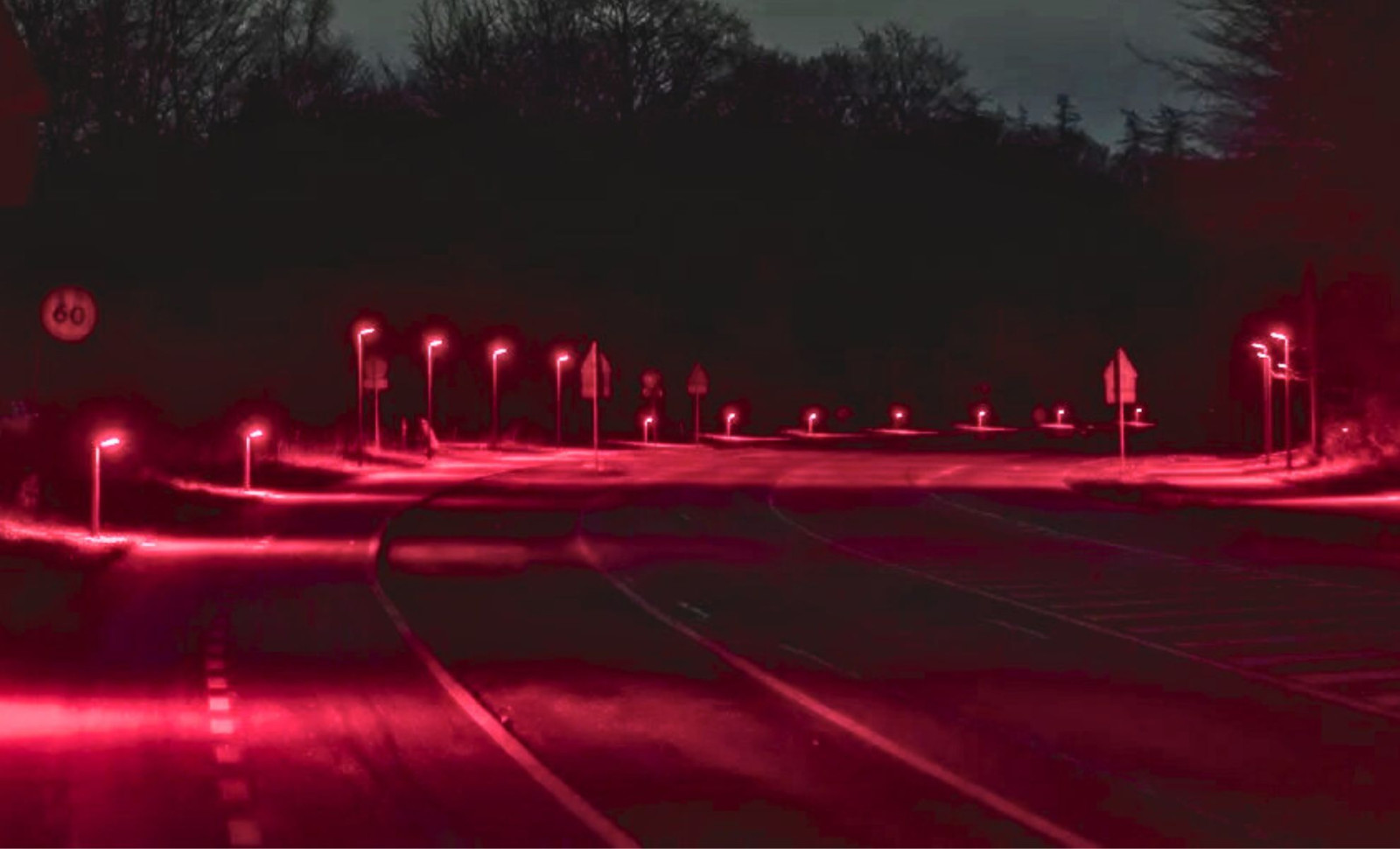
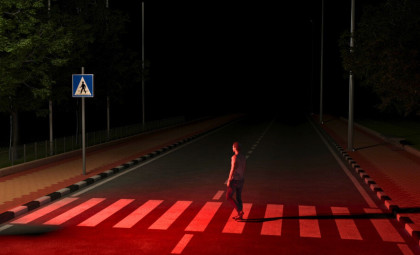
Starting February 8, 2026, drivers passing through Gladsaxe, a suburb near Copenhagen, observed a striking change along a stretch of road. The usual cool white streetlights were replaced by a vivid, deep red illumination. This shift transformed Frederiksborgvej, a key traffic artery, into a standout feature amid the conventional yellow and white urban lighting.
This alteration wasn’t part of a temporary event or decoration but a deliberate, constant red lighting that enveloped the roadway and nearby greenery. The modification attracted attention immediately, as it fundamentally changed the visibility and ambiance of a bustling urban corridor with no public forewarning.
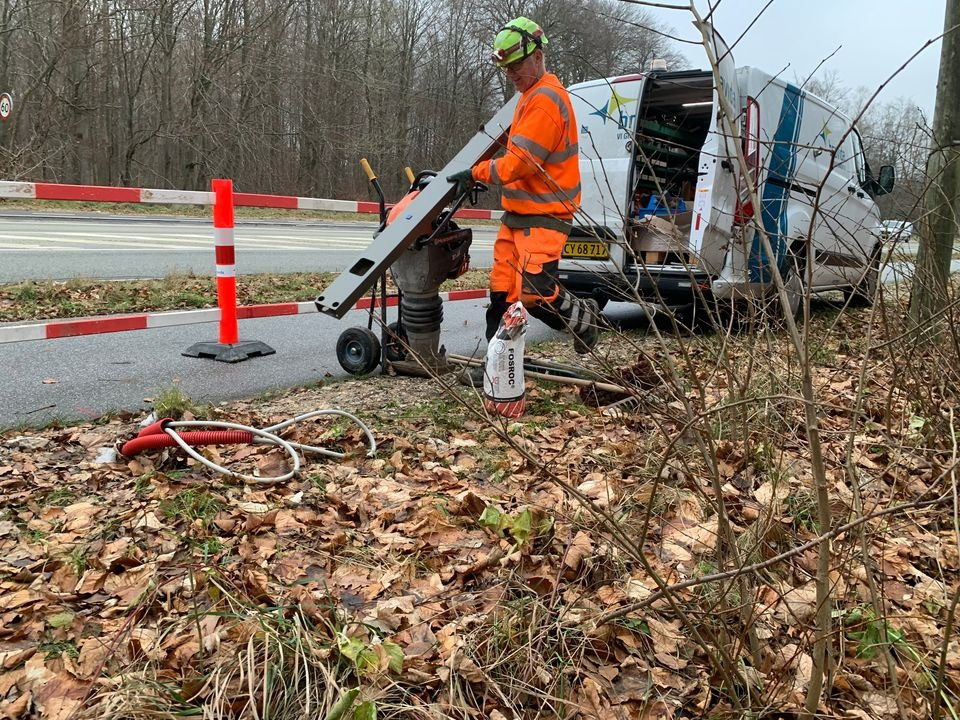
Residents noticed that the new red lighting was installed where the suburban landscape intersects with dense vegetation, indicating a targeted approach rather than a citywide lighting overhaul. Technical details behind the decision to switch to red lighting remained undisclosed, cloaked in the glow of the new fixtures.

Transformations Along Frederiksborgvej
Official accounts reveal that Gladsaxe substituted its standard white LEDs with specialized red LED streetlights on Frederiksborgvej. Positioned strategically near a bat colony, the shift aimed to reduce the harmful effects of artificial lighting on nocturnal wildlife. By altering the light’s wavelength, the city balanced road safety for motorists with the preservation of natural behaviors in local bat populations.
The initiative specifically focuses on the common pipistrelle and the brown long-eared bat, species dependent on dark pathways to navigate between roosts and feeding areas. Conventional white lighting creates “light barriers” that deter bats from crossing these corridors, limiting their natural habitat range.

Guidance from the Danish Road Directorate ensured that the red lights were carefully installed where engineered infrastructure meets ecological hotspots. Their goal was for Frederiksborgvej to function efficiently for traffic and simultaneously act as a safe corridor for wildlife. This represents a shift away from traditional lighting strategies that prioritize human visual requirements over ecological considerations.
Philip Jelvard, a lighting design expert from Light Bureau involved in the project, remarked:
“Overall, we hope that everyone welcomes the new lighting and that the red light not only has functional value, but also symbolic value. The red light should make passers-by aware that this is a special natural area that we want to protect.”
Reasons Behind Selecting Red Illumination
The main concern addressed is light pollution, a side effect of expanding urban areas that interferes with the biological clocks of many species. Research shows conventional white LEDs emit significant blue light, which scatters more and generates harsh glare. For bats, this bright spectrum poses disorientation and can lure insects away from their natural hunting zones.
Studies demonstrate that numerous bat species do not react negatively to red light as they do to white or blue wavelengths. Employing red LED streetlights allows sufficient visibility for drivers while minimizing disturbance to the common pipistrelle, enabling these bats to maintain their nocturnal routines uninhibited.
This choice of light wavelength aligns with advanced understanding of how different light frequencies impact animal vision. Humans adjust well to red lighting, but many nocturnal creatures have eyes optimized for shorter wavelengths. Gladsaxe’s red lighting solution represents a thoughtful compromise allowing both humans and wildlife to coexist safely in the same environment.
Integration Within a Broader Urban Vision
Gladsaxe’s lighting adjustment is part of the larger Lighting Metropolis – Green Mobility project, an EU-backed collaboration uniting Danish and Swedish cities to experiment with eco-friendly lighting technologies. Red illumination along Frederiksborgvej serves as a pilot to analyze energy usage and effects on biodiversity in real urban settings.
This initiative complements United Nations Development Programme objectives, especially those under Goal 11, which emphasizes developing sustainable cities worldwide. Currently, more than half of humanity resides in urban areas, with expectations rising to 70 percent by 2050, making environmentally responsible city planning increasingly vital for global well-being.
The United Nations Development Programme highlights that cities, though occupying a mere 3 percent of land, consume up to 80 percent of global energy. Small-scale initiatives like Gladsaxe’s lighting replacement showcase how infrastructure can become more eco-conscious while addressing growing urban demands. Such strategies reduce ecological footprints and enhance urban resilience.
Beyond environmental advantages, the red LED lamps serve as a lasting visual cue of the city's commitment to ecological stewardship. The distinctive red hue alerts drivers to a sensitive natural zone, encouraging careful driving where wildlife activity is high. This dual role enhances road safety and communicates the importance of protecting local biodiversity.
- Categories:
- News











0 comments
Sign in to Comment