
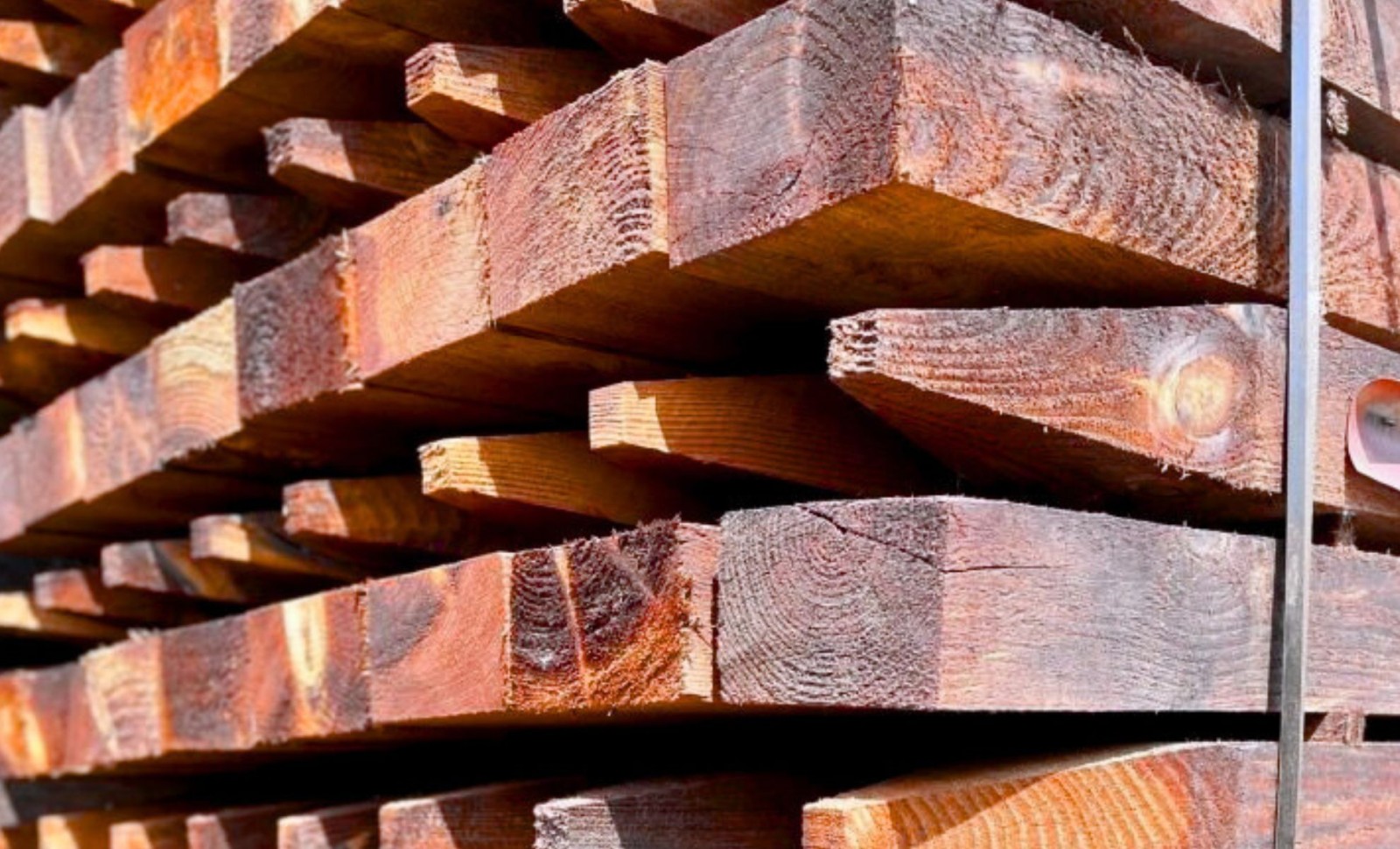
Researchers at the University of Maryland have transformed ordinary wood into a groundbreaking material that not only outperforms traditional wood but also rivals the strength of steel and aluminum. This eco-friendly innovation could revolutionize global construction practices.
The resulting product, termed superwood, is created by restructuring the internal architecture of natural wood to increase its strength, reduce its weight, and enhance durability. Validated by peer-reviewed research, this advanced wood-based composite is sturdy enough for structural applications and light enough for aerospace and transport use.
Unlike earlier wood composites or energy-intensive materials, this approach utilizes fast-growing, widely available tree species. The energy-efficient and scalable production process positions superwood as a promising candidate in the pursuit of sustainable construction materials.

Enhancing Wood Strength Through Cellular Reengineering
The procedure begins with chemical treatment followed by mechanical compression. Timber is immersed in a boiling mixture of sodium hydroxide and sodium sulfite to partially remove the lignin and hemicellulose compounds that typically limit wood’s flexibility and strength. After this, the wood is hot-pressed, aligning and densifying its cellular structure.
A 2018 Nature study reports that this treatment creates a material vastly stronger than untreated wood, with compressive strength exceeding 160 MPa and flexural strength surpassing 330 MPa, depending on species and load direction.
Densified samples from species such as oak, poplar, pine, and cedar showed up to a fivefold increase in tensile strength. For example, oak’s strength increased from 115 MPa naturally to 584 MPa post-treatment. Increased toughness was also noted across all tested woods.
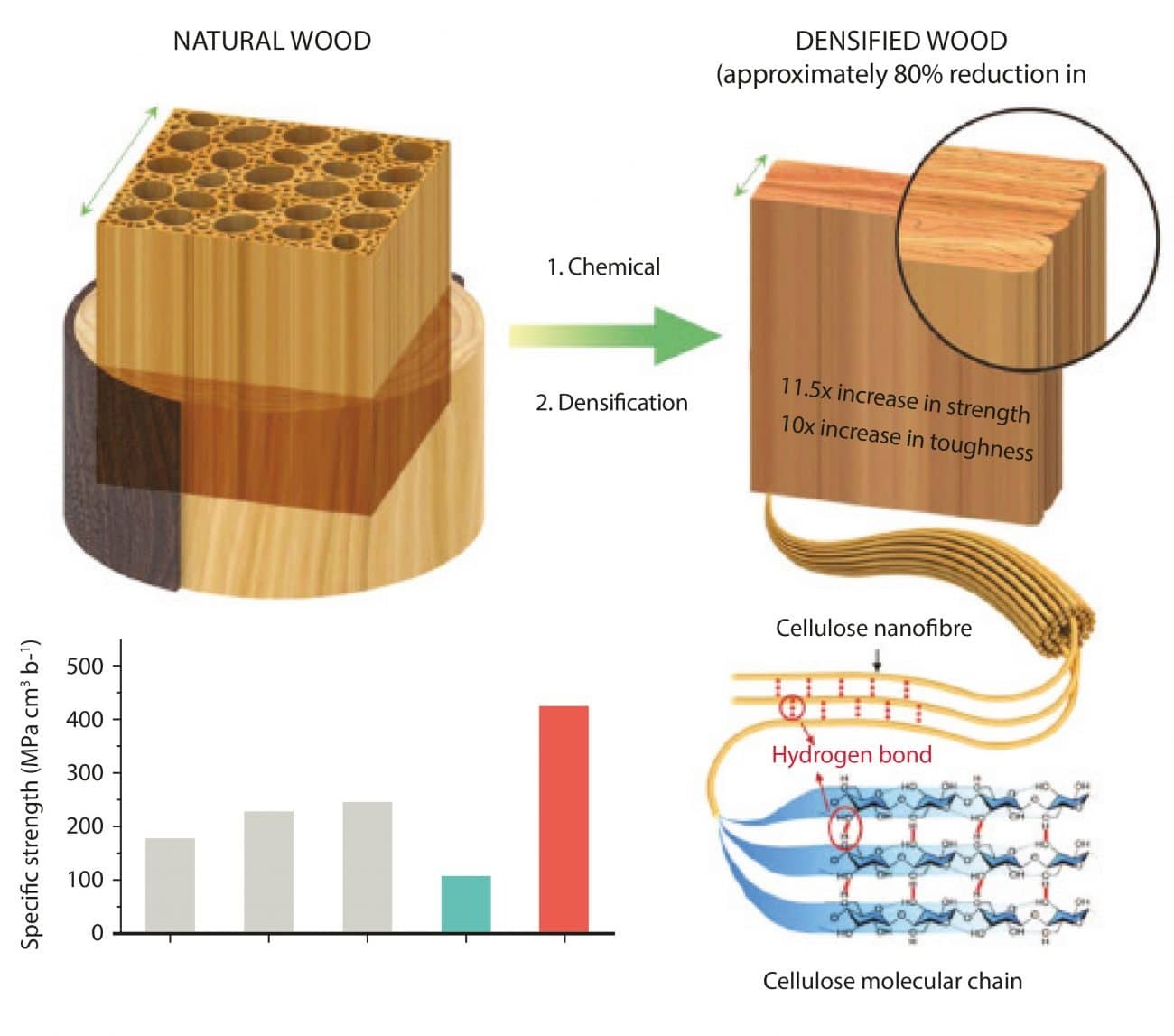
This transformation reorients the cellulose nanofibers, fostering denser hydrogen bonding. This fiber realignment strengthens resistance to deformation, making superwood behave more like engineered composite materials than natural fibers. According to the Nature paper, even when heavily strained, the densified wood maintains structural integrity and efficiently dissipates energy.
Designed to Withstand Stress, Moisture, and Fire
Superwood demonstrates key benefits in practical applications beyond enhanced strength. Research by the USDA Forest Service found that it maintains dimensional stability even under high humidity, a common drawback for untreated wood.
In lab tests, samples exposed to 95 percent relative humidity for over 120 hours showed far less swelling compared to untreated or traditionally pressed wood, while retaining most of their strength.
Thermally, InventWood, the startup commercializing this technology, reports that superwood achieves a Class A fire rating per its official website, marking it as highly flame-resistant by standard building codes.
The process works with multiple types of wood, allowing manufacturers to tap into local forestry or quickly replenishing species without performance loss. This supply chain flexibility surpasses that of metals or synthetic composites.
Advanced imaging techniques like electron microscopy and small-angle X-ray scattering confirm the wood’s dense, uniform, and layered microstructure. The lack of voids and aligned fibers limit moisture ingress and improve heat resistance compared to conventional products.
Low-Carbon Production Ready for Market
The transition from laboratory to commercial scale is underway. InventWood, started by University of Maryland’s Liangbing Hu, has initiated pilot production and is partnering with industry leaders in construction, transportation, and defense.
This manufacturing process requires significantly less energy than steel production, operating at lower temperatures and eliminating the need for high-heat furnaces. Lifecycle assessments linked to the Nature study estimate that superwood's carbon footprint is lowered by up to 90 percent compared to steel.
Relying on renewable biomass rather than mined metals also reduces vulnerability to geopolitical and economic uncertainties. In regions with established timber sectors, superwood could serve as a homegrown, high-performance building alternative, avoiding the complexities of importing heavy metals or composites.
Potential uses for superwood include lightweight cladding, vehicle panels, prefabricated structural elements, and protective barriers. Its combination of low weight and high durability suits applications demanding strong yet portable materials, especially where environmental impact is a priority.
- Categories:
- News












0 comments
Sign in to Comment